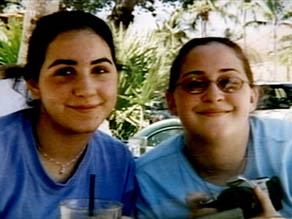
CAPE MAY COURT HOUSE — State Trooper Robert Higbee told jurors Monday that he did not remember crashing into a Dodge Caravan minivan at the intersection of Stagecoach and Tuckahoe roads on Sept. 27, 2006.
But he remembered the aftermath.
“I saw those girls in the van,” Higbee said from the witness stand. “I saw that they had suffered massive head injuries.”His voice, strong and clear throughout his testimony, slowed briefly as he said the words.
Maria Caiafa, the mother of Jacqueline Becker, 17, and Christina Becker, 19, wiped tears from her eyes.
Jacqueline Becker, who would now be 20 years old, and Christina Becker, who would be 22, both died at the scene of the collision after Higbee’s Ford Crown Victoria police vehicle struck the driver’s side of the minivan. Higbee is charged with two counts of vehicular homicide in their deaths.
Higbee, who had always planned to testify at his trial, told jurors that the crash is never far from his thoughts.
“It’s the first thing I think about when I get up. It’s the last thing I think about at night,” he said.
During questioning by defense attorney D. William Subin, Higbee said that he was on patrol that night just before 10 p.m. when he turned in to the southbound lane of Stagecoach Road, in an area he said he was semifamiliar with.
It was then he encountered a northbound car traveling well above the 35 mph speed limit. The car’s speed set off the audible alarm of the radar detector in Higbee’s vehicle, its pitch becoming higher and higher.
“The vehicle that was approaching me was going 65 mph,” Higbee said.
He slowed and turned around to catch up to the speeder, keeping his eye on what he could identify only as a dark car.
“I proceeded to close the distance on this vehicle,” he said, referencing a policy that has become a focus of the defense.
Higbee said he recalled seeing that car’s taillights flicker in the distance and then his memory is unclear.
“The last few frames in my mind are braking, looking and darkness,” Higbee said.
From there, Higbee recalled trying to call for help and the arrival of a young man, likely Michael Taylor, an occupant in the third vehicle involved.
“I remember trying to orient myself, realizing I’d been in an accident,” Higbee said.
Higbee said he learned that another vehicle was involved and asked the young man to check on them.
“He said they’re deceased,” Higbee said.
Higbee, who suffered injuries to his left side and back as well as a concussion, managed to get out of the police car and made his way to the Beckers’ minivan at the edge of Stagecoach Road.
Higbee said he had no memory of seeing the “stop ahead” sign about 517 feet before the intersection and had no memory of the stop sign itself.
“I don’t have a specific recollection of a stop sign or any traffic-control device,” Higbee said.
But Higbee, speaking directly to the jurors, told them he would never disregard a traffic sign. He was newly married with hopes of starting a family at the time. He and his wife now have a 16-month-old daughter.
“I had everything to live for, so there would be no reason for me to consciously disregard a stop sign,” said Higbee, who marked his 37th birthday Monday.
During cross-examination, First Assistant Prosecutor J. David Meyer focused on the stop sign and Higbee’s statement to police given on Oct. 17, 2006.
In the tape-recorded interview, Higbee said, “I remember stopping and looking both ways and proceeding through the intersection.”
Meyer asked why Higbee made that statement.
“I believe I was telling a true account of what happened,” Higbee said, adding that to the best of his recollection, he remembered stopping despite evidence to the contrary.
Early in his testimony, Higbee cited the state’s vehicular pursuit policy and his adherence to that policy, which advises emergency lights and sirens should not be used when closing the distance with a violator.
But Meyer asked that given that he was traveling at twice the posted speed limit while approaching an intersection, shouldn’t a reasonable law-enforcement officer substantially reduce his speed.
Higbee said yes, adding that would be the case if the officer recognized that a stop sign was present.
Meyer asked what priority the public’s safety held as police officers went about their duties.
“Safety is paramount,” Higbee said.
Meyer then pointed to the pursuit policy, which states in part, “To diminish the likelihood of a pursuit, a police officer intending to stop a vehicle for any violation of the law shall, when possible and without creating a threat to public safety, close the distance between the two vehicles prior to activating emergency lights and an audible device.”
Meyer said the qualifier “when possible and without creating a threat to public safety” gave officers discretion.
“I felt I was acting within the public safety realm,” Higbee said.
Higbee’s background as a football player, Meyer said, should also have given him the ability to be keenly aware of his surroundings, much like a player on the field.
But Higbee likened the comparison to comparing “apples and oranges.”
Jurors in the case must determine if Higbee acted recklessly when he failed to stop that night.
In this case, the judge has defined recklessness to mean a conscious disregard of a substantial and unjustifiable risk of serious bodily injury or death that requires a gross deviation from action that a reasonable law-enforcement officer would take under the circumstances.
Higbee will return to the witness stand Tuesday morning. The defense is expected to present other witnesses later in the day.

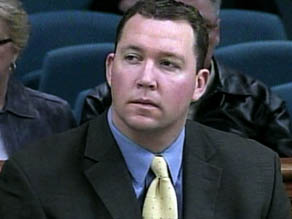 CAPE MAY COURT HOUSE, New Jersey–Late Monday afternoon jurors in the case of New Jersey vs Robert Higbee found the state trooper not guilty of vehicular homicide in the deaths of Jaqueline and Christina Becker.


 CAPE MAY COURT HOUSE, New Jersey–