Showing posts with label reference. Show all posts

Wednesday, May 4, 2011

New Study Regarding Spring Babies... Very Interesting!


Season of Birth May Affect the Rest of Your Life
Yahoo News- The season in which you are born may affect everything from your eyesight to your eating habits and overall health later in life, according to a blossoming field of research. The latest study shows that spring babies are more likely to suffer from anorexia nervosa as adults.

"We found an excess of anorexia births in the spring months compared to the general population," said study researcher Lahiru Handunnetthi, of the Wellcome Trust Center for Human Genetics. "The idea is that there is some sort of risk factor that varies seasonally with anorexia."

The researchers found that eight out of every 100 people born between March and June had anorexia compared with 7 percent of those without anorexia. This is a 15 percent increase in risk for those born during these spring months.

Previous studies have found similar links between spring births and various disorders, including schizophrenia, multiple sclerosis and even Type 1 diabetes. It's possible these diseases are linked to some environmental influence during gestation or the first few months of life, though researchers aren't sure what that could be.

The leading candidates including vitamin D levels, infections that come and go seasonally, changes in nutrition, and even possibly weather fluctuations, Handunnetthi told LiveScience.

These changing environmental factors seem to influence a wide array of conditions:

A study from 2003 published in the Journal of Nutrition showed that African-American babies born in the summer and fall were smaller than those born at other times. Also, babies of African-American and Puerto Rican decent gained less weight in their first four months if they were born in the fall.

Babies born in the fall have a 9.5 percent risk of having food allergies, up from 5 percent for babies born in June and July. Those babies born in November or December were also three times more likely to suffer from eczema and wheezing. That study was published in 2010 in the Journal of Epidemiology and Community Health.

Moderate and severe nearsightedness, or the inability to see well at long distances, is highest for babies born in the summer months, suggests research published in April 2008 in the journal Ophthalmology.

Birth month might even affect your biological clock, a mouse study published in 2010 in the journal Nature Neuroscience showed. Mice born in the winter were less able to adapt to a summer light cycle, which could be related to the increased risk of mental health disorders in humans born in the winter, the researchers speculated.

Leukemia has also been linked to being born in the spring, with a peak in April.

Birth month has even been linked to longevity, which could be because of these other adverse health effects. Studies in Austria and Denmark have found that those born in the fall live longer than people born in the spring.

"When we look at diseases we need to identify the risk factor that led to them," Handunnetthi said. "In general, risk factors could be environmental or genetic. Genetic risk factors you are born with and can't really change. If you identify environmental factors you can mediate them to carry out prevention studies."

These environmental causes are still unclear, though some of these birth-month effects may be related. "Perhaps a risk factor is playing a part that is common to all these conditions but we don't know that yet," Handunnetthi said.

Friday, February 5, 2010

Vegetative State Doesn't Mean Brain Death

Food Consumer.org- Some patients diagnosed as being in a vegetative state may be fully aware of what's going on around him, a new study in the New England Journal of Medicine suggests.

The study led by researchers in England and Belgium found four of 23 vegetative patients had signs of consciousness on brain-imaging tests.
For the study, Adrian M. Owen, coauthor, at the Medical Research Council in the U.K. and colleagues used functional magnetic resonance imaging or fMRI to test 54 patients with severe brain injury and see if they could think.

Patients were placed in a MRI scanner and asked to imagine playing tennis, which would activate the part of the brain associated with movement if the patients responded and asked to imagine walking on familiar city sweets, which would activate the part of the brain linked to spatial navigation if they were responsive.

Based on the test results, the researchers determined four out of 23 patients diagnosed as being in a vegetative state actually answered the questions the researchers asked just like the health control subjects did.

They further tested the patients asking them if they had brothers. The study subjects were asked to imagine playing tennis if the answer was yes and to imagine walking around their houses if the answer was no.

The four vegetative patients responded to the question correctly.

Forty percent of patients who suffered severe brain injury were misdiagnosed, according to the researchers and this misdiagnoses could lead to a wrongful termination of a patient's life.

Shelton Woman Died of Blood Loss While Giving Birth

Shelton — An autopsy has confirmed what Shelton police originally suspected when they found a woman and three newborn babies dead in a Redwood Circle home Tuesday.

Victoria Hope died from child birth while delivering the triplet boys.

The chief state medical examiner’s office has ruled the death was caused by exsanguination, or bleeding to death.

“It’s obvious there was no foul play,” Shelton Det. Ben Trabka said. “But we have to investigate all untimely deaths. We’ll try to do research. We try to get the family the answers loved ones deserve when someone passes away.”

Those answers include whether Hope, 26, told anyone she was pregnant, or sought medical attention, Trabka said.

Family and friends said Hope never said she was pregnant. She told people who asked if she was that she had gained weight due to another medical condition, Trabka said.

Hope had two young children and lived at the home at Redwood Circle with them, Trabka said.

The three infants were classified as stillborn by the medical examiner.

According to police, Hope’s mother came to the home at about 1 p.m. Tuesday and found Hope with the three babies. When police arrived on scene, Hope and the three babies were already dead.

While it’s still unclear whether Hope sought medical attention, there are local services that pregnant women can turn to for help:

Planned Parenthood
415 Howe Avenue
Shelton Connecticut
(203) 924-7756
www.ppsne.org

Nurturing Families Network
of the Visiting Nurse Association of South Central Connecticut
A support group for expectant mothers and their partners. For more information or to sign up, contact Kim at (203) 859-6061. Locations vary based on who registers, but previous sites for the group have been at local libraries and at T.E.A.M. headquarters in Derby.

Special Supplemental Nutrition Program for Women, Infants and Children (WIC)
Contact: Naugatuck Valley Health District
98 Bank Street, Seymour CT
(203) 881-3255
www.nvhd.org
or

State of Connecticut Department of Public Health
410 Capitol Avenue
Hartford CT 06134

Autism Parents Haunted by Question: Why?

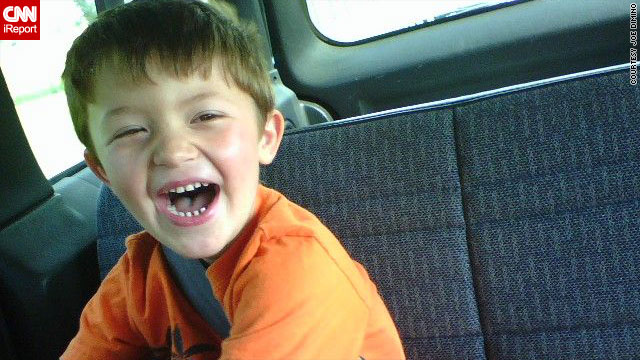
(CNN) -- The retraction of a controversial study that suggested a link between autism and a childhood vaccine has been little comfort to Joe Dimino.

Dimino, whose 5-year-old son has a type of autism, said it only made him more disillusioned with the medical establishment. While Dimino does not believe vaccines cause autism, he's not entirely convinced the shots are harmless.

The now-discredited study published in the Lancet in 1998 raised the possibility of a link between autism and the measles, mumps and rubella vaccine. The study had become a rallying point for many parents questioning the safety of childhood vaccinations.

"We feel like we're getting yanked around with this information -- how can you say something and say sorry 12 years later?" said Dimino, of Belton, Missouri. "That's the way it feels."

It left him feeling "more mistrustful of both 'communities,'" he wrote in his iReport.

Even without the vaccine-autism controversy, parents of children with autism live with a constant question that no scientist or doctor has been able to answer: Why?

Why did this happen to my child? What caused it? Will he or she get better?

"What happens with a large number of families is they get a diagnosis and there are no answers," said Patricia Robinson, who is a therapist for people with ADHD, autism and Asperger's syndrome. "And what I usually see is parents start really researching for information."

Dimino's son Miles had developmental delays that made his parents suspicious. He had trouble picking up objects. At age 1½, he crawled. He could barely spit out words or phrases and had trouble talking.

Has autism touched your life? Share your stories, thoughts

After learning that Miles is in the autism spectrum, Dimino and his wife browsed libraries, ordered countless books and spent hours online learning about autism. Watch Dimino's iReport submission

Maria Collazo of Belleville, New Jersey, spent hours on YouTube, watching everything she could about autism after learning that her daughter, Madison, had the condition.

She started wondering whether her hours at work, usage of the Blackberry and screen time during her pregnancy contributed to her daughter's condition.

"I questioned all things," she said. "Did I eat something I shouldn't have? Did I expose myself to something? You question yourself. You question and you don't know -- and it's like a state of mind."

It plunged her into depression and more questions.

Parents often blame themselves, Robinson said.

"They start looking back and wondering, 'Maybe I should've done something different. Maybe I should've had organic food. I should've eaten more vitamins. I should have not used pesticides. I shouldn't live near this area.'

"There's no evidence to say the child is autistic because the parents did something wrong during their pregnancy or early years," Robinson said. "It's common human nature to look for causes and it is hard on parents, because they do blame themselves."

The constant questioning is understandable, said Dr. Judith Miles, associate director of biomedical programs at the Thompson Center for Autism and Neurodevelopmental Disorders at the University of Missouri.

"The things that keep me awake at 2 a.m. are the things I'm puzzling over and things I don't have answers to," Miles said. "I think the reason that people look at vaccines is because of the time correspondence."

I think the reason that people look at vaccines is because of the time correspondence."

--Dr. Judith Miles, professor of pediatrics and pathology


The symptoms of autism become more apparent around the age of 2, which is around the same time toddlers receive their vaccinations. This has fueled theories that the childhood vaccinations cause the disorder, but scientists say the timing is coincidental.

"That temporally makes a lot of sense and that's why some families hold on to that," said Miles, a professor of pediatrics and pathology. "I assume it's a coping mechanism. We all have coping mechanisms."

She recalled one patient who repeatedly came to the clinic with one theory after another about why her child had autism.

"It's human nature to want to know why and some people do better on certainty than others," Miles said.

Collazo still wonders: "I wish I knew what it could've been. I really don't know." View Collazo's iReport

She does not believe vaccines contributed to Madison's autism and tries to look toward her progress.

Her 3-year-old daughter does not speak and hardly communicates. She cannot call Collazo "Mommy." She recently started using a sippy cup and began to clap. She also spins and bites herself to the point of bleeding and bangs her head against the wall.

"I have a lot of faith she will get better," said Collazo, an iReport contributor. "I also have to mentally prepare myself that she may not, but it doesn't matter as long as she reaches her personal goal, I'm happy. I know she knows who I am. She loves me -- that's really what's important."

While the Lancet retraction may not sway the parties entrenched in their beliefs, Cynthia Falardeau, an iReport contributor and parent of a child with autism, said parents have more in common that they realize.

"I know that the parents in both camps love their children dearly..." said the Vero Beach, Florida, resident. "As much as parents of children on the spectrum of autism are divided on the topic, they are united in their love for their children."

Monday, December 14, 2009

5 Behaviors of Manipulative People

Yahoo.com -Many of us like to think the best of people. We like to think that they shoot straight and are forthright in their intentions. We also like to believe that they will ask for what they want and not resort to crazy tactics to get it.

Unfortunately, however, there are times when we come across those who will do whatever it takes to get what they want…including manipulation. Being manipulated never feels good, but the worst part of manipulation is that often, we don’t even realize that it is happening.
Here are a few ways to know if someone is trying to manipulate you:

Buttering You Up: To get their way, manipulators will often make you feel good so that they can then ask you to do something that they want. The person may first compliment you or tell you what a wonderful job you did on something.
Making you feel good will, in their mind, make it difficult for you to say no…after all, you wouldn’t want to disappoint them or give them reason to think you didn’t deserve the compliment in the first place.
What you can do: Return the compliments and the niceties before saying no

Guilt: This doesn’t only pertain to Catholics and Jewish Mothers; guilt trips have been a successful manipulation tactic for centuries. The saddest part of this strategy is that the victims of this tactic succumb to the manipulators’ demands because they feel they HAVE to, not because they WANT to. In personal relationships, this sets up a co-dependency that is extremely unhealthy.
What you can do: Ask the individual if they want you to do something because you have to or because you want to. If they say they want you to want to do it, tell them that you don’t and that they are trying to force you into something you don’t feel comfortable with.

Broken Record: Probably the most obvious of formats is the broken record tactic. If a person asks you enough or pushes their agenda enough…constantly repeating the question or request over and over again…in slightly different ways, the victim will inevitably give in and give them what they want. Oye!
What you can do: Ask the individual what they don’t understand about the word “no.” Tell them that asking you over and over again isn’t going to change anything and that they are inappropriately over-stepping boundaries.

Selective Memory: This one gets me the most. You swear you have a conversation about a plan and everyone is on the same page, and then one day, the manipulator pretends to remember the conversation completely differently, if at all.
What you can do: Record your conversations…seriously! Okay, maybe not. At least have a witness that you can count on to back you up if the person pulls this shenanigan. Call them out on the fact that they conveniently change the game to fit their needs.

Bullying: If a person doesn’t get their way, they make you out to look or feel like the bad guy…like you are the wrong one.
What you can do: Be firm and tell them that their bullying tactics are inappropriate and unacceptable.

Keep your eyes open for these behaviors and continue to stand your ground to ensure that you aren’t a victim of manipulation. Have you seen any other types of manipulative behavior?

Wednesday, May 6, 2009

Class Notes: Suicide

Assessing self-destructive threats, gestures, and suicide potential refers to the degree of probability that a person may harm or attempt to kill themselves in the immediate or near future.

Suicidal impulse and suicidal behaviors constitute a response by a person whose coping mechanisms have failed. They are often desperate and feel ashamed. If the person has attempted suicide a medical evaluation and issues of medical stability supersede a clinical interview. Be calm and caring in your approach, establishing a setting conductive to eliciting the necessary information. Be reassuring in letting the person know how you plan to proceed regarding referral for medical evaluation if needed, and that you want to talk to them in order to understand what has been happening in their life which brought them to the point of suicidal intent and suicidal behavior.

SUICIDE ASSESMENT OUTLINE

1. Assessing suicidal ideation
A. Ask directly if they have thoughts of suicide
B. Are the thoughts pervasive or intermittent with a definite relationship to a given situation
C. Do they have a plan; if so, how extensive is their plan
D. Lethality of the means/method defined
E. Is there access to the identified means

2. Suicide attempt
A. Immediate referral for a medical evaluation for medical stability if method of attempt warrants it
1. Means, location, collaborator, rescuer, number of attempts
2. Thoroughness of plan and its implementation
3. Note signs of impairment and physical harm
4. Level of treatment required
*Intention, plan, method, means, lethality, and prior attempts

3. Risk factors
A. Intention and history
1. Recent/prior attempts or gestures
2. Direct or indirect communication of intent
3. Extensiveness of plan
4. Lethality of means
5. Access to means
6. Family history of suicidal behaviors

B. Demographics
1. Age (teens, middle age, and elderly are at highest risk)
2. Gender (males more often succeed at suicide attempts because of the lethality of means, but females make more attempts)
3. Homosexuals (additional stressors/lack of social supports)
4. Race (white)
5. Marital status (separated, widowed, divorced)

C. Helplessness
1. Encourage taking responsibility and making decisions.
2. Include the person when setting goals
3. Provide positive feedback for decision making
4. Facilitate development of realistic goals, limitations, and expectations
5. Identify areas of life and self-care in which person has control, as well as those areas where they lack control
6. Encourage expression of feelings related to areas of life outside person’s control, and let it go

4. Ineffective Development and/or Utilization of Resources and Social Supports
A. Resist desire to withdraw and isolate
B. Identify positive social/emotional supports that they have been avoiding
C. Make commitment to utilize resources and supports in some way everyday
D. Educate regarding role of isolation in maintaining depression
E. Impaired social interaction
1. Convey acceptance and positive regard in creating a safe, nonjudgmental environment
2. Identify people in their life and activities which were previously found pleasurable
3. Encourage utilization of support system
4. Encourage appropriate risk taking
5. Teach assertive communication
6. Give direct, nonjudgmental feedback regarding interaction with others
7. Offer alternative responses for dealing effectively with stress-provoking situations
8. Social skills training in how to approach others and participate in conversation
9. Role play and practice social skills for reinforcement and to increase insight for how they are perceived by others
10. Daily structure to include social interaction

5. Dysfunctional Grieving
A. Evaluate stage of grief that the person is at
B. Demonstrate care and empathy
C. Determine if the person has numerous unresolved losses
D. Encourage expression of feelings
E. Empty char technique or writing a letter to someone they have lose may provoke resolution process
F. Education person on stages of grief, and normalize appropriate feelings such as anger and guilt
G. Support person in letting go of their idealized perception so that they can accept the positive and negative aspects of their object of loss
H. Positively reinforce adaptive coping with experience of loss (talking into consideration ethnic and social differences)
I. Refer to a Grief Group
J. Explore the issue of spirituality and spiritual support

6. Low Self-Esteem
A. Focus on strengths and accomplishments
B. Avoid focus on past failures
C. Reframe failures or negative experiences as a normal part of learning process


Confronting and Understanding Suicide
Everyone is unique in the life crisis that they experience which can contribute or result in suicidal thoughts and behavior. However, there are 12 factors which we know often trigger suicidal thoughts:
_hopelessness/despair
_depression
_feeling overwhelmed or desperate
_life is out of control
_guilt
_loneliness
_chemical imbalance
_low self-esteem
_bad memories/fears
_recent loss
_seasonal anniversary such as a loss
_fatigue/sleep deprivation

Hopelessness And Despair
_no hope that things will ever change and be better
_no hope for the future
_no hope that there will ever be stability and wellness
_no hope that life goals will ever be met
_no hope that there will ever be a feeling of happiness or enthusiasm
_no hope that there will ever be a successful career
_no hope that there will ever be a successful relationship
_a feeling and belief that life is a miserable existence
_no point in being alive


Mood Disorders
Mood disorders are divided into Depressive Disorders and Bipolar Disorders. The defining feature of Bipolar Disorders is the experience of one or more manic or hypomanic episodes. This section will deal more simply with the objects and goals which are related to depressive symptoms and the objectives and goals related to manic symptoms.
According to the DSM IV (‘94), the central feature of mood disorders is disturbance of mood-manic or depressive. The range of the mood disorders include the following: Major Depression, Dysthymia, Seasonal Affective Disorder, Mania, Hypomania, Bipolar, and Cyclothymia.

Depression
Goals
1. Assess danger to self and others
2. Provide safe environment
3. Assess need for medication evaluation referral
4. Improved problem solving
5. Improved coping
6. Develop and encourage utilization of support system
7. Resolve issues of loss
8. Improved self-esteem
9. Cognitive restructuring
10. Improved eating and sleep patterns
11. Develop depression management program
12. Educate regarding medication compliance

Treatment Focus and Objectives
1. Suicide Risk Assessment
A. Thoughts of killing self, or persistent death wish
B. Do they have a plan?
C. Means to carry out the plan
D. Feelings of hopelessness
E. Past history of suicide attempts, or someone close to them that has attempted or committed suicide
F. Recent losses
G. Substance abuse
H. Poor impulse control
I. Poor judgment

During the interview it may be possible to decrease the level of emotional distress by validating the difficulty that they are experiencing, and encouraging them to vent their feelings and intentions of suicide. Talking about these issues, which have resulted in such despair and hopelessness, may not only decrease the level of distress, but may create some opportunities for intervention. As the person talks about their thoughts of suicide they can facilitate to begin to understand what a significant impact their suicide would have on family, friend, and others. Offering them validation and reassurance may increase their ambivalence.


Tuesday, May 5, 2009

Interviewing & Communication Class Journals

Week of 3/23/09:
- Awareness of your presence as a clinician -
What I gathered from class on Monday was that it seemed the main point was that you have to be honestly aware of yourself while in a session- be aware of your reaction, of the way you psychologically attend, and be aware of your body language. I found the SOLER acronym helpful in remembering appropriate body language. Sit squarely, open posture, lean forward, eye contact, and most importantly for what I may need to work on myself- relax! Then, of course, besides myself I need to remember to practice real clinical listening, and remember that the client’s body language will also speak in volumes, (whether supportive or not) to what they’re verbally saying.
Another key concept that I know will help me in the future would be to keep use of open-ended questions. This way I will expand the horizon for the client to develop their own path in discussion and further more helpful conversation.


Week of 3/30/09:
- Good qualities in a clinician -

I enjoyed writing the assignment on the Nancy Grace interviews I would so frequently watch. It’s good in the fact that now whatever program I end up seeing I’m comparing concepts learned in class to what I’m seeing on the screen. Meaningful concepts taken from class this week would include considering the context of a client- meaning relating the client’s current circumstances to their history, either mentally or physically, etc.- and realize again that you’re just seeing a snapshot image of your client. There’s a reason they’re there.
It’s good to look for themes while in session, and I’d want to keep in mind the idea that the client’s problem (or client themselves, depending on how you look at it) is like a puzzle- and the theme of your session would be the picture that you need to complete and put together.
The supportive presence is a very important skill to have in this field, obviously, and for the most part should come naturally. There needs to be a nice presence of genuineness, and acceptance, combined with your availability and possessing the quality of care and warmth.


Week of 4/6/09:
- Video Notes and Levels of Exploration & Evaluation -

The video we watched in class may be a bit outdated, but was generally very helpful. It’s good to see firsthand how a general session is eased into and handled by a clinician, and although it’s silly and comical, the one part that’s really going to stick in my mind will be the opening scene with the bad example of a clinician. He was so great in portraying how horrible a clinician could be- but to be THAT bad is a feat in itself, and it actually gives me confidence in knowing that I’d be at least better than he was.
A very important concept is the levels of exploration and evaluation- it lays the framework for being able to map out just what sort of progress is being made in sessions. The different criteria involving the “circles” (outer, middle, inner) help define how far along your relationship with your client has developed and how much progress you’ve made, relating the deepness in discussion.


Week of 4/13/09:
- Responding Emphatically -
It’s important to be aware of your own biases as a clinician. Being judgmental or holding a bias against a client could but that relationship in jeopardy. Being too pushy and not measuring the client’s readiness to explore could also hurt your progress. Allow yourself to be patient and use your good listening skills to help the client.
Listen for clues in what you’re clients saying through metaphors, like as we discussed, the “I feel like I have the world on my shoulders” line- ask the client to explain what they would mean by this. Keep in mind that providing that relief and support will outweigh the negative.
Do not enable the client in counseling, however. Don’t do all the work for them and have them rely on you as a messiah. Only they can help their own problems in the end.


Week of 4/20/09:
- Role playing and Client In-Take Evaluations -

Our role playing for the different levels helped demonstrate nicely what we need to know when it comes down to differentiating between them. My partner and I had the easiest level, Level 1, which reminds me back of that in-class video with the example of what NOT to do as a clinician, and we obviously had fun with ours. Some are tricky in deciphering which level you’re working with, but the importance is based on where it lies along in that scale.
We also studied our intake evaluations, and as I know I will in the near future take saying this back, I look forward to using this type of paperwork. I feel it’s a good way to keep yourself organized, and I’d personally feel more comforted if I had paperwork to refer to, it’s a great reference to helping any client, and obviously great for laying out the groundwork for client treatment.


Week of 4/27/09:
- Goal Setting, Healthy Relationships, and scales -

The treatment plans sheet handed out and filled in with notes in class helped me understand more about how any problem usually has something secondary following along with it as a symptom, thus why we usually use two goals on this sheet. It helps broaden my perspective that not every problem/diagnosis is as simple or cut-and-dry. As the in-take evaluations did the same, this sheet would be very useful in my own practice in that it would organize clear courses of action and lay out firm groundwork for progress with the client.
The Healthy Relationships handout I found really resourceful, not only as use in counseling, but also just applying to my own personal relationships with others. It points out good communicative skills and self-reflective thinking perspectives that would be helpful to keep in mind when I interact with others myself. As I pointed out in class and sound like a complete geek saying, I actually typed out the whole hand out and posted online on my blog I enjoyed it so much. (HERE)
A third thing covered in class I found resourceful is the use of scales in asking clients about their emotions or feelings. People may sometimes exaggerate their numbers in whatever way, but using that sort of relation is good to get an idea of intensity and is good at furthering conversation and getting feedback from the client.


Week of 5/4/09:
- Walking Away and Re-direction -

A good skill in helping clients along who escalate in whatever negative habits/behaviors they may have would be the “walking away” option, and it’s basically good common sense. A good practice to recommend to the client would be some self-soothing techniques, or encouragement of healthy and positive activities or relationships with others. It’s all about client-based therapy, helping the client change or modify their thought processes.
Also, I’ll want to remember that in escalating or sessions that become hostile, interrupting with a re-direction in the conversation or mood is a good option, and good for those moments when you may not know where to go with the session.

Friday, May 1, 2009

Casey Anthony Document Reference

Since there's a wealth of documents out there circulating detailing this case, I thought it'd be clever to place them all in one post.


I will keep updating/adding more in the near future!


Police Interviews:
Casey Anthony Part One Part Two
George Anthony - July 24
Amy Huizenga
Ricardo Morales
Brian Burner
Troy Brown
Brittany Schieber
George Anthony
Shirley Pleasea
Karen Angel
Anthony Lazaro
Jesse Grund Pt. 1 Pt. 2
Lee Anthony
Interview with Deputy Keithlin Cutcher, Dec 18, 2008
Interview with Deputy Keithlin Cutcher, Dec 19, 2008
Yuri Melich Interview on Jan 22, 2009
Sgt. John Allen Interview on Jan 22, 2009
Deputy Keith Williams Interview #1
Deputy Keith Williams Interview #2
Adrian Acevedo Interview on Dec 17, 2008
Alex Roberts Interview on Jan 6, 2009
Rosa Heisler Interview on Jan 21, 2009
Roy Kronk Interview #1 on Jan 6, 2009
Roy Kronk Interview #2 on Jan 6, 2009
Deputy Cain Administrative Investigation Reports
Carl Spare Interview on Jan 20 2009
Christopher Gibson Interview on Jan 6, 2009
Deputy Sheriff Elizabeth Collins
Deputy Sheriff Eduard Turso on Jan 8, 2009
Administrator Interviews In Deputy Cain Investigation


FBI George/Cindy:
CINDY: Part 1 2 3 4 5 6 7 8 9 10 11
GEORGE: Part 1 2 3 4 5 6 7


Audio Interviews:

George Anthony- July 24

Anthony Lazzaro - July 29

Lee Anthony - July 29

Jesse Grund - July 31 July 23


911 Phone Calls:
First 911 call by Caylee Marie Anthony's grandmother July 24, 2008
Second 911 call: My granddaughter is missing July 24, 2008
911 call: 'I've given you a month' to find Caylee July 25, 2008
Roy Kronk 911 Calls on Aug 11, 12, & 13


George Anthony Asks for Help:
Caylee's grandfather asks for help July 23, 2008


Jail Visitations:
See Images From Video Visitations
Patrick Bourgious July 24
Parents July 25 Morning Part 1 Part 2
Parents July 25 Afternoon Part 1 Part 2
Lee Anthony July 25 Part 1 Part 2 Part 3
Lee Anthony July 28 Part 1 Part 2
Parents July 30 Part 1 Part 2
George August 3 Part 1 Part 2


Casey / Lee Jail Calls:
Full phone call of Casey Anthony from jail July 25, 2008
"They are blaming me for stuff I didn't do" July 25, 2008
"I have no clue where Caylee is..." July 25, 2008
"If you had told them the truth..." July 25, 2008
"My gut feeling is (Caylee's) still OK." July 28, 2008
"It's something new every day" July 30, 2008
"How's the letter coming?"
July 31, 2008
Full call: Casey and Lee Anthony


Casey Surveillance:
SEE PURCHASES: Images Video
TARGET: Pics Video 1 Video 2
TARGET #2: Pics Video 1 Video 2
BANK: Pics Raw Video


Caylee Anthony Found:
REMAINS ID'd: Dr. G's Announcement
CLOSE-UP: Investigators Release Photos
RAW VIDEO: Sheriff's Office Bombshell
SEARCHING: Dec. 17 Search Scene Pics
911 CALL: Discovery Of Human Skull
EVIDENCE REMOVED: Video Images
REACTION: Sheriff Beary Leonard Padilla Tim Miller Legal Analyst Forensics Expert
AT SCENE: Ground Images Aerial Images Raw Aerial Video
CHAOS OUTSIDE HOUSE: Video Images


Witness Lists:
State's Complete Witness List
Defense's Complete Witness List


Documents Released:
Docs Released 4/31»
US Fish & WildLife report
FBI investigative reports

Docs Released 2/18»
Casey Anthony Journal Entry
Evidence Reports For Submissions To FBI
Supplemental Report Gives Witness Details
Sheriff's Office Evidence Property Forms
Sheriff's Office Crime Scene Reports

Docs Released 1/21»
Search Warrant for Anthony Home
Evidence From Anthony Car
Unedited Transcripts Of Kronk 911 Calls
FBI Documents From Investigation
Evidence Sent By County To FBI Supplemental County Investigation Report
Heart Sticker on Duct Tape
Reports from Friends & Witnesses
Motion to Inspect Crime Scene
State Motion
Motion to Strike Defense Witness List

-------------------------------------------------------------------------

Docs Released 9/23/08»
Calendar Noting Key Moments In Casey Anthony's Case
Transcript of Lee Anthony Interview, July 29, 2008
Transcript of interview with Amy Huizenga, July 23, 2008
Transcript of interview with Anthony Lazaro, July 22, 2008
Forensic Cell Phone Report for Cynthia Anthony's Cell Phone, Aug. 4, 2008
Text Messages taken from phone of Brittany Schieber
Text Messages from phone of Troy Brown, Collected On July 25, 2008
Transcript of interview with Troy Brown, July 25, 2008
Transcript of interview with Brian Burner, July 30, 2008
Transcript of interview with Brittany Schieber, July 24, 2008
Transcript of interview with Lauren Gibbs, Aug. 1, 2008
Transcript of interview with Ricardo Morales, July 25, 2008
Transcript of interview with William Waters, July 30, 2008
Transcript of interview with Jesse Grund, July 23, 2008


Released 9/26»
Transcript of interview with Karen Angel
Transcript of interview with Mike Kozak
Transcript of interview with Nicole Lett
Transcript of interview with Maria Kissh
Transcript of interview with Danny Colamarino
Transcript of interview with Chris Stutz
Transcript of interview with Jeff Hopkins
Transcript of interview with Jamie Realander
Transcript of interview with Matthew Crisp
Transcript of interview with Anthony Rusciano
Transcript of interview with Shirley Pleasea
Transcript of interview with Sean Daly
Transcript of interview with Jonathan Daly
Transcript of interview with Simon Burch
Transcript of interview with Gary Ridgeway
Transcript of interview with Brittany Schieber
Instant Message history between Casey and NYItaliano
Orange County Sheriff's Cell Telephone Reports
Orange County Sheriff's Office Documents
Computer Forensics Report of Casey Anthony's computer


Docs Released 11/26/08»
Part 1
Part 2
Part 3
Part 4
Part 5
Part 6
Part 7
Part 8
Part 9
Part 10
Part 11
Part 12
Part 13
Part 14
Part 15


Docs Released 11/18/08»

Application For Subpoena
Compel Calendar
Compel Crime Scenes
Compel Notes
Compel Reports
Compel Tips Gathered By Law Enforcement
Motion To Compel K9
Preserve Evidence
Sentinel And WFTV Motion To Intervene
Use Of Laptops In Jail

Docs Released 11/06/08»

Transcript: Cynthia Anthony, Aug. 4, 2008
Transcript: Dante Salati, Sept. 8, 2008
Transcript: George Anthony, Aug. 4, 2008
Transcript: George Anthony, July 24, 2008
Transcript: Amy Huizenga, July 23, 2008
Transcript: Jeffrey Hopkins, July 16, 2008
Transcript: Anthony Lazzaro, Sept. 18, 2008
Transcript: Ricardo Morales, July 5, 2008
CD Photos Taken At A Night Club
Department of Children and Families Files
George Anthony's ePass Records

Thursday, April 23, 2009

Good Interviewing Notes

From my Interviewing and Communication Skills (entry level human services) class:

Psychological Attending: Challenge to be there 100% for your client - understand the story

Remember SOLER:
Sit squarely
Open posture
Lean forward
Eye contact
Relax

Clinical listening: Paying attention to all of what the client's saying.
Non-verbal communication: The way you're sitting, listening. Mutual body language between the client and yourself.
Appearances: Dress appropriately, simple.
Body posture: Can tell mood of client by the way they sit- and vice versa (keep in mind gestures)
Facial Expressions, eye contact: Keep in mind how you YOURSELF react to what the client is telling you.

Behaviors: Everyone has reason for behaviors..
Feelings or affect: Are the client's feeligns coming across as they should? Does it agree with the context of their story or situation?
Context: Client's current circumstances, history, etc. relate client's situation to how behaving-->ex: Alzheimer's disease could be reason for client's depression (depression is a symptom of Alz. disease) -- Could me a medical or other psych. reason for original problem.

Meaning: How do the clients understand how everything has evolved?

Themes: Look for them. Like a puzzle, the theme is the complete picture of the puzzle you're piecing together.

Listening to the relationship: Show that you're not going to judge.
Supportive presence: Warmth and caring- clinicians genuinely care about clients & well being.

Wednesday, April 22, 2009

Healthy Relationships...

  • make people happier and ease stress
  • are realistic and flexible
  • mean sharing and talking
  • include self-care
  • use fair fighting techniques

Healthy relationships bring happiness and health to our lives. Studies show that people with healthy relationships really do have more happiness and less stress. There are basic ways to make relationships helathy, even though each one is different.. parents, siblings, friends, boyfriends, professors, roommates, and classmates.

Here are ten tips for healthy relationships:

1. Keep expectations realistic. No one can be everything we might want him or her to be. Sometimes people dissapoint us. It's not all-or-nothing, though. Healthy relationships mean accepting people as they are, and not trying to change them.

2. Talk with each other. It can't be said enough: communication is essential in healthy relationships! It means-

  • Take the time. Really be there.
  • Genuinely listen. Don't plan what to say next while you're trying to listen. Don't interrupt.
  • Listen with your ears and your heart. Sometimes people have emotional messages to share, and weave it into their words.
  • Ask questions. Ask if you think you may have missed the point. Ask friendly and appropriate questions. Ask for opinions, show your interest. Open the communication door.
  • Share information. Studies show that sharing information especially helps relationships begin. Be generous in sharing yourself, but don't overwhelm others with too much too soon.

3. Be flexible. Most of us try to keep people and situations just the way we like them to be. It's natural to feel apprehensive, even sad or angry, when people or things change and we're not ready for it. Healthy relationships mean change and growth are allowed!

4. Take care of you. You probably hope those arond you like you so you may try to please them. Don't forget to please yourself. Healthy relationships are mutual.

5. Be dependable. If you make plans with someone, follow through. If you have an assignment deadline, meet it. If you take on a responsibility, complete it. Healthy relationships are trustworthy.

6. Fight fair. Most relationships have some conflict. It only means you disagreea bout something, it doesn't mean you don't like each other! When you have a problem:

  • Negotiate a time to talk about it. Don't have difficult conversations when you are very angry or tired. Ask, "When is a good time to talk about something that is bothering me?" Healthy relationships are based on respect and have room for both.
  • Don't criticize. Attack the problem, not the other person. Open sensitive conversations with "I" statements; talk about how you struggle with the problem. Don't open with "you" statements; avoid blaming the other person for your thoughts and feelings. Healthy relationships don't blame.
  • Don't assign feelings or motives. Let others speak for themselves. Healthy relationships recognize each person's right to explain themselves.
  • Stay with the topic. Don't use a current concern as a reason to jump into everything that bothers you. Healthy relationships don't use ammunition from the past to fuel the present.
  • Say, "I'm sorry" when you're wrong. It goes a long way in making things right again. Healthy relationships can admit mistakes.
  • Don't assume things. When we feel close to someone it's easy to thinkw e know how he or she thinks and feels. We can be very wrong! Healthy relationships check things out.
  • Ask for help if you need it. Talk with someone who can help you find resolution- like your RA, a counselor, a teacher, a minister or even parents. Healthy relationships aren't afraid to ask for help.
  • There may not be a resolved ending. Be prepared to compromise or to disagree about some things. Healthy relationships don't demand conformity or perfect agreement.
  • Don't hold grudges. You don't have to accept anythigna nd everything, but don't hold grudges- they just drain your energy. Studies show that the moreo we see the best in others, the better healthy relationships get. Healthy relationships don't hold on to past hurts and misunderstandings.
  • The goal is for everyone to be a winner. Relationships with winners and losers don't last. Healthy relationships are between winners who seek answers to problems together.

7. Show your warmth. Studies tell us warmth is highly valued by most people in their relationships. Healthy relationships show emotional warmth!

8. Keep your life balanced. Other people help make our lives satisfying but they can't create that satisfaction for us. Only you can fill your life. Don't overload on activities, but do use your time at college to try new things. You'll have more oppurtunities to meet people and more to share with them. Healthy relationships aren't dependent!

9. It's a process. Sometimes it looks like everyone else on campus is confident and connected. Actually, most people feel just like you feel, wondering how to fit in and have good relationships. It takes time to meet people and get to know them, so make "small talk" .. Respond to others.. Smile.. Keep trying. Healthy relationships can be learned and practiced and keep getting better!

10. Be yourself! It's much easier and much more fun to be you than to pretend to be something or someone else. Sooner or later, it catches up anyway. Healthy relationships are made of real people, not images!