Showing posts with label brilliant. Show all posts

Monday, June 22, 2009

New Order Love

I've probably posted at least the first of these images previously, but it's worth repeating..


Saturday, April 25, 2009

Forgotten Franklin Letters Offer Glimpse Into U.S. History

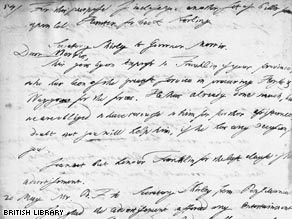
LONDON, England (CNN) -- An American professor doing research in London stumbled across a series of previously unknown letters written by, to, and about Benjamin Franklin, a stunning find that sheds new light on early U.S. history.


The collection of 47 letters are hand-written copies made 250 years ago, when Franklin lived in London. That they were filed under the copyist's name, not Franklin's, may explain why they were overlooked by historians until now, said a curator at the British Library, where the letters are held.

The find is reported in the April issue of the William & Mary Quarterly, a journal of early American history and culture.

The letters are important in large part because they offer a "wealth of new details" that affect modern understanding of Franklin, writes Alan Houston, the political science professor who discovered the letters in the spring of 2007.

They also raise the question of how many other documents remain waiting to be found on Franklin and his life.

Houston, a professor at the University of California at San Diego, discovered the letters on the last day of his last research trip to London, just before the library's closing time.

"The first item was a letter from Benjamin Franklin to the secretary of the governor of Maryland, and I looked at it and I started to read, and I thought, 'This doesn't look familiar,'" Houston told CNN. "I've read everything Franklin ever wrote."

Houston said he quickly began to realize he had uncovered something previously unknown to historians.

"I swear, I just about shot through the ceiling I was so excited," he said. "It's like finding a treasure chest."

Houston had been working at the time on a book on Franklin, "Benjamin Franklin and the Politics of Improvement," published last year.

The letters cover Franklin's success in dealing with British Gen. Edward Braddock, who had been sent to Pennsylvania in 1755 to defeat the French at Fort Duquesne, in modern-day Pittsburgh.

The march to retake the fort was part of the French and British battle for control of the western lands in the colonies, part of a larger struggle for control of North America, Houston said.

The problem was that Braddock was given no horses or wagons when he arrived in America -- no means of transport for him and his 2,000 redcoats. Braddock started to blame his hosts, so Franklin -- the Pennsylvania assembly's leading politician -- stepped in to help.

Franklin went all over Pennsylvania trying to persuade farmers to lend their horses and wagons to Braddock and his men. It wasn't easy, because the farmers were tough negotiators who were also anxious and suspicious of the effort.

Eventually, Franklin managed to get the farmers to agree, and within weeks, Braddock and his men were on the march.

Braddock suffered a devastating defeat before he even reached the fort, however, when a much smaller contingent of French and Indian soldiers surprised the British. They killed Braddock and about 1,000 of his men.

Despite the defeat, Franklin's success -- in what became known as "the wagon affair" -- highlighted his skill as a colonial leader, Houston said.

When Franklin was sent to London in 1757 as a representative of the assembly, he brought with him a collection of letters detailing that success. It was proof of his political value to Great Britain and that the assembly's loyalties had been on the right side.

This collection of letters, which Franklin referred to in his autobiography as his "quire book," was never found, however -- until now.

Houston said he believes the documents he read at the British Library are copies of that collection. They were made by Thomas Birch, an industrious and obsessive transcriber of historical documents who copied anything he could get his hands on.

"There was a vogue. It was very common for letters to be copied," said Matthew Shaw, curator of the U.S. collections at the British Library. "Birch was very well known for being a copyist."

Birch and Franklin were friends in London, both members of the Royal Society, and Houston said he believes the copies were made sometime between 1757 and 1758.

"Birch undoubtedly found Franklin's quire book captivating, and he appears to have copied anything that remotely interested him," Houston writes in the journal.

Also, Braddock's campaign and defeat were widely discussed in London, and "Birch may have wanted to capture a crucial moment in the life of the (Royal) society's most famous American member."

Birch's transcripts were filed in the British Library as "Copies of Letters relating to the March of General Braddock." They form part of the massive Birch Collection containing the hundreds of volumes of his copies that Birch bequeathed to the library on his death, said Shaw.

They weren't properly catalogued until the early 1970s, Shaw said, which is largely why they haven't been used by scholars.

"It's the first time they've really been shared with a wider audience," Shaw told CNN. "We're very pleased."

Friday, April 24, 2009

A CNN Psychological Piece


Teen tries to quiet the voices caused by schizophrenia


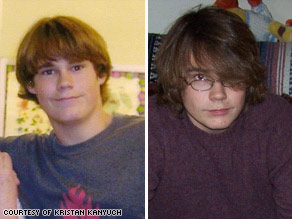
(CNN) -- The intrusive voices popped into William "Bill" Garrett's head. "They're coming for you," the voices told the 18-year-old. "Find somewhere to hide; they're going to get you."



They told the Johns Hopkins University freshman that his father had poisoned the family dog, his sister had injected crystal methamphetamine into his pet lizard and his grandmother had put human body parts into his food.

As schizophrenia took hold, the Maryland teenager became lost within his own mind and had to leave college after winning a full, four-year scholarship.

Garrett's experience echoes the teenage years of Nathaniel Ayers, a promising string bass player whose musical training at the Juilliard School was cut short by schizophrenia, a brain disorder that blurs a person's ability to distinguish between reality and delusions.

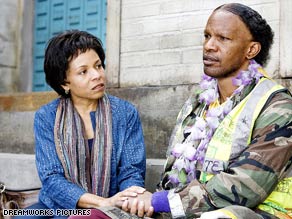
Ayers became homeless and played Beethoven pieces on a broken violin in the streets of Los Angeles, California. His struggles with schizophrenia and his friendship with a Los Angeles Times columnist inspired the movie "The Soloist," which releases Friday.

His sister, Jennifer Ayers-Moore, hopes the movie will raise awareness about schizophrenia and has established the Nathaniel Anthony Ayers Foundation for the artistically gifted mentally ill.

"I know there are thousands of Nathaniels, and they deserve a chance, too," said Ayers-Moore, an Atlanta-based social worker.


Teen interrupted
Schizophrenia is the result of disrupted brain development. Males typically get symptoms during their teens or early 20s, as Ayers and Garrett did.

"It's a critical time for the brain," said Dr. Jon McClellan, the medical director of the Child Study and Treatment Center at Seattle Children's Hospital. "It's the CEO part of the brain that pays attention, makes decisions and filters. The prefrontal cortex, that's the last area of the brain to develop. As that area comes online, that's when the illness presents."

In high school, Garrett won elected offices in student government and headed the lacrosse and cross country teams. A gifted student, he wanted to study political science and biology at Hopkins.

At home, he cooked family dinners, helped his little sister with homework, and surprised his mother with pancakes on her birthday.

"People likened him to the perfect child before he got sick," said his mother, Kristan Kanyuch.

In 2007, the unusual behaviors started. He slept a lot. He emptied an entire can of bug spray in his bedroom. When he came home for a weekend from college, he pointed to a blister on his hand that had formed from playing lacrosse.

"Look, I have gangrene," he said. "My hand is going to rot." Then he tried to cut off his hand with a paring knife.

His family stopped him and took him to an emergency room for a psych evaluation, but Garrett refused to wait and left.

A week later, Kanyuch got a call from the university. Her son was failing every class. When confronted, Garrett looked at the F's and calmly replied, "I'm not failing anything."

In the 1970s, Ayers-Moore saw the symptoms when her family picked her brother up from Juilliard to head home to Cleveland, Ohio, for summer.

"The look in his eye was so different," she said. "It was like you could see into his soul, he could look into yours. It sort of startled me a little bit. I didn't know what to say to him. On the way from New York, I pretended I was asleep. I didn't know what to say."


Paranoid schizophrenia
About three decades later, Nickole Kanyuch, 15, watched a similar scenario unfold as her brother, Garrett, struggled with paranoid schizophrenia and obsessive compulsive disorder.

"I watched the big brother who I had looked up to all my life fall apart and become someone entirely new," she said. "The boy who was destined for greatness, who worked long and hard for 12 years to lead a successful life, was destroyed in a mere six months."

Garrett, who had once organized his 600 books by the Dewey Decimal system, could hardly read two sentences. The voices in his head drowned out the words on the page, he told his mother.

Garrett, who color coordinated the clothes inside his closet, could no longer groom himself or shower. The voices told him the shampoo and soap were poisoned.

Kristan Kanyuch quit her financial planning job to take care of him. Despite taking medicine, Garrett's health fluctuated. One day he was fine; the next, he threatened to kill the neighbors. Frustrated and facing mounting debt, Kanyuch sought help.

She joined a mental health support group. At one session, she was told to follow simple instructions from a counselor. Meanwhile, 10 people who stood around her talked at once. While the chorus of voices drowned out the instructions, she realized this was how her son lived every day.

That night, Kanyuch hugged her son. "You have to be the most courageous person. You wake up every day," she told him.

"That's when he explained to me the reason he sleeps," Kanyuch said. "He doesn't hear the voices. He doesn't hear them telling him he's fat, stupid, there's a conspiracy. It's a break for him to sleep."

Although no one knows where these voices originated, they could be triggered by wiring problems in the brain, said McClellan, who researches adolescent psychiatry. One theory is schizophrenia causes difficulty distinguishing thoughts from their outside experiences, "so they experience internal thoughts and perceptions as voices," he said.


Recovery
Garrett has been a subject in two research programs searching for better schizophrenia treatments. His condition fluctuated and for months, he was on suicide watch.

Schizophrenia is a difficult disorder to treat, because one medication that soothes one patient can make another psychotic.

"Medication or dosages can't be matched absolutely with the individual, so there is some of that trial and error," said Dr. Thomas Bornemann, director of the Carter Center's Mental Health Program.

Garrett tried many drugs. Some made him drowsy, others volatile and one drug made him gain 75 pounds. Severe side effects often cause patients to stop taking medication.

For now, doctors seem to have found one that helps Garrett. Since March, Garrett has been at a Maryland research center that looks into the relationship between metabolism, tobacco and schizophrenia.

After a violent visit in August, Garrett, 21, had not been home until Easter. During the recent visit, he played basketball, Yahtzee and Wii bowling with his family.

"He was able to carry on a conversation and play card games," Kanyuch said. "He was interacting."

At home, surrounded by reminders all his past achievements, Garrett said: "Mom, I was on the top of the world. Now I'm in the gutter."

His mother disagreed: "Look at it as an opportunity."

"What?" he said.

"It's not an opportunity everyone would jump at," she told Garrett. "But as you rehabilitate, as you grow an insight into your illness, there may be things you deal with forever. But you've had significant experiences that you may be able to use to help other people. There's no place where insight and advocacy [for mental health] is needed more than in politics, which is what you wanted to do."

A life with schizophrenia won't easy, but some with the disorder have graduated from college, earned doctorates and lead enriched lives, she told Garrett.

"He doesn't understand the courage he has."