Showing posts with label psychology. Show all posts

Wednesday, October 6, 2010

"Virgin" Bikini Waxing Now Popular for Pre-Teen Girls

Disgusting..
Gothamist- MSNBC has a long trend-piece about how increasingly younger girls are getting bikini waxing.

How young? Well, Wanda Stawczyk, who runs Wanda's European Skin Care on West 57th Street, offers discounts for clients as young as 8, and she says pre-teen business is booming, telling the Post that "in 10 years waxing children will be like taking them to the dentist or putting braces on their teeth." Her company’s website says it all:

"Virgin-waxing for children 8 years old and up who have never shaved before. Virgin hair can be waxed so successfully that growth can be permanently stopped in just 2 to 6 sessions. Save your child a lifetime of waxing... and put the money in the bank for her college education instead

And leave it to the Post to enlighten those readers “interested in whether there's even hair to wax. Pre-puberty hair, called ‘velus,’ is a fine, light pigmented hair. When a child hits puberty - which these days is happening to kids as young as 9 - the hair coarsens and darkens.” And must be torn out by the roots if you don't want the other girls to laugh at you!

Of course some people, like child psychiatrist Candida Fink, think “this is another example of how younger and younger girls are being sexualized and objectified.” And Dr. Diane Levin, co-author of the book So Sexy So Soon, tells MSNBC that “girls are learning the worst possible lessons about body image and body hair. Keep your bodies like little girls’ because that’s what men like.” Anyway, better you hear about all this here, in a safe place, instead of from your creepy co-worker. Or did we just become your creepy co-worker?

Friday, May 8, 2009

Cat Parasite Affects Everything We Feel and Do

ABCNews:
"The parasite, Toxoplasma gondii, has been transmitted indirectly from cats to roughly half the people on the planet, and it has been shown to affect human personalities in different ways...


Research has shown that women who are infected with the parasite tend to be warm, outgoing and attentive to others, while infected men tend to be less intelligent and probably a bit boring. But both men and women who are infected are more prone to feeling guilty and insecure." (ARTICLE)

Friday, April 24, 2009

A CNN Psychological Piece


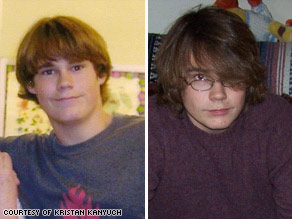
Teen tries to quiet the voices caused by schizophrenia


(CNN) -- The intrusive voices popped into William "Bill" Garrett's head. "They're coming for you," the voices told the 18-year-old. "Find somewhere to hide; they're going to get you."


They told the Johns Hopkins University freshman that his father had poisoned the family dog, his sister had injected crystal methamphetamine into his pet lizard and his grandmother had put human body parts into his food.

As schizophrenia took hold, the Maryland teenager became lost within his own mind and had to leave college after winning a full, four-year scholarship.

Garrett's experience echoes the teenage years of Nathaniel Ayers, a promising string bass player whose musical training at the Juilliard School was cut short by schizophrenia, a brain disorder that blurs a person's ability to distinguish between reality and delusions.

Ayers became homeless and played Beethoven pieces on a broken violin in the streets of Los Angeles, California. His struggles with schizophrenia and his friendship with a Los Angeles Times columnist inspired the movie "The Soloist," which releases Friday.

His sister, Jennifer Ayers-Moore, hopes the movie will raise awareness about schizophrenia and has established the Nathaniel Anthony Ayers Foundation for the artistically gifted mentally ill.

"I know there are thousands of Nathaniels, and they deserve a chance, too," said Ayers-Moore, an Atlanta-based social worker.


Teen interrupted
Schizophrenia is the result of disrupted brain development. Males typically get symptoms during their teens or early 20s, as Ayers and Garrett did.

"It's a critical time for the brain," said Dr. Jon McClellan, the medical director of the Child Study and Treatment Center at Seattle Children's Hospital. "It's the CEO part of the brain that pays attention, makes decisions and filters. The prefrontal cortex, that's the last area of the brain to develop. As that area comes online, that's when the illness presents."

In high school, Garrett won elected offices in student government and headed the lacrosse and cross country teams. A gifted student, he wanted to study political science and biology at Hopkins.

At home, he cooked family dinners, helped his little sister with homework, and surprised his mother with pancakes on her birthday.

"People likened him to the perfect child before he got sick," said his mother, Kristan Kanyuch.

In 2007, the unusual behaviors started. He slept a lot. He emptied an entire can of bug spray in his bedroom. When he came home for a weekend from college, he pointed to a blister on his hand that had formed from playing lacrosse.

"Look, I have gangrene," he said. "My hand is going to rot." Then he tried to cut off his hand with a paring knife.

His family stopped him and took him to an emergency room for a psych evaluation, but Garrett refused to wait and left.

A week later, Kanyuch got a call from the university. Her son was failing every class. When confronted, Garrett looked at the F's and calmly replied, "I'm not failing anything."

In the 1970s, Ayers-Moore saw the symptoms when her family picked her brother up from Juilliard to head home to Cleveland, Ohio, for summer.

"The look in his eye was so different," she said. "It was like you could see into his soul, he could look into yours. It sort of startled me a little bit. I didn't know what to say to him. On the way from New York, I pretended I was asleep. I didn't know what to say."


Paranoid schizophrenia
About three decades later, Nickole Kanyuch, 15, watched a similar scenario unfold as her brother, Garrett, struggled with paranoid schizophrenia and obsessive compulsive disorder.

"I watched the big brother who I had looked up to all my life fall apart and become someone entirely new," she said. "The boy who was destined for greatness, who worked long and hard for 12 years to lead a successful life, was destroyed in a mere six months."

Garrett, who had once organized his 600 books by the Dewey Decimal system, could hardly read two sentences. The voices in his head drowned out the words on the page, he told his mother.

Garrett, who color coordinated the clothes inside his closet, could no longer groom himself or shower. The voices told him the shampoo and soap were poisoned.

Kristan Kanyuch quit her financial planning job to take care of him. Despite taking medicine, Garrett's health fluctuated. One day he was fine; the next, he threatened to kill the neighbors. Frustrated and facing mounting debt, Kanyuch sought help.

She joined a mental health support group. At one session, she was told to follow simple instructions from a counselor. Meanwhile, 10 people who stood around her talked at once. While the chorus of voices drowned out the instructions, she realized this was how her son lived every day.

That night, Kanyuch hugged her son. "You have to be the most courageous person. You wake up every day," she told him.

"That's when he explained to me the reason he sleeps," Kanyuch said. "He doesn't hear the voices. He doesn't hear them telling him he's fat, stupid, there's a conspiracy. It's a break for him to sleep."

Although no one knows where these voices originated, they could be triggered by wiring problems in the brain, said McClellan, who researches adolescent psychiatry. One theory is schizophrenia causes difficulty distinguishing thoughts from their outside experiences, "so they experience internal thoughts and perceptions as voices," he said.


Recovery
Garrett has been a subject in two research programs searching for better schizophrenia treatments. His condition fluctuated and for months, he was on suicide watch.

Schizophrenia is a difficult disorder to treat, because one medication that soothes one patient can make another psychotic.

"Medication or dosages can't be matched absolutely with the individual, so there is some of that trial and error," said Dr. Thomas Bornemann, director of the Carter Center's Mental Health Program.

Garrett tried many drugs. Some made him drowsy, others volatile and one drug made him gain 75 pounds. Severe side effects often cause patients to stop taking medication.

For now, doctors seem to have found one that helps Garrett. Since March, Garrett has been at a Maryland research center that looks into the relationship between metabolism, tobacco and schizophrenia.

After a violent visit in August, Garrett, 21, had not been home until Easter. During the recent visit, he played basketball, Yahtzee and Wii bowling with his family.

"He was able to carry on a conversation and play card games," Kanyuch said. "He was interacting."

At home, surrounded by reminders all his past achievements, Garrett said: "Mom, I was on the top of the world. Now I'm in the gutter."

His mother disagreed: "Look at it as an opportunity."

"What?" he said.

"It's not an opportunity everyone would jump at," she told Garrett. "But as you rehabilitate, as you grow an insight into your illness, there may be things you deal with forever. But you've had significant experiences that you may be able to use to help other people. There's no place where insight and advocacy [for mental health] is needed more than in politics, which is what you wanted to do."

A life with schizophrenia won't easy, but some with the disorder have graduated from college, earned doctorates and lead enriched lives, she told Garrett.

"He doesn't understand the courage he has."

Wednesday, April 22, 2009

Healthy Relationships...

  • make people happier and ease stress
  • are realistic and flexible
  • mean sharing and talking
  • include self-care
  • use fair fighting techniques

Healthy relationships bring happiness and health to our lives. Studies show that people with healthy relationships really do have more happiness and less stress. There are basic ways to make relationships helathy, even though each one is different.. parents, siblings, friends, boyfriends, professors, roommates, and classmates.

Here are ten tips for healthy relationships:

1. Keep expectations realistic. No one can be everything we might want him or her to be. Sometimes people dissapoint us. It's not all-or-nothing, though. Healthy relationships mean accepting people as they are, and not trying to change them.

2. Talk with each other. It can't be said enough: communication is essential in healthy relationships! It means-

  • Take the time. Really be there.
  • Genuinely listen. Don't plan what to say next while you're trying to listen. Don't interrupt.
  • Listen with your ears and your heart. Sometimes people have emotional messages to share, and weave it into their words.
  • Ask questions. Ask if you think you may have missed the point. Ask friendly and appropriate questions. Ask for opinions, show your interest. Open the communication door.
  • Share information. Studies show that sharing information especially helps relationships begin. Be generous in sharing yourself, but don't overwhelm others with too much too soon.

3. Be flexible. Most of us try to keep people and situations just the way we like them to be. It's natural to feel apprehensive, even sad or angry, when people or things change and we're not ready for it. Healthy relationships mean change and growth are allowed!

4. Take care of you. You probably hope those arond you like you so you may try to please them. Don't forget to please yourself. Healthy relationships are mutual.

5. Be dependable. If you make plans with someone, follow through. If you have an assignment deadline, meet it. If you take on a responsibility, complete it. Healthy relationships are trustworthy.

6. Fight fair. Most relationships have some conflict. It only means you disagreea bout something, it doesn't mean you don't like each other! When you have a problem:

  • Negotiate a time to talk about it. Don't have difficult conversations when you are very angry or tired. Ask, "When is a good time to talk about something that is bothering me?" Healthy relationships are based on respect and have room for both.
  • Don't criticize. Attack the problem, not the other person. Open sensitive conversations with "I" statements; talk about how you struggle with the problem. Don't open with "you" statements; avoid blaming the other person for your thoughts and feelings. Healthy relationships don't blame.
  • Don't assign feelings or motives. Let others speak for themselves. Healthy relationships recognize each person's right to explain themselves.
  • Stay with the topic. Don't use a current concern as a reason to jump into everything that bothers you. Healthy relationships don't use ammunition from the past to fuel the present.
  • Say, "I'm sorry" when you're wrong. It goes a long way in making things right again. Healthy relationships can admit mistakes.
  • Don't assume things. When we feel close to someone it's easy to thinkw e know how he or she thinks and feels. We can be very wrong! Healthy relationships check things out.
  • Ask for help if you need it. Talk with someone who can help you find resolution- like your RA, a counselor, a teacher, a minister or even parents. Healthy relationships aren't afraid to ask for help.
  • There may not be a resolved ending. Be prepared to compromise or to disagree about some things. Healthy relationships don't demand conformity or perfect agreement.
  • Don't hold grudges. You don't have to accept anythigna nd everything, but don't hold grudges- they just drain your energy. Studies show that the moreo we see the best in others, the better healthy relationships get. Healthy relationships don't hold on to past hurts and misunderstandings.
  • The goal is for everyone to be a winner. Relationships with winners and losers don't last. Healthy relationships are between winners who seek answers to problems together.

7. Show your warmth. Studies tell us warmth is highly valued by most people in their relationships. Healthy relationships show emotional warmth!

8. Keep your life balanced. Other people help make our lives satisfying but they can't create that satisfaction for us. Only you can fill your life. Don't overload on activities, but do use your time at college to try new things. You'll have more oppurtunities to meet people and more to share with them. Healthy relationships aren't dependent!

9. It's a process. Sometimes it looks like everyone else on campus is confident and connected. Actually, most people feel just like you feel, wondering how to fit in and have good relationships. It takes time to meet people and get to know them, so make "small talk" .. Respond to others.. Smile.. Keep trying. Healthy relationships can be learned and practiced and keep getting better!

10. Be yourself! It's much easier and much more fun to be you than to pretend to be something or someone else. Sooner or later, it catches up anyway. Healthy relationships are made of real people, not images!