Showing posts with label hope. Show all posts

Friday, December 17, 2010

Brittany Smith Found Alive

(CNN) -- A missing Virginia girl and her alleged abductor were panhandling outside a San Francisco supermarket when someone nearby spotted them on Friday and alerted law enforcement, police said.

Brittany Mae Smith, 12 -- for whom police have been searching since Monday -- was found Friday afternoon, as was 32-year-old Jeffrey Scott Easley.

Easley is a "very good suspect" in the murder of Tina Smith -- his girlfriend and Brittany's mother -- who was found dead at her Salem, Virginia, home last Monday, Roanoke County, Virginia, Police Chief Ray Lavinder said Saturday.

Easley and Brittany Smith left Virginia early last Saturday or late on Friday, December 3 -- the same day that the girl's mother was killed, according to Lavinder.

A surveillance video from December 3 shows the pair shopping for a blue domed tent at a Walmart in Salem, Virginia.

A similar tent was found within walking distance of the Safeway store in northern California, where a witness saw Easley and Brittany Smith on Friday. The tipster recognized the pair after watching broadcast report's about the case on HLN's "Nancy Grace."

Lavinder said Saturday that he believes the girl and her alleged abductor were asking for money and holding up a cardboard sign when they were spotted.

Police were called, and the two were found shortly thereafter outside the store, more than 2,300 miles from where the girl was reported missing four days earlier, Lavinder said Friday. Police in San Francisco contacted their counterparts in Virginia with the news.

San Francisco Police Officer Albie Esparza said Brittany was turned over to California's Child Protective Services division after she was found. She has no visible injuries, has been in touch with family members and should return soon to Virginia, according to Lavinder. Easley did not resist arrest, he added.

"It's a fantastic sense of relief, and I know in my heart that it's due to information that you folks put out," Lavinder said Friday, thanking the media. "It's a party atmosphere, believe me."

Authorities found Easley's car relatively early in the manhunt. Lavinder said Saturday that authorities had located a silver 2005 Dodge Neon four-door sedan with Virginia tags that belonged to Tina Smith in a parking lot adjacent to San Francisco International Airport.

He said he believed the two had driven across country together, but he did not know when they arrived in California.

Police issued an Amber Alert for Brittany on Monday after finding the body of Tina Smith, 41, after her co-workers called to express concern that she hadn't shown up for work. Authorities in Florida and Alabama followed suit in subsequent days and notices went out to law enforcement nationwide .

Until Friday, Lavinder said the last known sighting of Easley and Brittany Smith was in December in the Salem, Virginia, Walmart.

The chief said Saturday that four Roanoke County detectives were heading to San Francisco, to help bring back Brittany Smith and to deal with Easley. Lavinder said he hoped "to get information back from them in the next 24 hours," though the earliest Easley could be extradited to Virginia is Monday, when California courts are back in session.

He could head east relatively soon if he waived extradition, or the process could be delayed for weeks if he contested the return.

Prior to his arrest, Easley was wanted for credit card theft, credit card fraud and abduction. Lavinder said that, "we are concentrating most of our efforts ... on the homicide investigation."

The chief has said Easley met Tina Smith online this summer, then moved into the family home in October. Authorities said they do not know if the girl went willingly with Easley.

Back east, the girl's great aunt told HLN's Nancy Grace on Friday night that Brittany already had talked to her father, and that there was widespread relief and joy from Salem to South Boston, Virginia, where many relatives live.

"Everybody here is just elated," said Lois Choquette, who is the late Tina Smith's aunt. "It's been a terrible thing, but we are just so thankful."

Wednesday, November 10, 2010

Help Find Doreen Jane Vincent


Doreen Jane Vincent
Case Type: Endangered Missing
DOB: Sep 30, 1975 Sex: Female
Missing Date: Jun 15, 1988 Race: White
Age Now: 35 Height: 5'4" (163 cm)
Missing City: WALLINGFORD Weight: 110 lbs (50 kg)
Missing State : CT Hair Color: Brown
Missing Country: United States Eye Color: Hazel
Case Number: NCMC711414
Circumstances: Doreen's photo is shown age-progressed to 32 years. She was last seen leaving her home on the evening of June 15, 1988 and has not been heard from since. She has double pierced ears and a small beauty mark on her abdomen.

Help find April Dawn Pennington


April Dawn Pennington

Case Type: Endangered Missing
DOB: Aug 22, 1980 Sex: Female
Missing Date: May 29, 1996 Race: White
Age Now: 30 Height: 5'2" (157 cm)
Missing City: UNCASVILLE Weight: 100 lbs (45 kg)
Missing State : CT Hair Color: Brown
Missing Country: United States Eye Color: Hazel
Case Number: NCMC819031
Circumstances: April's photo is shown age-progressed to age 26. She has not been seen or heard from since she left her home in the middle of the night.

Thursday, October 14, 2010

Boyfriend's Arrest Cracks Cold Case, Police Say

Back in April I posted about a cold case: Teen was Snatched from Street, Killed
Well, guess what
!
New York (CNN) -- More than a decade after high school sophomore Leah Freeman vanished from the street near her home in Coquille, Oregon, police say they have found her killer.

A grand jury concluded it was her boyfriend, after police looked into the cold case a second time. More than 100 people testified before the grand jury, including the boyfriend's best friend, said Coquille Police Chief Mark Dannels.

Acting on the grand jury's indictment, police arrested the boyfriend, Nick McGuffin, on August 24 and charged him with murder.

Police have not disclosed details of what evidence led to his arrest, and McGuffin is being held on $2 million bail. McGuffin, who is now 28, is scheduled to appear in court on Thursday.

McGuffin's attorney, Bob McCrea, has not commented. His office is still reviewing all the evidence presented to the grand jury.

In January, a cold case team of more than 20 members from several police jurisdictions was appointed to look into the case.

"We re-examined the evidence with newer technologies now available to us, and certain witnesses, due to maturity and time, have been able to come forward and provide more information about that night," Dannels said.

Leah, who was 15, was walking home from her best friend's house just as it was getting dark on June 28, 2000. She vanished, leaving one tennis shoe behind on the sidewalk, according to police and news accounts at the time.

A week after she disappeared, Leah's missing shoe was found along a dirt road on the outskirts of Fairview, a neighboring town just a few miles away. A month after that, Leah's body was found in the woods beyond the dirt road.

Leah had been living with her grandparents, older sister Denise and her mother, Cory Courtright, who was struggling to raise two daughters on her own.

"Words cannot express how relieved I am that they finally arrested Nick," Courtright said.

She recalled the last time she saw her daughter alive. Leah and McGuffin were washing his car and horsing around with a wet sponge. It was about 4 p.m., Courtright recalled, and her daughter seemed happy and carefree.

Leah and McGuffin left, and he dropped her off at the home of her best friend, Sherrie Mitchell. He was to return and pick her up at 9 p.m., Courtright said.

She said she later learned from the Mitchells and from police that the two friends had a spat because Sherrie's mother wouldn't let her go jogging with Leah after dark. Leah overheard the argument and then the two girls argued. Leah angrily left the Mitchell home before her boyfriend arrived to pick her up.

The Mitchells told Courtright that McGuffin came by at 9 p.m. to pick up Leah but left when she wasn't there. Courtright said McGuffin returned to the Mitchell home an hour later and called her, asking if Leah had come home.

Courtright reported her daughter missing the next morning. When police tracked McGuffin down, he was at the home of a friend, where they'd been partying the night before, Dannels said. The front porch was covered with empty beer cans and litter, Dannels said.

McGuffin told police he'd searched for his girlfriend the previous night but couldn't find her.

Police executed search warrants on the home of McGuffin's family and their vehicles. They discovered that the trunk of the car he drove had been recently gutted. His father told police there had been a fuel leak so the trunk liner, the spare tire, jack and tire iron had to be removed, Dannels told CNN in March.

Police also learned from neighbors that the family held a bonfire in their yard the day after Leah disappeared.

Forensic testing showed blood spatter on the bottom of the shoe found in Fairview. The sample matched Leah's blood, and experts determined a pattern consistent with medium- to high-velocity blood spatter, which can happen when an object -- a bullet or a car, for example -- hits a person while traveling at high speed.

Saturday, October 9, 2010

Rally to Keep Hasanni Campbell Case Alive

SFGate.com- Even the most stalwart volunteers in the search for Hasanni Campbell fear they will never find any trace of the adorable 5-year-old with cerebral palsy who disappeared one year ago today.

"We pretty much know we are searching for a body, but we still need to find him," said Sherri-Lyn Miller, founder of Citizens for the Lost, a civilian search and rescue organization.

The group, which began looking for Hasanni the day he went missing, may have to face the probability that the young boy has perished, but its primary focus is to ensure Campbell's case remains alive and active.

The group has scheduled a rally outside the Alameda County district attorney's office today at 2 p.m. to renew public interest in the case. Miller and Gail Steele, an Alameda County supervisor, are scheduled to meet with the district attorney's office afterward, Miller said.

A lot has happened in the year since Hasanni disappeared - but unfortunately, little has changed with the investigation to find him.

Sadly, neither police nor volunteers are any closer to knowing what happened to the youngster on Aug. 10, 2009. An extensive search conducted by city, county and federal authorities who canvassed the community with canines yielded no sign of him.

His foster father, Louis Ross, maintains that the boy was last seen inside his car parked in the Rockridge neighborhood. Ross and his then-fiancee, Jennifer Campbell, the boy's aunt, issued tearful pleas for his return. Then police disclosed that Ross had sent Campbell expletive-laden text messages, threatening to abandon Hasanni on a BART train platform.

Ross and Campbell were arrested Aug. 27 but later released due to a lack of evidence.

The couple gave birth to their first child in November and moved to Arizona from the Bay Area last February, authorities said. Since then, the couple have split and Ross moved to Maryland to be closer to his own family members.

Miller and others, meanwhile, continue the search.

"I made a promise in the beginning that I wasn't going to stop until we found Hasanni," Miller said.

It has been a year to the day since Miller contacted the Oakland police and asked for a printout of the flyer posted to find the boy.

Miller, who owned a San Leandro print shop, produced 10,000 flyers and T-shirts, then drove to Oakland around 8 a.m. and started looking for the boy.

Since that day, Miller has organized civilian searches involving more than 100 volunteers and stepped on the toes of law enforcement officials on more than one occasion.

Oakland police initially discredited the group's efforts, saying they did not condone civilian searches.

At Fremont's Central Park last spring, a San Jose police search and rescue team was admonished both for volunteering their services and crossing jurisdictional boundaries without permission, she said.

A rally held six months after Hasanni disappeared also produced a weekend search conducted by police that was not publicized, Miller pointed out.

"If it weren't for us, this case would have died last year," Miller said. "We put police in a situation where they had to respond. Do you think the six-month vigil was a mistake?"

If there is another reason that Miller decided to launch an organization around the disappearance of Hasanni, it was because of the outpouring of support for Sandra Cantu, an 8-year-old Tracy girl reported missing on March 27, 2009. Her body was found less than two weeks later in an irrigation ditch. Melissa Huckaby, a 28-year-old Sunday schoolteacher, was convicted of her murder.

"I'd just finished a print job for them and saw all the support the Cantu family had received," Miller said. "I just couldn't understand why Hasanni's case hadn't received the same support."

Officially, the Hasanni Campbell case is still open, but there are no new leads or evidence to chase down, authorities said.

"It's not a good thing to say, but the case of Hasanni Campbell has gone cold," said Officer Holly Joshi, a spokeswoman for the Oakland Police Department.

"We're going to keep the case open because it's a priority for us," Joshi added.

"There has to be someone out there who has some information, no matter how small, and it could be the piece that breaks it open for us."

Tuesday, June 1, 2010

U.S.-Developed Vaccine 'Could Eliminate' Breast Cancer

Fox News- U.S. scientists developed a vaccine that could prevent breast cancer and save the lives of millions of women, Sky News reported Monday.

The treatment was tested on mice and showed "overwhelmingly favorable results.”

Dr. Vincent Tuohy, who led the research at the Cleveland Clinic in Ohio, said there was evidence in the initial tests that the vaccine could prevent cancers from forming and stop the growth of existing tumors.

"If it works in humans the way it works in mice, this will be monumental," he said.

"We could eliminate breast cancer. We believe that this vaccine will someday be used to prevent breast cancer in adult women in the same way that vaccines have prevented many childhood diseases."

Researchers injected the test vaccine into six mice that were specifically bred to be prone to breast cancer. None developed any signs of tumors.

A further six mice bred in the same way were injected with a placebo vaccine and all developed tumors.

The drug makes the immune system attack a particular protein found in most breast cancer cells and in the mammary tissues of breastfeeding women.

If clinical tests of the vaccine on humans are successful, women over 40 could be vaccinated against the disease. At that age, breast cancer risk begins to increase and women are less likely to be breastfeeding.

Friday, February 5, 2010

Autism Parents Haunted by Question: Why?

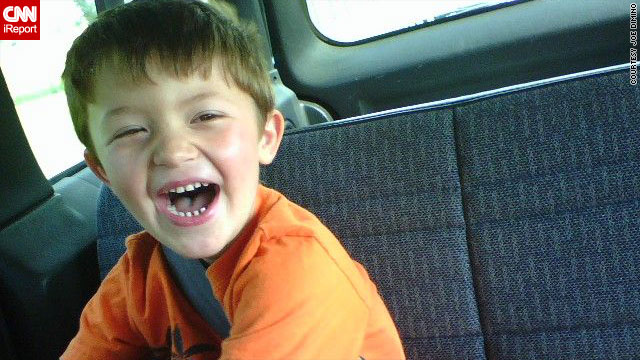
(CNN) -- The retraction of a controversial study that suggested a link between autism and a childhood vaccine has been little comfort to Joe Dimino.

Dimino, whose 5-year-old son has a type of autism, said it only made him more disillusioned with the medical establishment. While Dimino does not believe vaccines cause autism, he's not entirely convinced the shots are harmless.

The now-discredited study published in the Lancet in 1998 raised the possibility of a link between autism and the measles, mumps and rubella vaccine. The study had become a rallying point for many parents questioning the safety of childhood vaccinations.

"We feel like we're getting yanked around with this information -- how can you say something and say sorry 12 years later?" said Dimino, of Belton, Missouri. "That's the way it feels."

It left him feeling "more mistrustful of both 'communities,'" he wrote in his iReport.

Even without the vaccine-autism controversy, parents of children with autism live with a constant question that no scientist or doctor has been able to answer: Why?

Why did this happen to my child? What caused it? Will he or she get better?

"What happens with a large number of families is they get a diagnosis and there are no answers," said Patricia Robinson, who is a therapist for people with ADHD, autism and Asperger's syndrome. "And what I usually see is parents start really researching for information."

Dimino's son Miles had developmental delays that made his parents suspicious. He had trouble picking up objects. At age 1½, he crawled. He could barely spit out words or phrases and had trouble talking.

Has autism touched your life? Share your stories, thoughts

After learning that Miles is in the autism spectrum, Dimino and his wife browsed libraries, ordered countless books and spent hours online learning about autism. Watch Dimino's iReport submission

Maria Collazo of Belleville, New Jersey, spent hours on YouTube, watching everything she could about autism after learning that her daughter, Madison, had the condition.

She started wondering whether her hours at work, usage of the Blackberry and screen time during her pregnancy contributed to her daughter's condition.

"I questioned all things," she said. "Did I eat something I shouldn't have? Did I expose myself to something? You question yourself. You question and you don't know -- and it's like a state of mind."

It plunged her into depression and more questions.

Parents often blame themselves, Robinson said.

"They start looking back and wondering, 'Maybe I should've done something different. Maybe I should've had organic food. I should've eaten more vitamins. I should have not used pesticides. I shouldn't live near this area.'

"There's no evidence to say the child is autistic because the parents did something wrong during their pregnancy or early years," Robinson said. "It's common human nature to look for causes and it is hard on parents, because they do blame themselves."

The constant questioning is understandable, said Dr. Judith Miles, associate director of biomedical programs at the Thompson Center for Autism and Neurodevelopmental Disorders at the University of Missouri.

"The things that keep me awake at 2 a.m. are the things I'm puzzling over and things I don't have answers to," Miles said. "I think the reason that people look at vaccines is because of the time correspondence."

I think the reason that people look at vaccines is because of the time correspondence."

--Dr. Judith Miles, professor of pediatrics and pathology


The symptoms of autism become more apparent around the age of 2, which is around the same time toddlers receive their vaccinations. This has fueled theories that the childhood vaccinations cause the disorder, but scientists say the timing is coincidental.

"That temporally makes a lot of sense and that's why some families hold on to that," said Miles, a professor of pediatrics and pathology. "I assume it's a coping mechanism. We all have coping mechanisms."

She recalled one patient who repeatedly came to the clinic with one theory after another about why her child had autism.

"It's human nature to want to know why and some people do better on certainty than others," Miles said.

Collazo still wonders: "I wish I knew what it could've been. I really don't know." View Collazo's iReport

She does not believe vaccines contributed to Madison's autism and tries to look toward her progress.

Her 3-year-old daughter does not speak and hardly communicates. She cannot call Collazo "Mommy." She recently started using a sippy cup and began to clap. She also spins and bites herself to the point of bleeding and bangs her head against the wall.

"I have a lot of faith she will get better," said Collazo, an iReport contributor. "I also have to mentally prepare myself that she may not, but it doesn't matter as long as she reaches her personal goal, I'm happy. I know she knows who I am. She loves me -- that's really what's important."

While the Lancet retraction may not sway the parties entrenched in their beliefs, Cynthia Falardeau, an iReport contributor and parent of a child with autism, said parents have more in common that they realize.

"I know that the parents in both camps love their children dearly..." said the Vero Beach, Florida, resident. "As much as parents of children on the spectrum of autism are divided on the topic, they are united in their love for their children."

Friday, January 15, 2010

Scary Alzeimer's Predictions..

I've learned a bit about this disease and the predictions for our baby boomer generation- let's hope they find a preventive cure for this devastating disease.

(CBS) In its "Where America Stands" series, CBS News is looking at a broad spectrum of issues facing this country in the new decade.

One in eight Americans over age 65 will eventually develop Alzheimer's disease.

Starting next year, 10,000 baby boomers will turn 65 years old each day. That means over the next four decades the number of patients could triple - to 16 million.

"There is a big tidal wave, a tsunami tidal wave coming out there," said Adrian Ivinson, founding director, of the Harvard Neurodiscovery Center.

While deaths from other diseases have dropped in the last decade - heart disease down 11.5 percent, and stroke down 18.1 percent - deaths from Alzheimer's are up almost 50 percent.

Shirley Carreas was diagnosed with Alzheimer's eight years ago. "I want to live and recognize my children, and my children's children."

With Alzheimer's, annual Medicare costs triple.

Can America cope - with a growing disease -- for which there's no cure?

Ten years ago, the best seemed yet to come for three generations of one New Orleans family. But Lisa Carbo, now 55, had to move in with her mother, Shirley, when the 78-year-old was diagnosed with advanced Alzheimer's disease.

For five years, Lisa juggled caring for her mother and her job as a nurse. But then a curveball. At age fifty-three, Lisa was diagnosed with a genetic form of Alzheimer's - one that often strikes at a much earlier age.

"It floors me. These women raised me," said Aimee Palmer, Lisa's daughter. Aimee's 31-years-old and doesn't want genetic testing because she could have the gene yet never develop the disease - and if nothing could save her, she'd rather not know.

"You can't live your life thinking I'm going to die or I'm going to lose my mind at any moment," Aimee said.

While caring for Alzheimer's patients is critical, the only solution is to discover what causes this disease.

The leading suspect is a protein called "amyloid" - which can form sticky plaques that short-circuit communication between nerve cells and destroy brain tissue. As hundreds of trilions of connections begin to wither, so does memory. Another possible cause? A protein called "tau," which forms "tangles" that damage nerve cells."

Lisa is taking an experimental new drug - one that blocks amyloid formation. It's one of fifty drugs being tested in over a hundred clinical trials nationwide.

"I'd like to get some of my function back and possibly go back to work," Lisa said.

"We have a ton of evidence amyloid buildup happens years before someone forgets where they parked their car," said Dr. Dennis Selkoe, Professor of Neurology at the Harvard Medical School.

"If we can shut down amyloid buildup very early, we think we can protect from Alzheimer's," said Dr. Selkoe.

Dr. Selkoe is a leading proponent of this theory and is invested in a company testing anti-amyloid treatments.

Researchers are looking at another possible amyloid blocker - exercise.

"This could decrease their chance of getting Alzheimer's," LaPook asked.

"We hope that's the case," Dr. Selkoe replied.

"We desperately hope the anti-amyloid drugs work, and if they don't we're going to be in a fix," said Dr. Ivinson. "So, we better get started on the next generation."

At Harvard's drug discovery lab, robots can now test hundreds of thousands of chemicals in a matter of weeks - what used to take humans a year.

"You're going to have to tackle this disease from a number of directions, just as we tackle heart disease from a number of directions," Dr. Ivinson said.

As in heart disease, experts believe Alzheimer's needs to be treated early - before symptoms begin.

IReport Hosts Efforts to Look for Loved Ones in Haiti

A 7.0-magnitude earthquake struck Tuesday near Port-Au-Prince, Haiti, leaving thousands missing. Are you searching for a family member? Upload his or her photo here.

Please enter the missing person's information in the title of your iReport like this:
LAST NAME, FIRST NAME; age; city
Any additional info can go in the body of the iReport.

You can use the search bar above to look for loved ones. And if you're in Haiti and safe, please take a look through the photos and share any information you may have.

Friday, December 11, 2009

Amanda Knox: Meredith Kercher Murder Trial in Italy was 'Correct'

NY Daily News: Amanda Knox, the 22-year-old American exchange student who was convicted of murdering her roommate, says her trial was "correct."

According to ABC News, Knox spoke to Italian Parliament member Walter Verini four days after a jury found her guilty on the weekend of killing Meredith Kercher on Nov. 1 2007.

Verini, who represents Umbria, the region where Knox is jailed, told ABC that Knox was polite and "apparently calm."

He found the Seattle native in a track suit, reading in her cell, when he visited the Capanne prison outside of Perugia.

Knox allegedly told Verini that her trial was "correct" and that she "still has faith in the Italian legal system," to whom her lawyers will appeal the ruling.

"I asked her if she had seen how her country had reacted to the verdict," Verini told ABC News. "She was evidently aware of everything that was happening, but did not say what effect she thought it would have on her legal situation."

After receiving a prison sentence of 26 years, Knox was moved to a cell she shares with a 53-year-old American named Laura, her mother, Edda Mellas, told ABC News.

American commentators criticized the verdict, suggesting that the court was subject to anti-Americanism and the tabloid coverage of the trial.

Sen. Maria Cantwell, a Democrat from Washington state, released a statement implying that the jury was negatively influenced by the Italian media and by anti-Americanism. She said she would bring her concerns about the Italian justice system to Secretary of State Clinton. For her part, Clinton said she had not gone over the Knox case but would meet with anyone who had concerns about it.

But Knox's lawyer, Luciano Ghirga, has rejected claims that his client's trial in Perugia was tainted in an way.

"Amanda's rights were respected during the trial," he told ABC News. "She had a fair trial."

Ghirga, however, did bring up the fact that Knox's rights were not respected when she was questioned without a lawyer in the investigation following Kercher's death.

"We made that point very strongly in the trial," he said.

Kercher, 21, was found on Nov. 2, 2007, with her throat slit in the apartment she shared with Knox. Knox; her Italian ex-boyfriend, Raffaele Sollecito, and Ivory Coast citizen Rudy Hermann Guede (in a separate trial) were convicted of sexually assaulting and killing Kercher.

Sollecito was sentenced to 25 years in prison, and both he and Knox were ordered to pay 1 million euros to each of the victim's parents and 800,000 to each of her Kercher's three siblings.

Both parties plan to appeal in a process set to begin March 5.


Read more: http://www.nydailynews.com/news/world/2009/12/10/2009-12-10_amanda_knox_murder_trial_that_led_to_conviction_was_correct.html#ixzz0ZORbeHQO


Read more: http://www.nydailynews.com/news/world/2009/12/10/2009-12-10_amanda_knox_murder_trial_that_led_to_conviction_was_correct.html#ixzz0ZORbeHQO


Read more: http://www.nydailynews.com/news/world/2009/12/10/2009-12-10_amanda_knox_murder_trial_that_led_to_conviction_was_correct.html#ixzz0ZORbeHQO

Hearing Comes 1 Year After Caylee Found

ORLANDO, Fla. -- The next chapter in the case against Casey Anthony will play out in an Orange County courtroom on Friday -- the one-year anniversary of the discovery of Caylee Anthony's remains.

Anthony's defense team plans to argue six motions during a hearing, which began at 9:30 a.m.

Attorneys for Anthony, who is in court, are working to get the death penalty removed from the case.

"If their goal is to get the death penalty, they need to come up with that evidence ... It's way too weak," Attorney Richard Hornsby said.

Another motion from the defense seeks to destroy jail tapes made during visits to see Anthony.

Baez said Anthony has little to no privacy because jail officials steer him and his client into a room with cameras when they meet instead of a room without cameras, which would be expected based on attorney-client privilege.

Baez is expected to ask a judge to prevent jail officials from recording Anthony's visits with her lawyers and parents and destroy all recordings made in the past, but administrators said that would be destruction of public records.

Jail officials admit to assigning Baez a room for the visits, but they said he could request a different location.

Anthony is in the Orange County Jail awaiting trial in 2010 on a charge of first-degree murder in connection with the death of her daughter, Caylee.

Anthony said a nanny took Caylee, whose remains were found in a wooded area near the Anthony home one year ago -- on Dec. 11, 2008.

Hearing Comes 1 Year After Caylee Found

ORLANDO, Fla. -- The next chapter in the case against Casey Anthony will play out in an Orange County courtroom on Friday -- the one-year anniversary of the discovery of Caylee Anthony's remains.

Anthony's defense team plans to argue six motions during a hearing, which began at 9:30 a.m.

Attorneys for Anthony, who is in court, are working to get the death penalty removed from the case.

"If their goal is to get the death penalty, they need to come up with that evidence ... It's way too weak," Attorney Richard Hornsby said.

Another motion from the defense seeks to destroy jail tapes made during visits to see Anthony.

Baez said Anthony has little to no privacy because jail officials steer him and his client into a room with cameras when they meet instead of a room without cameras, which would be expected based on attorney-client privilege.

Baez is expected to ask a judge to prevent jail officials from recording Anthony's visits with her lawyers and parents and destroy all recordings made in the past, but administrators said that would be destruction of public records.

Jail officials admit to assigning Baez a room for the visits, but they said he could request a different location.

Anthony is in the Orange County Jail awaiting trial in 2010 on a charge of first-degree murder in connection with the death of her daughter, Caylee.

Anthony said a nanny took Caylee, whose remains were found in a wooded area near the Anthony home one year ago -- on Dec. 11, 2008.

Monday, August 31, 2009

Officers Who Cracked Missing Girl Case: Something Wasn't Right

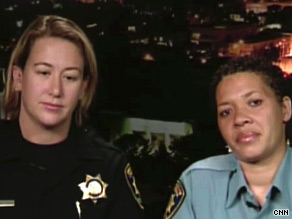
(CNN) -- Call it mother's intuition. Call it a police officer's intuition. But Allison Jacobs knew something was wrong.

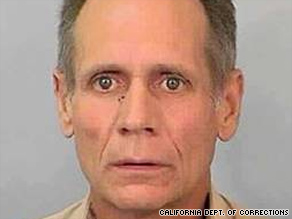
The University of California, Berkeley, police officer was sitting in on a meeting with a man named Phillip Garrido, who wanted to hold an event on campus, and Lisa Campbell, special events manager for the university police. Garrido brought along two young girls, introducing them as his daughters.

Jacobs' and Campbell's intuition, authorities said, led to the arrest of Garrido, a registered sex offender who along with his wife, Nancy, now faces 29 felony charges in connection with the 1991 kidnapping of Jaycee Dugard, who was then 11. Both have pleaded not guilty.

Police have said Garrido kept Dugard in a series of sheds in his backyard for 18 years, fathering two children with her -- the 11- and 15-year-old girls he brought with him to the meeting.

In a Friday interview with CNN's "AC360," Campbell said Garrido had approached her August 24 with the two girls in tow, asking about holding his event. She had another commitment, so she asked him to return the following day.

"He was clearly animated, he was very passionate, he was full of life about the things he wanted to talk about," Campbell said. "The girls sort of were recessed in the background. And they were young. It was one o'clock in the afternoon. They weren't in school. They were pretty much unresponsive emotionally, extremely pale ... there was just something about the girls that wasn't right."

She thought the encounter was strange enough to run a background check on Garrido, which revealed that he was on parole after a rape conviction and was a registered sex offender. Campbell asked Jacobs to sit in on the meeting the next day.

Jacobs said she began talking to the girls, trying to engage them in conversation. Checking for any abuse, she asked one girl about a bump on her eye, and the girl told her it was a birth defect, she said.

"They both said that they were home schooled," Jacobs said. "And when I asked about that, they said that the mom and the dad both home schooled them. And then they mentioned an older sister."

"The youngest girl was across from me," Jacobs said. "And she was very intently staring at me and smiling in a very eerie way. The older daughter was looking at Mr. Garrido, and not looking at us, not making eye contact with us. And her eyes were darting around at the ceiling, and [she] would give really quick, clipped one-word answers and would glance at us and back up at him."

She said, "My police intuition was kicking in, but I would say it's more of a mother's intuition. I was worried for these little girls. I knew something wasn't right. I could kind of see it in their eyes, although I really didn't know what it was. And just being the protective mom that I am, my reaction was to try and do what I could to help them."

Jacobs called Garrido's parole officer to tell him about the meeting. "And he stopped me dead in my tracks," she said. "And he said, 'He doesn't have daughters.' And that's when my heart kind of sunk down into my stomach. And I said, 'Well, he introduced them as his daughters. They had his blue eyes. They were calling him "Dad." They even mentioned an older sister at home. So I had no reason to believe that they were anything but his daughters.' "

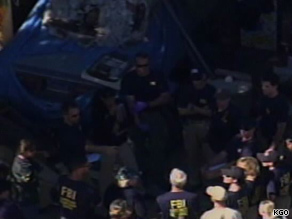
The parole officer called Garrido in for a meeting Wednesday. He attended, along with his wife, the two girls and another woman named Allissa, police have said. "Allissa" was eventually identified as Dugard. Scott Kernan, undersecretary of the California Department of Corrections and Rehabilitation, told reporters Thursday that Garrido admitted abducting Dugard.

"The parole agent called me on my way home from work," Jacobs said Friday. "And he was all excited ... and he said that ... he was involved with a kidnapping case and ... because I called it in, it helped solve this FBI case that was 18 years old."

"We're never going to forget this day," she said. "And I'm glad that Jaycee is safe and working on her road to recovery."

Police acknowledged Friday that someone called 911 in 2006 to report that children appeared to be living in tents in a neighbor's backyard. Contra Costa County Sheriff Warren Rupf told reporters a deputy visited the Garrido home after the call, but did not go in the backyard. "This is not an acceptable outcome," Rupf said.

In a jailhouse interview Thursday with CNN affiliate KCRA, Garrido would not discuss the abduction, but said he had "completely turned" his life around in the past several years.

"You're going to find the most powerful story coming from the witness, from the victim," he promised. "If you take this a step at a time, you're going to fall over backward, and in the end you're going to find the most powerful, heartwarming story."

Friday, August 28, 2009

Girl Grew Up Locked in Backyard Shed


(CNN) -- From the time she was an 11-year-old, blue-eyed, freckle-faced blonde until she was a 29-year-old woman with two children, Jaycee Dugard was kept locked away in a backyard compound of sheds and tarps by a couple police say abducted her.

She was more than 160 miles from home, and her family had no idea where she was.

Nobody else knew she was there except the couple that snatched her off the street in front of her house in South Lake Tahoe, California, in 1991, and took her straight to the soundproof shed, police said.

Dugard's pocket of Phillip and Nancy Garrido's backyard in Antioch, California, was so overgrown no one even knew it existed.

The details about Dugard's time in captivity emerged Thursday after one of Northern California's most enduring mysteries was solved and the Garridos were arrested and accused of her kidnapping.

Anyone who came across the couple's backyard, littered with garbage cans and a dishwasher, would assume that it ended at a six-foot fence.

"You could walk through the backyard and never know there was another set of living circumstances," said Fred Kollar, undersheriff of El Dorado County. "There was nothing that would cause you to question it. You can't see it from either adjoining property. It was presumably well arranged."

But tucked away beyond the tangle of bushes, high grass and trees was a blue tarp that concealed the only world Dugard had known since her abduction.

In it were sheds and tarps, a makeshift bathroom and shower, along with electricity supplied by an extension cord. Kollar compared the primitive conditions to camping.

Dugard lived for several years there by herself. The sheds were locked from the outside.

She grew up and had her captor's children there, and raised them there.

"None of them have ever been to school, they've never been to a doctor," Kollar said. "They were kept in complete isolation in this compound, if you will, at the rear of the house," he said. "They were born there."

The children, both girls, are now 15 and 11.

"They are all in good health," Kollar said in response to a question about how Dugard and her children are doing. "But living in a backyard for the last 18 years does take its toll."

Thursday, August 27, 2009

Kidnapped California Child Returns as Woman

Update at 1:14 p.m. ET: The Sacramento Bee reports that authorities have confirmed that the woman who walked into a police station is Jaycee Dugard, who was kidnapped in 1991 when she was 11. Authorities are planning a news conference at 6 p.m. ET.
"It's like winning the Lotto," said Dugard's stepfather, who said he remained under suspicion all these years.

A woman kidnapped 18 years ago from her California home has reportedly surfaced in Concord, Calif., the San Francisco Chronicle reports.

Jaycee Dugard, who would be 29 today, apparently walked into the Concord Police Department on Wednesday, the Chronicle says. A news conference is scheduled for later today.

Two people have been taken into custody, The Seattle Post-Intelligencer says.

The blue-eyed, blond 11-year-old was last seen on June 10, 1991, as she was walking to a bus stop in South Lake Tahoe. The Chronicle reports that her stepfather was watching helplessly from the family's driveway on a hill about two blocks away when a two-tone gray sedan pulled up and someone yanked the girl into the car and sped off.

Even though officers responded within minutes, no trace of the car or girl was ever found.

Dugard's mother was on her way from her southern California home for a reunion with her daughter, the Chronicle reports. We'll keep an eye on this.

Tuesday, August 25, 2009

'Person of Interest' Sought in Slain Model's Case

(CNN) -- Canadian authorities are searching for a woman in their investigation into the death of a reality TV contestant, who is suspected of killing his wife in Southern California.

Authorities have "identified the woman who is now a person of interest in this investigation, but she is not considered a risk to public safety," Sgt. Duncan Pound, spokesman for the Royal Canadian Mounted Police, said Monday.

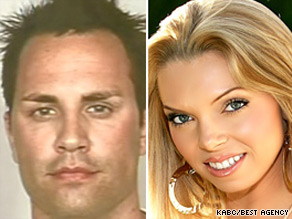
The woman helped rent a room for Ryan Alexander Jenkins, who was found dead at the budget Thunderbird Motel in the town of Hope in British Columbia on Sunday, hotel staff told CNN affiliate CTV on Sunday. Jenkins' body was discovered in the motel room, hanging by a belt from a coat rack in an apparent suicide.

Motel manager Kevin Walker told CTV that a woman, about 5 feet, 9 inches tall and 20 to 25 years old, dropped off Jenkins at the motel on Friday in a silver Chrysler PT Cruiser with Alberta tags.

"She just came for that one day and had checked in and rented the room," according to Allana Herrling, a motel employee. "I don't know if he paid her to rent the room or if he knew her or not, but she had rented the room and she had left right away."

Before Jenkins' body was found, Canadian authorities had said they had credible information that Jenkins was in Canada and urged him to turn himself in. He was thought to be armed and dangerous.

The nude body of Jenkins' wife, former swimsuit model Jasmine Fiore, was found August 15 in a Dumpster behind an apartment complex in Buena Park, just outside Anaheim, California. CNN has not confirmed reports that the marriage was annulled.

Fiore's teeth had been extracted and fingers removed in what police said was an apparent attempt to conceal her identity.

Law enforcement sources have told CNN that Fiore was identified through the serial numbers on her breast implants. A preliminary coroner's report indicated that she had been strangled.

Fiore lived in Los Angeles and was last seen alive in San Diego at a poker game with Jenkins, the night before her body was found.

Jenkins reported Fiore missing last Saturday night to the Los Angeles County Sheriff's Department, authorities said.

Jenkins' apparent suicide brought a "sense of relief" to some of those who knew Fiore well.

"It helps us -- the family and extended family -- so that we can get on with our lives," Gwendolyn Beauregard, a friend of Fiore, said on CNN's "Larry King Live" on Monday night. "We don't have to go through a trial and all the pain that brings up as well. We have a sense of relief."

According to court records in Las Vegas, Nevada, Jenkins was charged in June with battery, for allegedly striking Fiore in the arm with his fist.

And in 2007, Jenkins pleaded guilty in Calgary, Alberta, to assault in a separate case. He was sentenced to 15 months' probation, ordered to undergo counseling for domestic violence and sex addiction, and to stay away from the victim, according to court records.

Jenkins, who appeared on the VH1 show "Megan Wants a Millionaire," is from Calgary.

51 Minds, which produced "Megan Wants a Millionaire," said Thursday in a written statement that it didn't know about Jenkins' record when it cast him.

"I was completely shocked he would have been capable of doing this," Stuart Brazell, who cast Jenkins on the show, told Larry King on Monday night. "I could see he could be a loose cannon. But, no, did I think he was capable of murdering his wife? Absolutely not."

Wednesday, August 19, 2009

Unraveling the Mysteries of Thousands of Cold Cases

CNN Blogs- Last week, a young man hours away from starting a new job took a bike ride in Lubbock, Texas, and hasn’t been seen since.

Decades earlier, on March 15, 1967, the remains of a woman clad in a blue dress and white shoes were discovered in a field in Baltimore.

The two cases are separated by nearly 2,000 miles and more than 42 years. Yet they share a common bond: they have never been solved.

There is now another, more hopeful connection. They are just two of thousands of cold cases and now all of them can be found on a single free web site that is funded by the federal government. It is designed to help law enforcement agencies and medical examiners across the country unravel the mysteries. It also gives countless families a place to look for loved ones and a chance to find answers and peace of mind.

It is the National Missing and Unidentified Persons System. Known as NamUS, the site offers what may be the most comprehensive public search engine to date for this undertaking. “With advances in forensic sciences, there is always the possibility of closing an old case,” NamUS Operations Manager Billy Young told CNN. “No matter how old the records are, we have someone looking at them.”


NamUS, which was launched in 2007, was commissioned for the National Institute of Justice. It is operated by the National Forensic Science Technology Center, located in Largo, Florida.

In an email to CNN, Christine Vivian, the organization’s communications director, explained the genesis behind NamUS, writing it “was created to address the issue of the estimated 40,000 unidentified dead nationwide, and give families a tool to assist in finding missing adults.”

“As more cases are entered into the system, more people in every area – law enforcement, victim advocacy and the general public can become part of the conversation that will resolve cases.”

The missing persons database contains 1,996 individual files, of which more than 92 percent remain open – including the disappearance of that young man in Lubbock. His name is William Bradley Klosterman. Known as Brad, the 20-year-old hopped on his new Fuji bike around noon on August 11. He said he was going to visit a friend. He left without taking his i.d., his wallet, or cell phone.

Klosterman was last seen wearing black mesh running shorts and a black-t-shirt with the word “Southlake” on the front. He also has a small scar on the outside of his right eye and a tattoo that says “Psalm 23″ on his right arm. Authorities believe he may have been traveling to California.

It is the same theory that investigators had nearly half a century ago with the disappearance of Lyndal Ashby. On October 23, 1960, the 22-year-old Ashby vanished in Hartford, Kentucky. As with the other cases in NamUS, the file on Ashby includes police contact information.

The NamUs National Unidentified Decedent Data System lists 5,564 cases. But only 147 have been closed. The woman in the blue dress is not one of them. Her skeletal remains were found in a Baltimore field in the winter of 1967, but forensic experts believe she probably died the previous year. She was 5′3″ and between the ages of 21 and 45.

The file on the woman’s case is limited. However, there are thousands of other entries for both NamUs databases that have detailed information on condition and physical characteristics, clothing, accessories, police reports, photographs, and dental charting.

Case #5593 is a representative example. A man believed to be in his thirties was found intoxicated and unconscious on the ground in Queens, New York on May 31 of this year. He was taken to a hospital where it was determined he suffered a traumatic brain injury. He died on June 3.

The man, who had black hair and was wearing blue jeans, had several scars on his body. He was also missing part of his right second finger.

Perhaps he had children, or maybe a wife waiting for him at home. Nobody knows for sure. But there is probably someone who wants to know what happened to that man. And they are joined by many others throughout the country. With NamUS, they all have somewhere to which they can turn.

“It lets them know that someone is constantly looking for their loved ones and they are not being forgotten, Billy Young said to CNN. “It gives them hope that one day they will be able to get closure.”

Hope Endures, Reward Rises for Missing Woman

(CNN) -- As Tracy Ocasio's 28th birthday came and went last week, her mother remained hopeful that she would soon get answers about the young Florida woman's disappearance nearly three months ago.

Police have a person of interest in custody on unrelated charges, but they still don't have the full story, said Detective Mark Olson of the Ocoee Police Department near Orlando.

In honor of Ocasio's birthday, her family increased the reward for information on her disappearance to $20,000.

Elizabeth Ocasio said she last spoke with her daughter about 8:30 p.m. May 26. Tracy Ocasio said she planned to come home that night after watching a televised basketball game with friends at the Florida Tap Room, a popular sports bar in Orlando.

When Ocasio didn't come home that night, her mother said she assumed she'd decided to stay at a friend's house. She often stayed with the friend when she was too tired to drive home.

At 6:30 the next morning, Elizabeth Ocasio sent a text message to her daughter: "Where are you?" She did not receive a response, she said, so she called her daughter's cell phone again two hours later. The phone rang a few times and then went to voice mail. She tried calling Ocasio several more times that day, and each time, the call went to voice mail.

"I was worried, but I still did not imagine that anything terrible could have happened," Elizabeth Ocasio said.

Panic set in when she received a call from police on the afternoon of May 27. They'd found Tracy Ocasio's car in a rundown neighborhood three miles from the Ocasio home. The car was parked on private property, and the residents had called to have it towed.

"When I got there, I knew something didn't make sense. Tracy would never go to such a neighborhood by herself," Elizabeth Ocasio told CNN. She found her daughter's purse in the car, but her ID, cell phone and car keys were missing.

By 7 p.m., Tracy Ocasio was officially reported missing and a county-wide search was under way. It lasted for weeks. "We searched bodies of water and heavily wooded areas," Olson said, "and we continue to search based on tips we receive."

The investigation led detectives to James Hataway, 28, who is considered a person of interest because a Tap Room surveillance video shows him leaving the bar with Tracy Ocasio, Olson said. A spokesman said the Orange County Public Defender's Office would have no comment.

Police questioned Hataway for 11 hours over two days. He told investigators that Ocasio had given him a ride home from the bar that night, Olson said.

Hataway told police that he didn't see Ocasio after she dropped him off. His home was just 200 yards from where Ocasio's car was found, police said. During questioning, Hataway took a polygraph test, which police said showed some discrepancies, Olson said.

Police brought bloodhounds to where Ocasio's car was found, but the dogs didn't hit on her scent, leading police to believe she wasn't the one who parked her car there. Police also say no forensic evidence was found to suggest Ocasio was injured or killed inside her car.

Police are holding Hataway on unrelated charges at the Orange County Jail. He is charged with aggravated battery, robbery and false imprisonment stemming from an incident in neighboring Seminole County in August 2008.

A young woman said she gave him a ride home one night. She said he attacked her and tried to break her neck, but she fought back. She'd reported the assault when it happened but only later were police able to identify Hataway as the alleged assailant. Hataway remains in custody on those charges with bail set at $250,000. He has not pled.

Shortly after his interrogation in the Ocasio case, the public defender's office took Hataway's case, and he stopped talking.

Hataway has not been named a suspect and has not been charged in the Ocasio case.

Police and family urge anyone with information that can lead to the arrest of the person responsible for Ocasio's disappearance to call the tip line at 1-800-423-TIPS. A $20,000 reward is offered.