Showing posts with label schizophrenia. Show all posts

Saturday, June 23, 2012

Accused Wilton Murderer Found Competent for Trial

WILTON - A judge ruled that the Wilton man accused of killing his own father is competent to stand trial.


Detectives say Aaron Ramsey claims he heard voices in his head when he beat and stabbed Edward Ramsey in their home last month.


His lawyer says Ramsey understands the charges against them and is able to help with his defense.


He is due back in court next month.


Saturday, June 2, 2012

Etan Patz Case: Doctors Assess Mental State of Murder Suspect Pedro Hernandez


(CBS/AP) NEW YORK - Pedro Hernandez, the man who has confessed to killing 6-year-old Etan Patz in one of New York City's and the country's most notorious missing child cases, remains in a psychiatric hospital as court-appointed doctors assess his mental state.
Defense lawyers said Hernandez, 51, has schizophrenia and a history of hallucinations and it's unclear how much that will factor in the case charging him with the Etan's 1979 murder.

If Hernandez' psychiatric record becomes an issue, he'll encounter a justice system that seeks to strike a balance between recognizing mental illness and holding people responsible for their actions. It is a balance that has shifted back and forth over more than a century and a half.


Hernandez confessed last week and is now charged with Patz's murder. The boy vanished on his way to school in his lower Manhattan neighborhood. The suspect, who had worked at a convenience store near Etan's home, confessed after hours of police questioning, Police Commissioner Raymond Kelly said on Friday. Kelly said Hernandez told police he lured the boy to the convenience store with the promise of a soda. He then took him into the basement and choked him.


After defense lawyer Harvey Fishbein told a judge that Hernandez was schizophrenic, bipolar, had had visual and auditory hallucinations, and had been on psychiatric medication for some time, the judge ordered an examination to see whether he was mentally fit to stand trial.


The results aren't yet known and either side could challenge the findings and get another exam. It will ultimately be up to a judge to declare whether Hernandez can go to trial. If not, he would be sent to a psychiatric hospital and evaluated periodically to see whether he had improved enough to go to court. Most people found unfit are eventually returned to court, legal experts say.


Such exams aim to assess whether someone is well enough to participate in a trial and aid his or her own defense. They are separate from an insanity defense, which revolves around the defendant's psychological state at the time of the alleged crime.


In New York and many other states, defendants have to prove they were so mentally ill that they didn't know what they were doing was wrong. If successful, they are sent to psychiatric hospitals until judged well enough for release, if ever.


One of Hernandez's sisters, Norma Hernandez, said Tuesday that she went to police in Camden, N.J., years ago to report a rumor he had confessed at a prayer group. Camden police declined to comment on her remarks.


Meanwhile, Etan's father made clear that the attention to the case since Hernandez's arrest last week had taken a toll, telling reporters they had "managed to make a difficult situation even worse."


"It is past time for you to leave me, my family and my neighbors alone," Stan Patz said in a note posted on his apartment building's door.

-------------------------------------------------------------

It's a tragedy they had to lose their son, especially in such a henious way, but that goes to show why you should NEVER LET YOUR CHILD ROAM THE STREETS ALONE.  Especially only six years old!

WTF, even if it was the 1950s that is something you NEVER DO. Or even if just to walk "around the corner"... NEVER DO IT.

Wednesday, May 4, 2011

New Study Regarding Spring Babies... Very Interesting!


Season of Birth May Affect the Rest of Your Life
Yahoo News- The season in which you are born may affect everything from your eyesight to your eating habits and overall health later in life, according to a blossoming field of research. The latest study shows that spring babies are more likely to suffer from anorexia nervosa as adults.

"We found an excess of anorexia births in the spring months compared to the general population," said study researcher Lahiru Handunnetthi, of the Wellcome Trust Center for Human Genetics. "The idea is that there is some sort of risk factor that varies seasonally with anorexia."

The researchers found that eight out of every 100 people born between March and June had anorexia compared with 7 percent of those without anorexia. This is a 15 percent increase in risk for those born during these spring months.

Previous studies have found similar links between spring births and various disorders, including schizophrenia, multiple sclerosis and even Type 1 diabetes. It's possible these diseases are linked to some environmental influence during gestation or the first few months of life, though researchers aren't sure what that could be.

The leading candidates including vitamin D levels, infections that come and go seasonally, changes in nutrition, and even possibly weather fluctuations, Handunnetthi told LiveScience.

These changing environmental factors seem to influence a wide array of conditions:

A study from 2003 published in the Journal of Nutrition showed that African-American babies born in the summer and fall were smaller than those born at other times. Also, babies of African-American and Puerto Rican decent gained less weight in their first four months if they were born in the fall.

Babies born in the fall have a 9.5 percent risk of having food allergies, up from 5 percent for babies born in June and July. Those babies born in November or December were also three times more likely to suffer from eczema and wheezing. That study was published in 2010 in the Journal of Epidemiology and Community Health.

Moderate and severe nearsightedness, or the inability to see well at long distances, is highest for babies born in the summer months, suggests research published in April 2008 in the journal Ophthalmology.

Birth month might even affect your biological clock, a mouse study published in 2010 in the journal Nature Neuroscience showed. Mice born in the winter were less able to adapt to a summer light cycle, which could be related to the increased risk of mental health disorders in humans born in the winter, the researchers speculated.

Leukemia has also been linked to being born in the spring, with a peak in April.

Birth month has even been linked to longevity, which could be because of these other adverse health effects. Studies in Austria and Denmark have found that those born in the fall live longer than people born in the spring.

"When we look at diseases we need to identify the risk factor that led to them," Handunnetthi said. "In general, risk factors could be environmental or genetic. Genetic risk factors you are born with and can't really change. If you identify environmental factors you can mediate them to carry out prevention studies."

These environmental causes are still unclear, though some of these birth-month effects may be related. "Perhaps a risk factor is playing a part that is common to all these conditions but we don't know that yet," Handunnetthi said.

Thursday, February 25, 2010

Defense: Kidnap Suspect Hears Angels' Voices

(CNN) -- A California sex offender suspected of abducting a girl in 1991 and keeping her captive for 18 years is suffering from "serious mental illness," defense attorneys say in court papers.

"It appears that Phillip Garrido has been hearing [the] voices of angels for years," said documents filed Wednesday in El Dorado County Superior Court.

The court papers dispute prosecutors' asserting that Garrido is a "master manipulator" who is still trying to influence his victim.

Garrido, 58, and his wife, Nancy, are charged with 29 felony counts in the kidnapping of Jaycee Dugard, who was 11 when she was snatched from the street in front of her house in South Lake Tahoe, California.

She was 29 when found in August at the Garridos' home in Antioch, about 120 miles from her home. Prosecutors allege that Garrido fathered two daughters with Dugard during her captivity.

Both Phillip Garrido, who was a registered sex offender on parole at the time of his arrest in August, and Nancy Garrido have pleaded not guilty to the charges against them.

In a filing earlier this month, prosecutors called Garrido a "master manipulator," citing journal entries made by Dugard. They also said Garrido's attorneys were attempting to contact Dugard, whose location they are trying to keep secret, and asked the court to impose a protective order barring such contact. A judge refused to immediately grant the request, setting a hearing for Friday.

Garrido's public defenders, Rick Meyer and Susan Gellman, said Dugard, who is identified in court papers as Jane Doe, told investigators following Garrido's arrest that he had a "self-described ability to understand the voices of angels. ... One of the children disclosed this as well, describing how the voices would keep him up at night, and how the angels lived underground and spoke to him from this location."

The filing points to Garrido's "manifesto," entitled "Origin of Schizophrenia Revealed," which he prepared in the days and weeks before his arrest and addressed to the FBI. He took it "from law enforcement agency to law enforcement agency, calling attention to himself in a way that could [and ultimately did] lead to his arrest," the attorneys said.

Garrido went to the campus of the University of California, Berkeley, accompanied by his two daughters with Dugard, to get a permit to stage a demonstration of his ability, the documents said. University employees brought about his arrest after contacting his parole officer, saying they thought Garrido's behavior was odd.

"Mr. Garrido's illness was not subtle at all," the documents said. "Obviously the campus police at the University of California, Berkeley were able to perceive the clear signs of mental illness and took some action instead of ignoring them."

Prosecutors, the defense said, have discussed the "cover stories" told by Dugard and the children when Garrido was summoned to the parole office the following day and questioned. Authorities maintain such lies were evidence of Garrido's manipulation, according to the documents.

"In reality, it appears that everyone was very frightened by what could happen. They were afraid they would be separated and lose each other," the defense said. "Even the children made up stories; there was a sense of panic. They were trying to protect each other. One of the children was so nervous she got sick."

Asked several times who was the father of the children, Garrido told several different stories, his attorneys said. "The agent's report is helpful in showing how manipulative Mr. Garrido is not."

Further evidence of Garrido's mental illness is his repeated contact with the news media, according to his attorneys. "Contacting the media against the advice of counsel when one is facing criminal charges as serious as these shows an inability to cooperate with counsel and an inability to appreciate the function of the criminal justice system," the attorneys said. "In short, Mr. Garrido's contacts with the media, when his attorney tells him not to have them, are not manipulations at all, but evidence that he may not be competent to be a defendant."

Garrido believes that Dugard is part of his "transformation" and his "disclosure," the documents said. "Mr. Garrido believes that he and Jane Doe once had a plan to launch a Web site wherein Mr. Garrido's ability to speak to angels would be revealed to mankind. He remains confused as to why that has not happened."

The attorneys said they had not attempted to contact Dugard, but sent a letter to her former attorney without knowing he was no longer representing her.

Prosecutors said a sentence in that letter, conveying that Garrido harbored no ill will toward Dugard or the children and "loves them very much," was interpreted as a manipulation attempt. Defense attorneys maintained it was not. "There has been no intimidation or harassment of any kind," they wrote.

Authorities maintain Dugard does not want to speak to Garrido or his attorneys. She has that right, the defense attorneys said, and the court can refuse to disclose her location.

"However, in a case like this, it would make settlement far more difficult if counsel were forever foreclosed from approaching the idea of contact again," the attorneys said. If the court will not disclose Dugard's location, they requested a representative be appointed for communication purposes.

Saturday, August 29, 2009

Fort Worth Taser Death Ruled A Homicide

This pisses me off. If he's a diagnosed schizophrenic then I'm sure his mother would've specified that when the police got to the house, and 49 seconds is seeming like a VERY long time to pump those kind of volts into someone. It's nearly a full minute!!

FORT WORTH- The Tarrant County Medical Examiner said the in-custody death of a mentally disabled man was a homicide. The ruling came on the heels of a series of CBS 11 News reports highlighting the case of Michael Jacobs Jr.

It's another black eye for the Fort Worth Police Department.

But, the Jacobs family did not comment on the ruling. They said they would speak on Friday, at a press conference to be held at their house.

On Thursday night, the house was quiet, though Michael Sr. marked a birthday. It was his own. There was little to celebrate on the day that the Medical Examiner ruled Michael Jr.'s death a homicide. The family only recently spoke of their pain. "We're in living Hell. I mean, I have a lot of good days and a lot of bad days," Charlotte Jacobs said.

"We just keep expecting him to walk through the door but," Michael Sr. said, his voice trailing off.

On April 18, Michael Jr., who suffers from schizophrenia, was off his medication. Charlotte Jacobs called 911.

Charlotte: "He's out there cursing and carrying on, jamming on stuff."
Dispatcher: "He's outside the house?"
Charlotte: "Yeah, we had to put him outside of the house."
Dispatcher: "Is he violent?"
Mother: "Hmm! Y'all better bring enforcement."

According to the Medical Examiner's report, police used a Taser on Jacobs twice. The first Taser deployment lasted 49 seconds. Then, there was a one second pause. The second taser deployment lasted five seconds.

Police Chief Jeff Halstead held a press conference soon after the Medical Examiner's ruling. "First and foremost, we wanted to extend our condolences to the family of Michael Jacobs," Halstead said.

Halstead added that, since 2001, the department has used Tasers 1,360 times. Four people died. Jacobs was the only one ruled a homicide.

Halstead would not take any questions or make any comments about the police officers involved because the case is going to a grand jury. "I can't make any comments about specifics of our investigation and I can't comment on the past behaviors of any employees," Halstead said.

City officials made statements of their own.

Mayor Mike Moncrief said, "We will continue to watch this case closely."

City council member Kathleen Hicks said, "I believe the grand jury will be able to make a final and unbiased decision."

City council member Frank Moss said, "If the chief's investigation finds that adjustments are needed, the community will count on him to make the necessary changes."

Any changes will be too late for the Jacobs family, who only wanted police to take their son to the hospital.

Friday, April 24, 2009

A CNN Psychological Piece


Teen tries to quiet the voices caused by schizophrenia


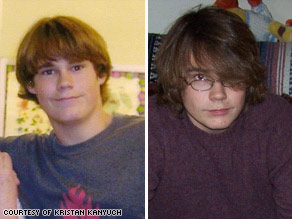
(CNN) -- The intrusive voices popped into William "Bill" Garrett's head. "They're coming for you," the voices told the 18-year-old. "Find somewhere to hide; they're going to get you."


They told the Johns Hopkins University freshman that his father had poisoned the family dog, his sister had injected crystal methamphetamine into his pet lizard and his grandmother had put human body parts into his food.

As schizophrenia took hold, the Maryland teenager became lost within his own mind and had to leave college after winning a full, four-year scholarship.

Garrett's experience echoes the teenage years of Nathaniel Ayers, a promising string bass player whose musical training at the Juilliard School was cut short by schizophrenia, a brain disorder that blurs a person's ability to distinguish between reality and delusions.

Ayers became homeless and played Beethoven pieces on a broken violin in the streets of Los Angeles, California. His struggles with schizophrenia and his friendship with a Los Angeles Times columnist inspired the movie "The Soloist," which releases Friday.

His sister, Jennifer Ayers-Moore, hopes the movie will raise awareness about schizophrenia and has established the Nathaniel Anthony Ayers Foundation for the artistically gifted mentally ill.

"I know there are thousands of Nathaniels, and they deserve a chance, too," said Ayers-Moore, an Atlanta-based social worker.


Teen interrupted
Schizophrenia is the result of disrupted brain development. Males typically get symptoms during their teens or early 20s, as Ayers and Garrett did.

"It's a critical time for the brain," said Dr. Jon McClellan, the medical director of the Child Study and Treatment Center at Seattle Children's Hospital. "It's the CEO part of the brain that pays attention, makes decisions and filters. The prefrontal cortex, that's the last area of the brain to develop. As that area comes online, that's when the illness presents."

In high school, Garrett won elected offices in student government and headed the lacrosse and cross country teams. A gifted student, he wanted to study political science and biology at Hopkins.

At home, he cooked family dinners, helped his little sister with homework, and surprised his mother with pancakes on her birthday.

"People likened him to the perfect child before he got sick," said his mother, Kristan Kanyuch.

In 2007, the unusual behaviors started. He slept a lot. He emptied an entire can of bug spray in his bedroom. When he came home for a weekend from college, he pointed to a blister on his hand that had formed from playing lacrosse.

"Look, I have gangrene," he said. "My hand is going to rot." Then he tried to cut off his hand with a paring knife.

His family stopped him and took him to an emergency room for a psych evaluation, but Garrett refused to wait and left.

A week later, Kanyuch got a call from the university. Her son was failing every class. When confronted, Garrett looked at the F's and calmly replied, "I'm not failing anything."

In the 1970s, Ayers-Moore saw the symptoms when her family picked her brother up from Juilliard to head home to Cleveland, Ohio, for summer.

"The look in his eye was so different," she said. "It was like you could see into his soul, he could look into yours. It sort of startled me a little bit. I didn't know what to say to him. On the way from New York, I pretended I was asleep. I didn't know what to say."


Paranoid schizophrenia
About three decades later, Nickole Kanyuch, 15, watched a similar scenario unfold as her brother, Garrett, struggled with paranoid schizophrenia and obsessive compulsive disorder.

"I watched the big brother who I had looked up to all my life fall apart and become someone entirely new," she said. "The boy who was destined for greatness, who worked long and hard for 12 years to lead a successful life, was destroyed in a mere six months."

Garrett, who had once organized his 600 books by the Dewey Decimal system, could hardly read two sentences. The voices in his head drowned out the words on the page, he told his mother.

Garrett, who color coordinated the clothes inside his closet, could no longer groom himself or shower. The voices told him the shampoo and soap were poisoned.

Kristan Kanyuch quit her financial planning job to take care of him. Despite taking medicine, Garrett's health fluctuated. One day he was fine; the next, he threatened to kill the neighbors. Frustrated and facing mounting debt, Kanyuch sought help.

She joined a mental health support group. At one session, she was told to follow simple instructions from a counselor. Meanwhile, 10 people who stood around her talked at once. While the chorus of voices drowned out the instructions, she realized this was how her son lived every day.

That night, Kanyuch hugged her son. "You have to be the most courageous person. You wake up every day," she told him.

"That's when he explained to me the reason he sleeps," Kanyuch said. "He doesn't hear the voices. He doesn't hear them telling him he's fat, stupid, there's a conspiracy. It's a break for him to sleep."

Although no one knows where these voices originated, they could be triggered by wiring problems in the brain, said McClellan, who researches adolescent psychiatry. One theory is schizophrenia causes difficulty distinguishing thoughts from their outside experiences, "so they experience internal thoughts and perceptions as voices," he said.


Recovery
Garrett has been a subject in two research programs searching for better schizophrenia treatments. His condition fluctuated and for months, he was on suicide watch.

Schizophrenia is a difficult disorder to treat, because one medication that soothes one patient can make another psychotic.

"Medication or dosages can't be matched absolutely with the individual, so there is some of that trial and error," said Dr. Thomas Bornemann, director of the Carter Center's Mental Health Program.

Garrett tried many drugs. Some made him drowsy, others volatile and one drug made him gain 75 pounds. Severe side effects often cause patients to stop taking medication.

For now, doctors seem to have found one that helps Garrett. Since March, Garrett has been at a Maryland research center that looks into the relationship between metabolism, tobacco and schizophrenia.

After a violent visit in August, Garrett, 21, had not been home until Easter. During the recent visit, he played basketball, Yahtzee and Wii bowling with his family.

"He was able to carry on a conversation and play card games," Kanyuch said. "He was interacting."

At home, surrounded by reminders all his past achievements, Garrett said: "Mom, I was on the top of the world. Now I'm in the gutter."

His mother disagreed: "Look at it as an opportunity."

"What?" he said.

"It's not an opportunity everyone would jump at," she told Garrett. "But as you rehabilitate, as you grow an insight into your illness, there may be things you deal with forever. But you've had significant experiences that you may be able to use to help other people. There's no place where insight and advocacy [for mental health] is needed more than in politics, which is what you wanted to do."

A life with schizophrenia won't easy, but some with the disorder have graduated from college, earned doctorates and lead enriched lives, she told Garrett.

"He doesn't understand the courage he has."