Showing posts with label social work. Show all posts

Wednesday, May 4, 2011

New Study Regarding Spring Babies... Very Interesting!


Season of Birth May Affect the Rest of Your Life
Yahoo News- The season in which you are born may affect everything from your eyesight to your eating habits and overall health later in life, according to a blossoming field of research. The latest study shows that spring babies are more likely to suffer from anorexia nervosa as adults.

"We found an excess of anorexia births in the spring months compared to the general population," said study researcher Lahiru Handunnetthi, of the Wellcome Trust Center for Human Genetics. "The idea is that there is some sort of risk factor that varies seasonally with anorexia."

The researchers found that eight out of every 100 people born between March and June had anorexia compared with 7 percent of those without anorexia. This is a 15 percent increase in risk for those born during these spring months.

Previous studies have found similar links between spring births and various disorders, including schizophrenia, multiple sclerosis and even Type 1 diabetes. It's possible these diseases are linked to some environmental influence during gestation or the first few months of life, though researchers aren't sure what that could be.

The leading candidates including vitamin D levels, infections that come and go seasonally, changes in nutrition, and even possibly weather fluctuations, Handunnetthi told LiveScience.

These changing environmental factors seem to influence a wide array of conditions:

A study from 2003 published in the Journal of Nutrition showed that African-American babies born in the summer and fall were smaller than those born at other times. Also, babies of African-American and Puerto Rican decent gained less weight in their first four months if they were born in the fall.

Babies born in the fall have a 9.5 percent risk of having food allergies, up from 5 percent for babies born in June and July. Those babies born in November or December were also three times more likely to suffer from eczema and wheezing. That study was published in 2010 in the Journal of Epidemiology and Community Health.

Moderate and severe nearsightedness, or the inability to see well at long distances, is highest for babies born in the summer months, suggests research published in April 2008 in the journal Ophthalmology.

Birth month might even affect your biological clock, a mouse study published in 2010 in the journal Nature Neuroscience showed. Mice born in the winter were less able to adapt to a summer light cycle, which could be related to the increased risk of mental health disorders in humans born in the winter, the researchers speculated.

Leukemia has also been linked to being born in the spring, with a peak in April.

Birth month has even been linked to longevity, which could be because of these other adverse health effects. Studies in Austria and Denmark have found that those born in the fall live longer than people born in the spring.

"When we look at diseases we need to identify the risk factor that led to them," Handunnetthi said. "In general, risk factors could be environmental or genetic. Genetic risk factors you are born with and can't really change. If you identify environmental factors you can mediate them to carry out prevention studies."

These environmental causes are still unclear, though some of these birth-month effects may be related. "Perhaps a risk factor is playing a part that is common to all these conditions but we don't know that yet," Handunnetthi said.

Wednesday, November 17, 2010

Prosecutors Claim Suspect Bound, Stabbed Kathleen Smith of Burlington

Burlington, VT- Police believe a drifter bound and killed a Burlington woman in her home last month because she sided with a friend, the mother of his child, in a years-old custody dispute.

Jose Pazos held a grudge against Kathleen Smith for the stance she took in the feud, according to statements to police from a woman who knew Pazos and a friend of Smith’s, lead investigator Detective Paul Petralia wrote in court papers made public at Pazos’ arraignment Tuesday.

Smith, 50, bled to death late Oct. 14 or early Oct. 15 from apparent knife wounds to her neck after being tied up in her home, according to court papers. Authorities said they have significant evidence linking Pazos to the killing:

• Investigators found Smith’s blood on a knife taken from Pazos, 45, at the time of his arrest.

• The type of utility rope used to bind Smith matched rope found at the Burlington encampment where Pazos lived.

• The tread on Pazos’ hiking shoes matched bloody footprints left in Smith’s house, at 154 Park St.

• A search of Pazos’ computer showed he had researched the same “prusik” knot that was used to bind Smith a week before the killing, and searched for news reports about her death — before her body had been found, Oct. 18.

Pazos pleaded not guilty Tuesday in Vermont Superior Court in Burlington to first-degree murder, kidnapping (restraining) with the intent to inflict injury, burglarizing an occupied dwelling and operating a vehicle without the owner’s consent. Judge Linda Levitt ordered Pazos held without bail. He faces up to life in prison if convicted.

He made no comments in court Tuesday, but authorities said he told investigators he had nothing to do with the slaying of Smith, a popular social worker and artist.

“No, I have no reason, no motive,” Pazos said, according to court papers.

Margaret Jansch, one of Pazos’ two court-appointed attorneys, said after the arraignment that the defense had little time to review the court paperwork before the hearing.

“I must say the motive seems rather thin,” Jansch told reporters at the courthouse. “A grudge that’s three years old, but, again, this is something that we’ll find more about as the case progresses.”

Jansch urged the public to avoid judging Pazos prematurely.

“You heard one side of the story today with the facts the police have uncovered so far,” she said. “But that’s only one side of the story. I’m sure as the case progresses, both sides of the case will become clear.”

She declined to discuss any private conversations with Pazos but said, “He seems in good spirits. He appears to me to be an articulate man, an educated man and calm, given the circumstances.”

The mother of Pazos’ second child, Sharon Fialco, who lives in northern Vermont, said they met about 15 years ago, had a child, and then had a dispute regarding the custody of that child, according to court papers. Fialco said she “was not aware of Pazos having any animosity towards Smith,” according to court papers.

Fialco couldn’t be reached for comment Tuesday.

Smith, 50, a popular social worker and artist, was found dead Oct. 18 in her Old North End home by a co-worker when she failed to appear for her job, Burlington police have said.

Pazos had been jailed at the Chittenden Regional Correctional Facility in South Burlington for lack of $1 million bail on four misdemeanor charges related to the break-in at the Middlebury Snow Bowl. Burlington police discovered Pazos in a shed Oct. 23 at the Snow Bowl, about six miles from a wooded area of Hancock where Smith’s car was found abandoned.

Pazos faces two counts of unlawful trespass, and one charge each of unlawful mischief and petty larceny. Those charges are pending in Addison County.

Police say Pazos killed Smith, stole her car and drove it more than 60 miles to Hancock. He ditched the car off a dirt road in the Green Mountain National Forest after the vehicle struck a rock ledge, traveled about six miles and broke into the Middlebury College Snow Bowl, police said.

Police arrested Pazos a week later at the Snow Bowl while searching the area of the break-in.

Smith, who worked an overnight shift for the Howard Center, missed a mandatory training session Oct. 15 and her shift Oct. 17. She was last reported seen alive walking her dog at 4:30 p.m. Oct. 14. A co-worker went to Smith’s house Oct. 18 and found her dead.

Dressed in her nightgown, Smith lay face-down in a pool of dried blood on her kitchen floor, her hands tied behind her back and her fingers duct-taped together, according to court papers. A wire with a wooden handle lay on her back, and another wooden handle, apparently broken from the wire, lay next to her body, court papers said. She had a scarf wrapped around her neck and tied to her hands.

A window pane above the lock on the back door had been removed, court papers said.

Investigators have yet to determine how long Smith had been bound or whether she had been tortured, Chittenden County State’s Attorney T. J. Donovan said after Tuesday’s arraignment.

Burlington police searching the Snow Bowl found Pazos on Oct. 23 asleep in a storage shed.

Officers said they found him with a hunting knife, a hatchet and a replica handgun. In his backpack they said they found items including a laptop and a HowardCenter first-aid kit. Pazos wore a plastic cover over his clothes, held together with distinctive duct tape similar to the kind used to bind Smith, police said.

Pazos admitted to breaking into the Snow Bowl to seek shelter from a storm, court papers said.

Pazos said he hitchhiked to Middlebury and had been in the area for about three weeks, although a surveillance camera recorded Pazos on Oct. 13 entering the Cumberland Farms store on Riverside Avenue in Burlington, according to court papers.

Pazos lived in an encampment in the woods behind the store, police said. At the encampment, police said they found rope, a stun gun and a Burlington police incident report naming Pazos as the complainant.

Pazos told police he knew Smith, met her once at the Fletcher Free Library, communicated with her on Facebook and had been to her house “once or twice,” according to court papers.

Pazos accessed the Internet on his laptop via unsecured wireless networks, police said. He accessed a network in Burlington a day or two before Smith was killed, and accessed a network in Middlebury on Oct. 15, according to court papers.

That same day, three days before a co-worker found Smith’s body, Pazos searched Google for “Police blotter,” “Burlington Vermont crime rates” and “Smith,” according to court papers.

Two days later, he searched the Burlington Free Press obituaries and cops and court section, along with Google, for “Kathleen Smith, Vermont” and “Kathleen Smith, Howard Center, Vermont,” court papers said.

Authorities believe Pazos last communicated with Smith on Facebook over the summer, and said they are unsure what triggered the alleged slaying in October.

Pazos is scheduled to appear again in court in about two months.

Thursday, May 6, 2010

Girl's Arrest for Doodling Raises Concerns About Zero Tolerance

(CNN) -- There was no profanity, no hate. Just the words, "I love my friends Abby and Faith. Lex was here 2/1/10 :)" scrawled on the classroom desk with a green marker.

Alexa Gonzalez, an outgoing 12-year-old who likes to dance and draw, expected a lecture or maybe detention for her doodles earlier this month. Instead, the principal of the Junior High School in Forest Hills, New York, called police, and the seventh-grader was taken across the street to the police precinct.

Alexa's hands were cuffed behind her back, and tears gushed as she was escorted from school in front of teachers and -- the worst audience of all for a preadolescent girl -- her classmates.

"They put the handcuffs on me, and I couldn't believe it," Alexa recalled. "I didn't want them to see me being handcuffed, thinking I'm a bad person."

Alexa is no longer facing suspension, according a spokeswoman for the New York City Department of Education. Still, the case of the doodling preteen is raising concerns about the use of zero tolerance policies in schools.

Critics say schools and police have gone too far, overreacting and using well-intended rules for incidents involving nonviolent offenses such as drawing on desks, writing on other school property or talking back to teachers.

"We are arresting them at younger and younger ages [in cases] that used to be covered with a trip to the principal's office, not sending children to jail," said Emma Jordan-Simpson, executive director of the Children's Defense Fund, a national children's advocacy group.

There aren't any national studies documenting how often minors become involved with police for nonviolent crimes in schools. Tracking the incidents depends on how individual schools keep records. Much of the information remains private, since it involves juveniles.

But one thing is sure: Alexa's case isn't the first in the New York area. One of the first cases to gain national notoriety was that of Chelsea Fraser. In 2007, the 13-year-old wrote "Okay" on her desk, and police handcuffed and arrested her. She was one of several students arrested in the class that day; the others were accused of plastering the walls with stickers.

At schools across the country, police are being asked to step in. In November, a food fight at a middle school in Chicago, Illinois, resulted in the arrests of 25 children, some as young as 11, according to the Chicago Police Department.

The Strategy Center, a California-based civil rights group that tracks zero tolerance policies, found that at least 12,000 tickets were issued to tardy or truant students by Los Angeles Police Department and school security officers in 2008. The tickets tarnished students' records and brought them into the juvenile court system, with fines of up to $250 for repeat offenders.

The Strategy Center opposes the system. "The theory is that if we fine them, then they won't be late again," said Manuel Criollo, lead organizer of the "No to Pre-Prison" campaign at The Strategy Center. "But they just end up not going to school at all."

His group is trying to stop the LAPD and the school district from issuing the tickets. The Los Angeles School District says the policy is designed to reduce absenteeism.

And another California school -- Highland High School in Palmdale -- found that issuing tardiness tickets drastically cut the number of pupils being late for class and helped tone down disruptive behavior. The fifth ticket issued landed a student in juvenile traffic court.

In 1998, New York City took its zero tolerance policies to the next level, placing school security officers under the New York City Police Department. Today, there are nearly 5,000 employees in the NYPD School Safety Division. Most are not police officers, but that number exceeds the total police force in Washington, D.C.

In contrast, there are only about 3,000 counselors in New York City's public school system. Critics of zero tolerance policies say more attention should be paid to social work, counseling and therapy.

"Instead of a graduated discipline approach, we see ... expulsions at the drop of a hat," said Donna Lieberman, an attorney with the New York branch of the American Civil Liberties Union.

"If they have been suspended once, their likelihood of being pushed out of the school increases," she said. "They may end up in jail at some point in their life."

One of Lieberman's clients was in sixth grade when police arrested her in 2007 for doodling with her friend in class. The child, called M.M. in court filings to protect her identity, tried to get tissues to remove the marks, a complaint states.

Lieberman says police subjected M.M. to unlawful search and seizure. A class-action lawsuit, filed in January on behalf of five juveniles, is pending. It maintains that inadequately trained and poorly supervised police personnel are aggressive toward students when no criminal activity is taking place.

Several studies have confirmed that the time an expelled child spends away from school increases the chance that child will drop out and wind up in the criminal justice system, according to a January 2010 study from the Advancement Project, a legal action group.

Alexa Gonzalez missed three days of school because of her arrest. She spent those days throwing up, and it was a challenge to catch up on her homework when she returned to school, she said. Her mother says she had never been in trouble before the doodling incident.

New York attorney Joe Rosenthal, who is representing Alexa, plans to file a lawsuit accusing police and school officials of violating Alexa's constitutional rights. New York City Department of Education officials declined to comment specifically on any possible legal matters.

"Our mission is to make sure that public schools are a safe and supportive environment for all students," said Margie Feinberg, an education department spokeswoman.

Several media outlets have reported that school officials admitted the arrest was a "mistake," but when asked by CNN, Feinberg declined to comment specifically on the incident. She referred CNN to the NYPD.

The NYPD did not return CNN's repeated phone calls and e-mails. It is unknown whether charges will be pressed against Alexa.

Kenneth Trump, a security expert who founded the National School Safety and Security Services consulting firm, said focusing on security is essential to the safety of other students. He said zero tolerance policies can work if "common sense is applied."

Michael Soguero recalls being arrested himself in 2005 when, as principal at Bronx Guild School, he tried to stop an officer from handcuffing one of his students. A charge of assault against him was later dropped. He says police working in schools need specific training on how to work with children.

In Clayton County, Georgia, juvenile court judge Steven Teske is working to reshape zero tolerance policies in schools. He wants the courts to be a last resort. In 2003, he created a program in Clayton County's schools that distinguishes felonies from misdemeanors.

The result? The number of students detained by the school fell by 83 percent, his report found. The number of weapons detected on campus declined by 73 percent.

Last week, after hearing about 12-year-old Alexa's arrest in New York, he wasn't shocked.

"There is zero intelligence when you start applying zero tolerance across the board," he said. "Stupid and ridiculous things start happening."

Thursday, April 29, 2010

Fury As U.S. Woman Adopts Russian Boy, 7, Then Sends Him Back Alone with Note

Russia reacted with horror today over the heartbreaking story of a seven-year-old Siberian boy adopted by an American family who was sent back to Moscow alone - because his U.S. mother didn't want him any more.

Little Artem Saveliev was last year taken from a grim orphanage and given a new life in Tennessee last year.

But his adoptive mother Torry-Ann Hansen, a 34-year-old nurse, yesterday put him on a ten-hour flight as an unaccompanied minor with a note 'to whom it may concern' saying: 'I no longer wish to parent this child'.

In his rucksack, she had placed sweets, biscuits and colouring pens for the journey.

She did not tell him she was rejecting him. Instead, she and a grandmother that he was going on an 'excursion' to Moscow.

In the typed note, which the blond boy was clutching when Moscow police picked him up, she said she wanted the adoption annulled.

She accused the Vladivostok orphanage of misleading her about the child's behavioural problems.

The Russians angrily denied this, saying he was stubborn but that his only disability was that he was 'flat-footed'.

Officials said they have never witnessed such cruelty to a child after promising a 'new life'.

Unwanted Artem, eight next week, looked confused and bewildered as he was taken into care by Moscow social services.


The Kremlin's children's rights commissioner Pavel Astakhov lambasted the U.S. mother, who is understood to be a nurse and a single parent with a natural son.

Russia's foreign minister is now demanding a freeze on adoptions between the U.S. and Russia.

Foreign Minister Sergey Lavrov was quoted by Russian news agencies as saying the ministry would recommend that the U.S. and Russia hammer out an agreement before any new adoptions are allowed.

'We have taken the decision ... to suggest a freeze on any adoptions to American families until Russia and the USA sign an international agreement' on the conditions for adoptions and the obligations of host families, Lavrov was quoted as saying.

He also said he was 'indignant' at the way the child was treated 'as a parcel'.

Lavrov said the U.S. had refused to negotiate such an accord in the past but 'the recent event was the last straw'.

U.S. ambassador to Russia, John Beyrle, said he was 'deeply shocked by the news' and 'very angry that any family would act so callously toward a child that they had legally adopted'.

Russian officials also refused the U.S. consul access to the child saying: 'If his American parent kicked out him from the country on a plane like a sack of potatoes, then we will look after the boy.

'Our care system will take up the case. After a full medical examination, he will be placed into one of our orphanages.'

Ashtakhov questioned how American immigration had let the child leave Washington, and why United Airlines had carried him alone to Moscow. Normally, stringent checks are applied on minors travelling without parents.

It appears the child was also alone when he flew from Tennessee to Washington before boarding the flight to Moscow.

'The adoptive mother broke all the rules and procedures by sending an adopted child back,' he said.

Ashtakhov, who said he played with the child and talked to him, said the mother had another son called Logan.

'Artem said he made good friends with Logan,' he said. 'He was talking quite calmly about the family, but when he started to talk about his mother he began to cry, showing how she dragged him by the hair.'

In a shocking typed letter she gave to her seven-year-old 'son' to take with him to Moscow, she revealed how she adopted the boy in September 2009.

She claimed he is 'mentally unstable' and that his problems were hidden from her by Russian orphanage officials before she adopted him.

'He is violent and has severe psychopathic issues/behaviour. I was lied to and misled by the Russian orphanage workers and director regarding his mental stability,' she wrote.

'They chose to grossly misrepresent those problems in order to get him out of their orphanage.'

The letter - addressed 'to whom it may concern' at the Russian Ministry of Education in Moscow - said: 'After giving my best to this child I am sorry to say that for the sake of my family, friends and myself, I no longer wish to parent this child.

'As he is a Russian national, I am returning him to your guardianship and would like the adoption disannulled.'

Adoption officials in Partizansk, near Vladivostok were stunned, saying that the U.S. woman had made a good impression on them when she went through adoption procedures last year.

She spent four full days with Artem watched by adoption workers before she was allowed to become his mother.

'It was clear that there was mutual affection, and it was good,' said Vera Kuznetsova, chief adoption officer in the region.

'She seemed a nice, kind woman. Artem immediately reached out to her. She even learned a few Russian words to communicate with her future son,' said one official.

U.S. social workers also submitted reports on Hansen for the court which granted the adoption. 'They did not doubt Hansen's honesty and sense of responsibility,' she said.

Recent follow-up reports from America on the boy did not detect any strains in the family, it is claimed.

Russian officals deny Hansen's claims about Artem having severe behavioural problems and being mentally unstable.

'Artem is normal for his age,' said the official. 'He is a little stubborn child, but this is not a problem for loving parents.

'We are shocked by how the American family has treated our child. Artem grew up as a completely normal, relatively advanced child for his age, and healthy. Does she count being flatfooted as a disability?

'No other medical abnormalities were found. The child was completely ready for school (Russian pupils start school at seven years of age) and had learned to read when the American mother came to the orphanage.'

American psychotherapist Joe Soll told Russian media that the boy's rejection from his adopted family would have a serious impact.

'When you remove a child from a family, no matter what the circumstances are, it's a trauma,' he said.

'We don't look at children who have been adopted as tramuatised, but they are. I don't think people are educated at all to understand what adoption is really about.'

The child's real mother Ekaterina was deprived of her parental rights because she was an alcoholic, officials said yesterday.

She gave birth to the child at 19 and cared for him until he was six.

He was adopted by Hansen on 18 September 2009 in Russia and eleven days later she formally changed his name to Artem Justin Hansen.

Astakhov said the boy told him that neither he nor Logan went to school, but played at home in America. The boy spoke of a grandmother who shouted at him.

Russian officials believe it is this grandmother who actually organised the one-way trip to Moscow for Artem.

'Artem is a very nice kid. We drew pictures together and had nice chat,' said Astakhov.

Officials say they want action against the mother for child abuse. The Moscow media angrily denounced the 'cruelty' inflicted on the seven-year-old.

This shocking return of an unwanted child follows several appalling cases of Russian children being killed after being adopted to America.

In one case, a two-year-old boy died after his American father left him alone in a car in 30C temperatures.

The cases led to a public outcry and new curbs on adoption.

The case was highlighted on a day when U.S. President Barack Obama and Russian leader Dmitry Medvedev signed an historic nuclear arm reduction treaty in Prague.

Child Starves as Foster Home Banks Cash

This is an outrage. Why are these foster parents or facilities continually effing up? It's a disgrace to social workers as well when some can't simply follow up on these families and see that the child's being neglected! No one's watching over these angels when they're having thousands of dollars spent on helping them!

(WXYZ) - All she wanted was help caring for her wheel-chair bound son Johnny. The state’s answer was to put him in a foster care facility. Johnny’s mom would have preferred to have someone help her at home, but the state offers limited home-care services. A year after Johnny was in foster care, the 10-year-old boy starved to death.

We have all heard the horrendous cases of kids who were abused and some who died in Michigan’s foster care system. Our story exposes the state’s financial incentive to keep kids in the foster care system. Federal law sets it up that way—the more kids in the state system, the more money the federal government gives Michigan.

The foster care facilities contracted with the state cash-in too. In Johnny’s case, the foster care facility got $12,000 a month to care for him. It is a heart-wrenching case that illuminates problems in the system, including how difficult it is to get your children out of foster care. Johnny’s mom fought to get him out of the system, but he died before she succeeded.

For several months, the Action News Investigators dug deep into Michigan's tragically-flawed foster care system. Along with Johnny's story, we also met a father who fought all the way to the Michigan Supreme Court to get his boys out of the system. The state’s main reason for terminating his parental rights was his finances. We all know people who are struggling in this economy—and as one attorney said, if it can happen to him, it can happen to anyone.

The state is making some changes as a result of a class action lawsuit. A court-appointed monitor now oversees the Department of Human Services. Progress is underway, but some critics say more needs to be done to help parents keep their children rather than put them in a flawed foster care system.

You’ll see the first piece of our investigation Thursday night at 11 on Channel 7 Action News. Watch and let us know what you think of state's foster system and it's ability to care for the children of Michigan.

Tuesday, April 27, 2010

Death at 25: Blogging the End of a Life

(CNN) -- The former beauty queen stared into the camera, but this was no pageant or performance. She looked frail and thin, and her hair was rumpled. But Eva Markvoort smiled weakly.

"Hello to the world at large," she said in the video. "To my blog, to my friends, to everyone. I have some news today. It's kinda tough to hear, but I can say it with a smile." Propped in a hospital bed, Markvoort sat surrounded by her family. "My life is ending."

Markvoort had cystic fibrosis, an incurable disease that causes mucus to accumulate in the lungs. For nearly four years, she narrated an unvarnished blog about life with a terminal disease. Even when it appeared unlikely that she would receive a second double lung transplant, the 25-year-old continued to chronicle life on her blog.

The public sharing of one's last thoughts is a way to acknowledge that the end is near, but it also destigmatizes death for others, said medical experts who work with terminally ill patients.

In the Internet age, many people reflect on their lives through video, personal blogs and larger websites such as CaringBridge.org, where people who have major health events connect and share online.

"What we're seeing over the last decade, we are gradually moving from a culture that had become during the 20th century, very closed about death," said Dr. Chris Feudtner, research director of Palliative Care Services at the Children's Hospital of Philadelphia in Pennsylvania.

A cultural shift has occurred, he said, referring to columnists and Randy Pausch, a computer science professor at Carnegie Mellon University, who discussed their impending deaths with frankness. Pausch's last lecture, urging students to fearlessly pursue their dreams, went viral on YouTube in 2007, getting more than 11 million views.

Their line of thinking may be, "I'm still alive. I don't want to be closed. I want connection. I want to be able to share what I'm learning on this journey," Feudtner said.

Bloggers like Miles Levin, an 18-year-old who had a rare soft-tissue cancer and died in 2007, and Michelle Lynn Mayer, a 39-year-old mother who had scleroderma and died in 2008, shared their thoughts on living and dying, too.

"We all tend to be open via video, blog or Facebook about what we do every day. It's hardly surprising that openness extends to people's last days or weeks," said Dr. David Cassarett, author of the book "Last Acts," about end-of-life decisions.

These bloggers, Cassarett said, are helping the rest of us through largely uncharted territory. He used a sports analogy to explain.

"Hardcore bicycle riders ride in packs, and there's a tradition," he said. "The one in the front points out hazards in the road to those who come behind. It's both an opportunity to be helpful, if you're in front. You spot sewer grates, so others can avoid accidents."

Blogs like Markvoort's could be acting similarly, he said. They don't shy away from the ugliness and brutality of the dying process.

"They're not just about hope but also about despair. That is, they're telling us not just what we want to hear but also what we need to hear," Cassarett wrote.

Markvoort started her blog in 2006 because hospitalized patients with cystic fibrosis were isolated because of infection. Alone in her hospital room at Vancouver General Hospital after visiting hours, she sought to connect with other patients by finding them online.

The blog's name 65_RedRoses, originated from her childhood inability to pronounce cystic fibrosis; she, as have many other children with the disease, called it "65 roses." Markvoort added the word red because it was her favorite color.

Markvoort was the subject of a Canadian documentary also called "65_RedRoses." It showed her harrowing experiences with the disease: violent coughing, vomiting, IVs, the painful procedures that made her scream.

The documentary followed her as she waited for a double lung transplant and as she formed online friendships with two American girls who have cystic fibrosis. The film ends on a happy note: Markvoort got her lung transplant and appeared to be on the road to recovery.

But less than two years later, her body began rejecting the organs. Her lung capacity dwindled, and every breath became laborious.

Sometimes, her blog posts were raw, filled with "episodes of projectile vomiting, hours of gasping for breath, waves of nausea lulling out into hours of sleepiness."

"I'm drowning in the medications," she wrote. "I can't breathe."

Initially, Markvoort's mother, Janet Brine, said, her daughter's openness made her feel uncomfortable.

"We connect differently than your generation. I'm part of the digital world," Brine recalled her daughter telling her.

The constant theme in Markvoort's blog is love.

In a video entry where she talks about her impending death, Markvoort said: "I think I'm very lucky, because I've loved more than you could possibly think, could possibly imagine. So I'm celebrating that: celebrating my life."

Markvoort grew up in a suburb of Vancouver, Canada. Girly to the core, she dyed her hair red and loved outrageous fashion like pink boas, polka dot dresses and striped knee socks. She was crowned a beauty queen (of New Westminster, a suburb of Vancouver) and attended University of Victoria, hoping to become an actress.

But she couldn't pursue that career because of her unpredictable health.

"But she has found other ways to have that artistic outlet, and writing the blog is one of them," her mother said.

She championed cystic fibrosis awareness and organ donations. From Los Angeles to Poland, letters, stuffed animals and cards poured into her hospital room.

"I felt so selfish when I stumbled across your [LiveJournal] on here, because I've been smoking cigarettes for years, taking my lungs for granted. You helped me quit the worst habit I've ever had," one wrote.

When Markvoort was too frail, she dictated blog posts to her friends and family.

"She had already processed the concept of dying," her mother said. "And for her, she came to terms with it quite quickly. For her it was like, 'Oh, my gosh, I don't know how much time I have. I have things to say.' There was a sense of urgency on her part."

Sometimes, her posts have no words, just pictures of her and her loved ones, with their eyes crossed, tongues sticking out and comical gestures.

"This is the end of my life, but it's not the end of my love," Markvoort said in a video entry.

She died the morning of March 27.

In the same style that she had allowed her readers (who were often strangers) into her life, Markvoort's family plans to hold a memorial service that will run in a live stream on her blog at 1 p.m. ET Friday.

"She indicated that she thought it would be a cool idea if whatever we did, was made available for her online blogging community," her mother said.

Thursday, February 25, 2010

Yankees GM Help Raise Funds for Family Centers’ Children’s Programs R

Connecticut Post- A few days before the New York Yankees opened Spring Training camp in Florida, General Manager Brian Cashman made a stop in Greenwich on Friday, Feb. 12 for a fundraising breakfast to benefit Family Centers’ children’s programs.

Before a small group of the agency’s supporters, Cashman traced the path from his days as a wide-eyed intern to running baseball’s most decorated franchise. He also discussed the winning strategies that made the Yankees a globally-recognized brand, and how the team overcame injuries and adversity to capture its 27th World Series Championship.

Family Centers is a private, nonprofit organization offering education and human services to children, adults and families in Fairfield County. More than 1000 professionals and trained volunteers work together to provide a wide range of responsive, innovative programs. A United Way and Community Fund of Darien partner agency, Family Centers is a member of the Connecticut Council of Family Service Agencies and the Alliance for Children and Families and is accredited by the Council on Accreditation (COA) and the National Association for the Education of Young Children (NAEYC). The agency is licensed by the State of Connecticut Department of Public Health. Visit www.familycenters.org for additional information.

Tuesday, February 23, 2010

Stella C. Vandermeer


STELLA C. VANDERMEER, 51, a Stamford resident, passed away on Thursday February 4, 2010. She was born on October 7, 1958 in Leiden, The Netherlands to Hans Vandermeer and the late Louise Vandermeer.

Stella moved to the United States in 1964 and graduated from Rye High School in Rye New York. She attended the University of Tampa and Berkley College in New Jersey. She was currently attending Norwalk Community College pursuing an associate's degree in Human Services. Stella worked for many years in the corporate world and was most recently employed as a customer service representative at Barnes and Noble Bookstore in Stamford.

An active member of Laurel House since 2004, Stella was an ambassador for those recovering from mental illness. She presented a workshop on recovery at Fordham University's Graduate School of Social Services and recently hosted Congressman Jim Himes' visit to Laurel House. Stella loved photography, creative writing, and her cat, Tinkerbell. She possessed a radiant smile and was a loyal friend to many. In addition to her father, Stella is survived by her stepmother, Neinke Vandermeer; and two brothers, Roland and Marc Vandermeer.

A Memorial Service will be held on Monday February 8, 2010 at 11:00am at Leo P. Gallagher & Son Funeral Home, 2900 Summer Street in Stamford. In lieu of flowers, friends may make donations to Friends of Laurel House, 1616 Washington, Blvd, Stamford CT 06902.

Published in Stamford Advocate from February 6 to February 7, 2010
_____________________________________________
Stella was a very genuine person from the few times I've gotten to talk with her and get to know her.. Unfortunately I only had one full semester a year ago to get to know her, this semester she only attended one of our classes before passing away in her sleep.

R.I.P., Stella....

Friday, February 5, 2010

Shelton Woman Died of Blood Loss While Giving Birth

Shelton — An autopsy has confirmed what Shelton police originally suspected when they found a woman and three newborn babies dead in a Redwood Circle home Tuesday.

Victoria Hope died from child birth while delivering the triplet boys.

The chief state medical examiner’s office has ruled the death was caused by exsanguination, or bleeding to death.

“It’s obvious there was no foul play,” Shelton Det. Ben Trabka said. “But we have to investigate all untimely deaths. We’ll try to do research. We try to get the family the answers loved ones deserve when someone passes away.”

Those answers include whether Hope, 26, told anyone she was pregnant, or sought medical attention, Trabka said.

Family and friends said Hope never said she was pregnant. She told people who asked if she was that she had gained weight due to another medical condition, Trabka said.

Hope had two young children and lived at the home at Redwood Circle with them, Trabka said.

The three infants were classified as stillborn by the medical examiner.

According to police, Hope’s mother came to the home at about 1 p.m. Tuesday and found Hope with the three babies. When police arrived on scene, Hope and the three babies were already dead.

While it’s still unclear whether Hope sought medical attention, there are local services that pregnant women can turn to for help:

Planned Parenthood
415 Howe Avenue
Shelton Connecticut
(203) 924-7756
www.ppsne.org

Nurturing Families Network
of the Visiting Nurse Association of South Central Connecticut
A support group for expectant mothers and their partners. For more information or to sign up, contact Kim at (203) 859-6061. Locations vary based on who registers, but previous sites for the group have been at local libraries and at T.E.A.M. headquarters in Derby.

Special Supplemental Nutrition Program for Women, Infants and Children (WIC)
Contact: Naugatuck Valley Health District
98 Bank Street, Seymour CT
(203) 881-3255
www.nvhd.org
or

State of Connecticut Department of Public Health
410 Capitol Avenue
Hartford CT 06134

Autism Parents Haunted by Question: Why?

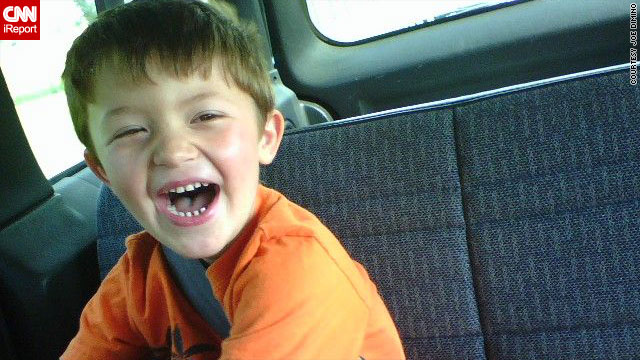
(CNN) -- The retraction of a controversial study that suggested a link between autism and a childhood vaccine has been little comfort to Joe Dimino.

Dimino, whose 5-year-old son has a type of autism, said it only made him more disillusioned with the medical establishment. While Dimino does not believe vaccines cause autism, he's not entirely convinced the shots are harmless.

The now-discredited study published in the Lancet in 1998 raised the possibility of a link between autism and the measles, mumps and rubella vaccine. The study had become a rallying point for many parents questioning the safety of childhood vaccinations.

"We feel like we're getting yanked around with this information -- how can you say something and say sorry 12 years later?" said Dimino, of Belton, Missouri. "That's the way it feels."

It left him feeling "more mistrustful of both 'communities,'" he wrote in his iReport.

Even without the vaccine-autism controversy, parents of children with autism live with a constant question that no scientist or doctor has been able to answer: Why?

Why did this happen to my child? What caused it? Will he or she get better?

"What happens with a large number of families is they get a diagnosis and there are no answers," said Patricia Robinson, who is a therapist for people with ADHD, autism and Asperger's syndrome. "And what I usually see is parents start really researching for information."

Dimino's son Miles had developmental delays that made his parents suspicious. He had trouble picking up objects. At age 1½, he crawled. He could barely spit out words or phrases and had trouble talking.

Has autism touched your life? Share your stories, thoughts

After learning that Miles is in the autism spectrum, Dimino and his wife browsed libraries, ordered countless books and spent hours online learning about autism. Watch Dimino's iReport submission

Maria Collazo of Belleville, New Jersey, spent hours on YouTube, watching everything she could about autism after learning that her daughter, Madison, had the condition.

She started wondering whether her hours at work, usage of the Blackberry and screen time during her pregnancy contributed to her daughter's condition.

"I questioned all things," she said. "Did I eat something I shouldn't have? Did I expose myself to something? You question yourself. You question and you don't know -- and it's like a state of mind."

It plunged her into depression and more questions.

Parents often blame themselves, Robinson said.

"They start looking back and wondering, 'Maybe I should've done something different. Maybe I should've had organic food. I should've eaten more vitamins. I should have not used pesticides. I shouldn't live near this area.'

"There's no evidence to say the child is autistic because the parents did something wrong during their pregnancy or early years," Robinson said. "It's common human nature to look for causes and it is hard on parents, because they do blame themselves."

The constant questioning is understandable, said Dr. Judith Miles, associate director of biomedical programs at the Thompson Center for Autism and Neurodevelopmental Disorders at the University of Missouri.

"The things that keep me awake at 2 a.m. are the things I'm puzzling over and things I don't have answers to," Miles said. "I think the reason that people look at vaccines is because of the time correspondence."

I think the reason that people look at vaccines is because of the time correspondence."

--Dr. Judith Miles, professor of pediatrics and pathology


The symptoms of autism become more apparent around the age of 2, which is around the same time toddlers receive their vaccinations. This has fueled theories that the childhood vaccinations cause the disorder, but scientists say the timing is coincidental.

"That temporally makes a lot of sense and that's why some families hold on to that," said Miles, a professor of pediatrics and pathology. "I assume it's a coping mechanism. We all have coping mechanisms."

She recalled one patient who repeatedly came to the clinic with one theory after another about why her child had autism.

"It's human nature to want to know why and some people do better on certainty than others," Miles said.

Collazo still wonders: "I wish I knew what it could've been. I really don't know." View Collazo's iReport

She does not believe vaccines contributed to Madison's autism and tries to look toward her progress.

Her 3-year-old daughter does not speak and hardly communicates. She cannot call Collazo "Mommy." She recently started using a sippy cup and began to clap. She also spins and bites herself to the point of bleeding and bangs her head against the wall.

"I have a lot of faith she will get better," said Collazo, an iReport contributor. "I also have to mentally prepare myself that she may not, but it doesn't matter as long as she reaches her personal goal, I'm happy. I know she knows who I am. She loves me -- that's really what's important."

While the Lancet retraction may not sway the parties entrenched in their beliefs, Cynthia Falardeau, an iReport contributor and parent of a child with autism, said parents have more in common that they realize.

"I know that the parents in both camps love their children dearly..." said the Vero Beach, Florida, resident. "As much as parents of children on the spectrum of autism are divided on the topic, they are united in their love for their children."

Monday, December 14, 2009

5 Behaviors of Manipulative People

Yahoo.com -Many of us like to think the best of people. We like to think that they shoot straight and are forthright in their intentions. We also like to believe that they will ask for what they want and not resort to crazy tactics to get it.

Unfortunately, however, there are times when we come across those who will do whatever it takes to get what they want…including manipulation. Being manipulated never feels good, but the worst part of manipulation is that often, we don’t even realize that it is happening.
Here are a few ways to know if someone is trying to manipulate you:

Buttering You Up: To get their way, manipulators will often make you feel good so that they can then ask you to do something that they want. The person may first compliment you or tell you what a wonderful job you did on something.
Making you feel good will, in their mind, make it difficult for you to say no…after all, you wouldn’t want to disappoint them or give them reason to think you didn’t deserve the compliment in the first place.
What you can do: Return the compliments and the niceties before saying no

Guilt: This doesn’t only pertain to Catholics and Jewish Mothers; guilt trips have been a successful manipulation tactic for centuries. The saddest part of this strategy is that the victims of this tactic succumb to the manipulators’ demands because they feel they HAVE to, not because they WANT to. In personal relationships, this sets up a co-dependency that is extremely unhealthy.
What you can do: Ask the individual if they want you to do something because you have to or because you want to. If they say they want you to want to do it, tell them that you don’t and that they are trying to force you into something you don’t feel comfortable with.

Broken Record: Probably the most obvious of formats is the broken record tactic. If a person asks you enough or pushes their agenda enough…constantly repeating the question or request over and over again…in slightly different ways, the victim will inevitably give in and give them what they want. Oye!
What you can do: Ask the individual what they don’t understand about the word “no.” Tell them that asking you over and over again isn’t going to change anything and that they are inappropriately over-stepping boundaries.

Selective Memory: This one gets me the most. You swear you have a conversation about a plan and everyone is on the same page, and then one day, the manipulator pretends to remember the conversation completely differently, if at all.
What you can do: Record your conversations…seriously! Okay, maybe not. At least have a witness that you can count on to back you up if the person pulls this shenanigan. Call them out on the fact that they conveniently change the game to fit their needs.

Bullying: If a person doesn’t get their way, they make you out to look or feel like the bad guy…like you are the wrong one.
What you can do: Be firm and tell them that their bullying tactics are inappropriate and unacceptable.

Keep your eyes open for these behaviors and continue to stand your ground to ensure that you aren’t a victim of manipulation. Have you seen any other types of manipulative behavior?

Friday, September 18, 2009

My Fieldwork Friend

I have to always remember this, one member of the non-profit where I'm doing my current fieldwork at has a voice exactly like the Boar's Head man who's in all radio and television advertisements for the company!!


He's actually mentally disabled to a certain extent, but it's so hard to tell in basic conversation- to me, he just seemed a bit nagging-like, and attention seeking, and yet he's very high functioning, and can drive, just has the handicapped-sticker.

Saturday, June 20, 2009

Little Mid-Morning Humour..

Client: "Having a cynical friend makes me feel like I'm cheerful."

Clinician: "See, we all have our place. What are friends for, but to make us feel good about ourselves?"

Wednesday, May 6, 2009

Class Notes: Suicide

Assessing self-destructive threats, gestures, and suicide potential refers to the degree of probability that a person may harm or attempt to kill themselves in the immediate or near future.

Suicidal impulse and suicidal behaviors constitute a response by a person whose coping mechanisms have failed. They are often desperate and feel ashamed. If the person has attempted suicide a medical evaluation and issues of medical stability supersede a clinical interview. Be calm and caring in your approach, establishing a setting conductive to eliciting the necessary information. Be reassuring in letting the person know how you plan to proceed regarding referral for medical evaluation if needed, and that you want to talk to them in order to understand what has been happening in their life which brought them to the point of suicidal intent and suicidal behavior.

SUICIDE ASSESMENT OUTLINE

1. Assessing suicidal ideation
A. Ask directly if they have thoughts of suicide
B. Are the thoughts pervasive or intermittent with a definite relationship to a given situation
C. Do they have a plan; if so, how extensive is their plan
D. Lethality of the means/method defined
E. Is there access to the identified means

2. Suicide attempt
A. Immediate referral for a medical evaluation for medical stability if method of attempt warrants it
1. Means, location, collaborator, rescuer, number of attempts
2. Thoroughness of plan and its implementation
3. Note signs of impairment and physical harm
4. Level of treatment required
*Intention, plan, method, means, lethality, and prior attempts

3. Risk factors
A. Intention and history
1. Recent/prior attempts or gestures
2. Direct or indirect communication of intent
3. Extensiveness of plan
4. Lethality of means
5. Access to means
6. Family history of suicidal behaviors

B. Demographics
1. Age (teens, middle age, and elderly are at highest risk)
2. Gender (males more often succeed at suicide attempts because of the lethality of means, but females make more attempts)
3. Homosexuals (additional stressors/lack of social supports)
4. Race (white)
5. Marital status (separated, widowed, divorced)

C. Helplessness
1. Encourage taking responsibility and making decisions.
2. Include the person when setting goals
3. Provide positive feedback for decision making
4. Facilitate development of realistic goals, limitations, and expectations
5. Identify areas of life and self-care in which person has control, as well as those areas where they lack control
6. Encourage expression of feelings related to areas of life outside person’s control, and let it go

4. Ineffective Development and/or Utilization of Resources and Social Supports
A. Resist desire to withdraw and isolate
B. Identify positive social/emotional supports that they have been avoiding
C. Make commitment to utilize resources and supports in some way everyday
D. Educate regarding role of isolation in maintaining depression
E. Impaired social interaction
1. Convey acceptance and positive regard in creating a safe, nonjudgmental environment
2. Identify people in their life and activities which were previously found pleasurable
3. Encourage utilization of support system
4. Encourage appropriate risk taking
5. Teach assertive communication
6. Give direct, nonjudgmental feedback regarding interaction with others
7. Offer alternative responses for dealing effectively with stress-provoking situations
8. Social skills training in how to approach others and participate in conversation
9. Role play and practice social skills for reinforcement and to increase insight for how they are perceived by others
10. Daily structure to include social interaction

5. Dysfunctional Grieving
A. Evaluate stage of grief that the person is at
B. Demonstrate care and empathy
C. Determine if the person has numerous unresolved losses
D. Encourage expression of feelings
E. Empty char technique or writing a letter to someone they have lose may provoke resolution process
F. Education person on stages of grief, and normalize appropriate feelings such as anger and guilt
G. Support person in letting go of their idealized perception so that they can accept the positive and negative aspects of their object of loss
H. Positively reinforce adaptive coping with experience of loss (talking into consideration ethnic and social differences)
I. Refer to a Grief Group
J. Explore the issue of spirituality and spiritual support

6. Low Self-Esteem
A. Focus on strengths and accomplishments
B. Avoid focus on past failures
C. Reframe failures or negative experiences as a normal part of learning process


Confronting and Understanding Suicide
Everyone is unique in the life crisis that they experience which can contribute or result in suicidal thoughts and behavior. However, there are 12 factors which we know often trigger suicidal thoughts:
_hopelessness/despair
_depression
_feeling overwhelmed or desperate
_life is out of control
_guilt
_loneliness
_chemical imbalance
_low self-esteem
_bad memories/fears
_recent loss
_seasonal anniversary such as a loss
_fatigue/sleep deprivation

Hopelessness And Despair
_no hope that things will ever change and be better
_no hope for the future
_no hope that there will ever be stability and wellness
_no hope that life goals will ever be met
_no hope that there will ever be a feeling of happiness or enthusiasm
_no hope that there will ever be a successful career
_no hope that there will ever be a successful relationship
_a feeling and belief that life is a miserable existence
_no point in being alive


Mood Disorders
Mood disorders are divided into Depressive Disorders and Bipolar Disorders. The defining feature of Bipolar Disorders is the experience of one or more manic or hypomanic episodes. This section will deal more simply with the objects and goals which are related to depressive symptoms and the objectives and goals related to manic symptoms.
According to the DSM IV (‘94), the central feature of mood disorders is disturbance of mood-manic or depressive. The range of the mood disorders include the following: Major Depression, Dysthymia, Seasonal Affective Disorder, Mania, Hypomania, Bipolar, and Cyclothymia.

Depression
Goals
1. Assess danger to self and others
2. Provide safe environment
3. Assess need for medication evaluation referral
4. Improved problem solving
5. Improved coping
6. Develop and encourage utilization of support system
7. Resolve issues of loss
8. Improved self-esteem
9. Cognitive restructuring
10. Improved eating and sleep patterns
11. Develop depression management program
12. Educate regarding medication compliance

Treatment Focus and Objectives
1. Suicide Risk Assessment
A. Thoughts of killing self, or persistent death wish
B. Do they have a plan?
C. Means to carry out the plan
D. Feelings of hopelessness
E. Past history of suicide attempts, or someone close to them that has attempted or committed suicide
F. Recent losses
G. Substance abuse
H. Poor impulse control
I. Poor judgment

During the interview it may be possible to decrease the level of emotional distress by validating the difficulty that they are experiencing, and encouraging them to vent their feelings and intentions of suicide. Talking about these issues, which have resulted in such despair and hopelessness, may not only decrease the level of distress, but may create some opportunities for intervention. As the person talks about their thoughts of suicide they can facilitate to begin to understand what a significant impact their suicide would have on family, friend, and others. Offering them validation and reassurance may increase their ambivalence.


Tuesday, May 5, 2009

Interviewing & Communication Class Journals

Week of 3/23/09:
- Awareness of your presence as a clinician -
What I gathered from class on Monday was that it seemed the main point was that you have to be honestly aware of yourself while in a session- be aware of your reaction, of the way you psychologically attend, and be aware of your body language. I found the SOLER acronym helpful in remembering appropriate body language. Sit squarely, open posture, lean forward, eye contact, and most importantly for what I may need to work on myself- relax! Then, of course, besides myself I need to remember to practice real clinical listening, and remember that the client’s body language will also speak in volumes, (whether supportive or not) to what they’re verbally saying.
Another key concept that I know will help me in the future would be to keep use of open-ended questions. This way I will expand the horizon for the client to develop their own path in discussion and further more helpful conversation.


Week of 3/30/09:
- Good qualities in a clinician -

I enjoyed writing the assignment on the Nancy Grace interviews I would so frequently watch. It’s good in the fact that now whatever program I end up seeing I’m comparing concepts learned in class to what I’m seeing on the screen. Meaningful concepts taken from class this week would include considering the context of a client- meaning relating the client’s current circumstances to their history, either mentally or physically, etc.- and realize again that you’re just seeing a snapshot image of your client. There’s a reason they’re there.
It’s good to look for themes while in session, and I’d want to keep in mind the idea that the client’s problem (or client themselves, depending on how you look at it) is like a puzzle- and the theme of your session would be the picture that you need to complete and put together.
The supportive presence is a very important skill to have in this field, obviously, and for the most part should come naturally. There needs to be a nice presence of genuineness, and acceptance, combined with your availability and possessing the quality of care and warmth.


Week of 4/6/09:
- Video Notes and Levels of Exploration & Evaluation -

The video we watched in class may be a bit outdated, but was generally very helpful. It’s good to see firsthand how a general session is eased into and handled by a clinician, and although it’s silly and comical, the one part that’s really going to stick in my mind will be the opening scene with the bad example of a clinician. He was so great in portraying how horrible a clinician could be- but to be THAT bad is a feat in itself, and it actually gives me confidence in knowing that I’d be at least better than he was.
A very important concept is the levels of exploration and evaluation- it lays the framework for being able to map out just what sort of progress is being made in sessions. The different criteria involving the “circles” (outer, middle, inner) help define how far along your relationship with your client has developed and how much progress you’ve made, relating the deepness in discussion.


Week of 4/13/09:
- Responding Emphatically -
It’s important to be aware of your own biases as a clinician. Being judgmental or holding a bias against a client could but that relationship in jeopardy. Being too pushy and not measuring the client’s readiness to explore could also hurt your progress. Allow yourself to be patient and use your good listening skills to help the client.
Listen for clues in what you’re clients saying through metaphors, like as we discussed, the “I feel like I have the world on my shoulders” line- ask the client to explain what they would mean by this. Keep in mind that providing that relief and support will outweigh the negative.
Do not enable the client in counseling, however. Don’t do all the work for them and have them rely on you as a messiah. Only they can help their own problems in the end.


Week of 4/20/09:
- Role playing and Client In-Take Evaluations -

Our role playing for the different levels helped demonstrate nicely what we need to know when it comes down to differentiating between them. My partner and I had the easiest level, Level 1, which reminds me back of that in-class video with the example of what NOT to do as a clinician, and we obviously had fun with ours. Some are tricky in deciphering which level you’re working with, but the importance is based on where it lies along in that scale.
We also studied our intake evaluations, and as I know I will in the near future take saying this back, I look forward to using this type of paperwork. I feel it’s a good way to keep yourself organized, and I’d personally feel more comforted if I had paperwork to refer to, it’s a great reference to helping any client, and obviously great for laying out the groundwork for client treatment.


Week of 4/27/09:
- Goal Setting, Healthy Relationships, and scales -

The treatment plans sheet handed out and filled in with notes in class helped me understand more about how any problem usually has something secondary following along with it as a symptom, thus why we usually use two goals on this sheet. It helps broaden my perspective that not every problem/diagnosis is as simple or cut-and-dry. As the in-take evaluations did the same, this sheet would be very useful in my own practice in that it would organize clear courses of action and lay out firm groundwork for progress with the client.
The Healthy Relationships handout I found really resourceful, not only as use in counseling, but also just applying to my own personal relationships with others. It points out good communicative skills and self-reflective thinking perspectives that would be helpful to keep in mind when I interact with others myself. As I pointed out in class and sound like a complete geek saying, I actually typed out the whole hand out and posted online on my blog I enjoyed it so much. (HERE)
A third thing covered in class I found resourceful is the use of scales in asking clients about their emotions or feelings. People may sometimes exaggerate their numbers in whatever way, but using that sort of relation is good to get an idea of intensity and is good at furthering conversation and getting feedback from the client.


Week of 5/4/09:
- Walking Away and Re-direction -

A good skill in helping clients along who escalate in whatever negative habits/behaviors they may have would be the “walking away” option, and it’s basically good common sense. A good practice to recommend to the client would be some self-soothing techniques, or encouragement of healthy and positive activities or relationships with others. It’s all about client-based therapy, helping the client change or modify their thought processes.
Also, I’ll want to remember that in escalating or sessions that become hostile, interrupting with a re-direction in the conversation or mood is a good option, and good for those moments when you may not know where to go with the session.

Thursday, April 23, 2009

Good Interviewing Notes

From my Interviewing and Communication Skills (entry level human services) class:

Psychological Attending: Challenge to be there 100% for your client - understand the story

Remember SOLER:
Sit squarely
Open posture
Lean forward
Eye contact
Relax

Clinical listening: Paying attention to all of what the client's saying.
Non-verbal communication: The way you're sitting, listening. Mutual body language between the client and yourself.
Appearances: Dress appropriately, simple.
Body posture: Can tell mood of client by the way they sit- and vice versa (keep in mind gestures)
Facial Expressions, eye contact: Keep in mind how you YOURSELF react to what the client is telling you.

Behaviors: Everyone has reason for behaviors..
Feelings or affect: Are the client's feeligns coming across as they should? Does it agree with the context of their story or situation?
Context: Client's current circumstances, history, etc. relate client's situation to how behaving-->ex: Alzheimer's disease could be reason for client's depression (depression is a symptom of Alz. disease) -- Could me a medical or other psych. reason for original problem.

Meaning: How do the clients understand how everything has evolved?

Themes: Look for them. Like a puzzle, the theme is the complete picture of the puzzle you're piecing together.

Listening to the relationship: Show that you're not going to judge.
Supportive presence: Warmth and caring- clinicians genuinely care about clients & well being.

Wednesday, April 22, 2009

Healthy Relationships...

  • make people happier and ease stress
  • are realistic and flexible
  • mean sharing and talking
  • include self-care
  • use fair fighting techniques

Healthy relationships bring happiness and health to our lives. Studies show that people with healthy relationships really do have more happiness and less stress. There are basic ways to make relationships helathy, even though each one is different.. parents, siblings, friends, boyfriends, professors, roommates, and classmates.

Here are ten tips for healthy relationships:

1. Keep expectations realistic. No one can be everything we might want him or her to be. Sometimes people dissapoint us. It's not all-or-nothing, though. Healthy relationships mean accepting people as they are, and not trying to change them.

2. Talk with each other. It can't be said enough: communication is essential in healthy relationships! It means-

  • Take the time. Really be there.
  • Genuinely listen. Don't plan what to say next while you're trying to listen. Don't interrupt.
  • Listen with your ears and your heart. Sometimes people have emotional messages to share, and weave it into their words.
  • Ask questions. Ask if you think you may have missed the point. Ask friendly and appropriate questions. Ask for opinions, show your interest. Open the communication door.
  • Share information. Studies show that sharing information especially helps relationships begin. Be generous in sharing yourself, but don't overwhelm others with too much too soon.

3. Be flexible. Most of us try to keep people and situations just the way we like them to be. It's natural to feel apprehensive, even sad or angry, when people or things change and we're not ready for it. Healthy relationships mean change and growth are allowed!

4. Take care of you. You probably hope those arond you like you so you may try to please them. Don't forget to please yourself. Healthy relationships are mutual.

5. Be dependable. If you make plans with someone, follow through. If you have an assignment deadline, meet it. If you take on a responsibility, complete it. Healthy relationships are trustworthy.

6. Fight fair. Most relationships have some conflict. It only means you disagreea bout something, it doesn't mean you don't like each other! When you have a problem:

  • Negotiate a time to talk about it. Don't have difficult conversations when you are very angry or tired. Ask, "When is a good time to talk about something that is bothering me?" Healthy relationships are based on respect and have room for both.
  • Don't criticize. Attack the problem, not the other person. Open sensitive conversations with "I" statements; talk about how you struggle with the problem. Don't open with "you" statements; avoid blaming the other person for your thoughts and feelings. Healthy relationships don't blame.
  • Don't assign feelings or motives. Let others speak for themselves. Healthy relationships recognize each person's right to explain themselves.
  • Stay with the topic. Don't use a current concern as a reason to jump into everything that bothers you. Healthy relationships don't use ammunition from the past to fuel the present.
  • Say, "I'm sorry" when you're wrong. It goes a long way in making things right again. Healthy relationships can admit mistakes.
  • Don't assume things. When we feel close to someone it's easy to thinkw e know how he or she thinks and feels. We can be very wrong! Healthy relationships check things out.
  • Ask for help if you need it. Talk with someone who can help you find resolution- like your RA, a counselor, a teacher, a minister or even parents. Healthy relationships aren't afraid to ask for help.
  • There may not be a resolved ending. Be prepared to compromise or to disagree about some things. Healthy relationships don't demand conformity or perfect agreement.
  • Don't hold grudges. You don't have to accept anythigna nd everything, but don't hold grudges- they just drain your energy. Studies show that the moreo we see the best in others, the better healthy relationships get. Healthy relationships don't hold on to past hurts and misunderstandings.
  • The goal is for everyone to be a winner. Relationships with winners and losers don't last. Healthy relationships are between winners who seek answers to problems together.

7. Show your warmth. Studies tell us warmth is highly valued by most people in their relationships. Healthy relationships show emotional warmth!

8. Keep your life balanced. Other people help make our lives satisfying but they can't create that satisfaction for us. Only you can fill your life. Don't overload on activities, but do use your time at college to try new things. You'll have more oppurtunities to meet people and more to share with them. Healthy relationships aren't dependent!

9. It's a process. Sometimes it looks like everyone else on campus is confident and connected. Actually, most people feel just like you feel, wondering how to fit in and have good relationships. It takes time to meet people and get to know them, so make "small talk" .. Respond to others.. Smile.. Keep trying. Healthy relationships can be learned and practiced and keep getting better!

10. Be yourself! It's much easier and much more fun to be you than to pretend to be something or someone else. Sooner or later, it catches up anyway. Healthy relationships are made of real people, not images!