Showing posts with label russia. Show all posts

Friday, September 9, 2011

This Day In History


Sep 9 1942
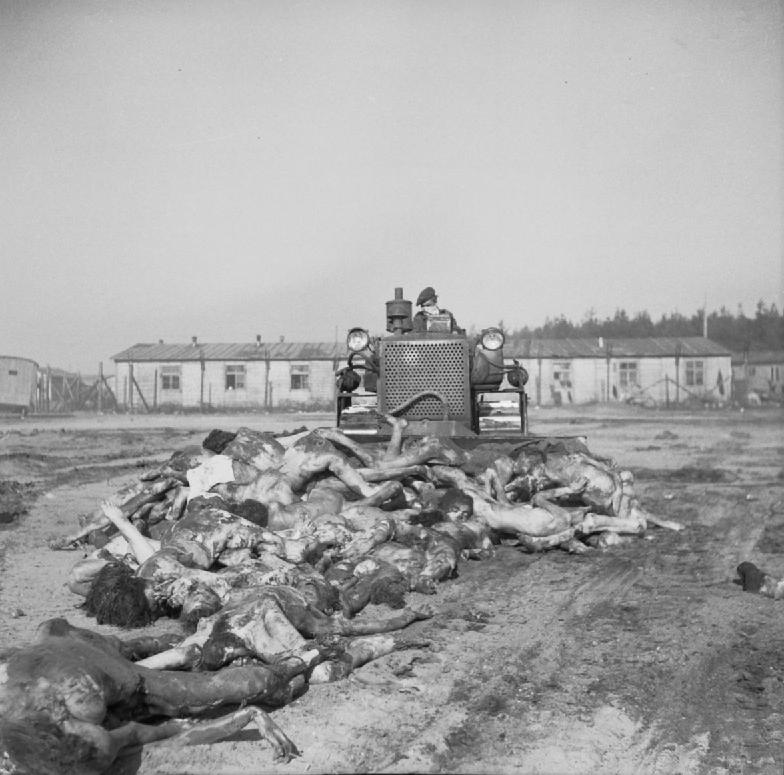
On orders of Heinrich Himmler, Auschwitz prisoners are forced to exhume and burn 107,000 decaying corpses from the camp's mass graves. They are cremated in gigantic, open-pit bonfires.


Sep 9 1999
A bomb planted by Chechen terrorists explodes in a Moscow apartment building on Guryanov Street, killing more than 90 people. It is part of a series of apartment bombings in Russia leaving more than 400 dead.

Saturday, June 4, 2011

This Day In History


Jun 4 1939
After already having been turned away by Cuba, the SS St. Louis is also denied permission to land in Florida. So it is forced to return to Europe with its cargo of 963 Jewish refugees, most of whom will later die in
Nazi concentration camps.


Jun 4 1989
645 rail passengers are killed in a natural gas explosion near Ufa, Russia. Their two trains are torn apart as they pass each other, throwing sparks near a leaky pipeline.

Tuesday, April 26, 2011

This Day In History


Apr 26 1865
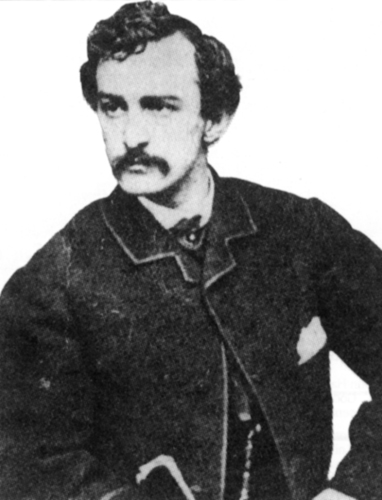
Discovered hiding in a farmer's tobacco shed, John Wilkes Booth is shot in the neck. Dying and paralyzed from the neck down, he whispers: "Tell my mother I did it for my country." As his hands are held up to his face, Booth mutters "useless... useless..." They are his last words.


Apr 26 1986
44 seconds into a late-night experiment at the Chernobyl nuclear power station, reactor number four sustains two large explosions. A plume of dangerous radioactivity looms three kilometers high, making it the worst catastrophe in the history of nuclear power. The Soviet news agency TASS holds off reporting the incident for almost 48 hours.

Thursday, April 29, 2010

Fury As U.S. Woman Adopts Russian Boy, 7, Then Sends Him Back Alone with Note

Russia reacted with horror today over the heartbreaking story of a seven-year-old Siberian boy adopted by an American family who was sent back to Moscow alone - because his U.S. mother didn't want him any more.

Little Artem Saveliev was last year taken from a grim orphanage and given a new life in Tennessee last year.

But his adoptive mother Torry-Ann Hansen, a 34-year-old nurse, yesterday put him on a ten-hour flight as an unaccompanied minor with a note 'to whom it may concern' saying: 'I no longer wish to parent this child'.

In his rucksack, she had placed sweets, biscuits and colouring pens for the journey.

She did not tell him she was rejecting him. Instead, she and a grandmother that he was going on an 'excursion' to Moscow.

In the typed note, which the blond boy was clutching when Moscow police picked him up, she said she wanted the adoption annulled.

She accused the Vladivostok orphanage of misleading her about the child's behavioural problems.

The Russians angrily denied this, saying he was stubborn but that his only disability was that he was 'flat-footed'.

Officials said they have never witnessed such cruelty to a child after promising a 'new life'.

Unwanted Artem, eight next week, looked confused and bewildered as he was taken into care by Moscow social services.


The Kremlin's children's rights commissioner Pavel Astakhov lambasted the U.S. mother, who is understood to be a nurse and a single parent with a natural son.

Russia's foreign minister is now demanding a freeze on adoptions between the U.S. and Russia.

Foreign Minister Sergey Lavrov was quoted by Russian news agencies as saying the ministry would recommend that the U.S. and Russia hammer out an agreement before any new adoptions are allowed.

'We have taken the decision ... to suggest a freeze on any adoptions to American families until Russia and the USA sign an international agreement' on the conditions for adoptions and the obligations of host families, Lavrov was quoted as saying.

He also said he was 'indignant' at the way the child was treated 'as a parcel'.

Lavrov said the U.S. had refused to negotiate such an accord in the past but 'the recent event was the last straw'.

U.S. ambassador to Russia, John Beyrle, said he was 'deeply shocked by the news' and 'very angry that any family would act so callously toward a child that they had legally adopted'.

Russian officials also refused the U.S. consul access to the child saying: 'If his American parent kicked out him from the country on a plane like a sack of potatoes, then we will look after the boy.

'Our care system will take up the case. After a full medical examination, he will be placed into one of our orphanages.'

Ashtakhov questioned how American immigration had let the child leave Washington, and why United Airlines had carried him alone to Moscow. Normally, stringent checks are applied on minors travelling without parents.

It appears the child was also alone when he flew from Tennessee to Washington before boarding the flight to Moscow.

'The adoptive mother broke all the rules and procedures by sending an adopted child back,' he said.

Ashtakhov, who said he played with the child and talked to him, said the mother had another son called Logan.

'Artem said he made good friends with Logan,' he said. 'He was talking quite calmly about the family, but when he started to talk about his mother he began to cry, showing how she dragged him by the hair.'

In a shocking typed letter she gave to her seven-year-old 'son' to take with him to Moscow, she revealed how she adopted the boy in September 2009.

She claimed he is 'mentally unstable' and that his problems were hidden from her by Russian orphanage officials before she adopted him.

'He is violent and has severe psychopathic issues/behaviour. I was lied to and misled by the Russian orphanage workers and director regarding his mental stability,' she wrote.

'They chose to grossly misrepresent those problems in order to get him out of their orphanage.'

The letter - addressed 'to whom it may concern' at the Russian Ministry of Education in Moscow - said: 'After giving my best to this child I am sorry to say that for the sake of my family, friends and myself, I no longer wish to parent this child.

'As he is a Russian national, I am returning him to your guardianship and would like the adoption disannulled.'

Adoption officials in Partizansk, near Vladivostok were stunned, saying that the U.S. woman had made a good impression on them when she went through adoption procedures last year.

She spent four full days with Artem watched by adoption workers before she was allowed to become his mother.

'It was clear that there was mutual affection, and it was good,' said Vera Kuznetsova, chief adoption officer in the region.

'She seemed a nice, kind woman. Artem immediately reached out to her. She even learned a few Russian words to communicate with her future son,' said one official.

U.S. social workers also submitted reports on Hansen for the court which granted the adoption. 'They did not doubt Hansen's honesty and sense of responsibility,' she said.

Recent follow-up reports from America on the boy did not detect any strains in the family, it is claimed.

Russian officals deny Hansen's claims about Artem having severe behavioural problems and being mentally unstable.

'Artem is normal for his age,' said the official. 'He is a little stubborn child, but this is not a problem for loving parents.

'We are shocked by how the American family has treated our child. Artem grew up as a completely normal, relatively advanced child for his age, and healthy. Does she count being flatfooted as a disability?

'No other medical abnormalities were found. The child was completely ready for school (Russian pupils start school at seven years of age) and had learned to read when the American mother came to the orphanage.'

American psychotherapist Joe Soll told Russian media that the boy's rejection from his adopted family would have a serious impact.

'When you remove a child from a family, no matter what the circumstances are, it's a trauma,' he said.

'We don't look at children who have been adopted as tramuatised, but they are. I don't think people are educated at all to understand what adoption is really about.'

The child's real mother Ekaterina was deprived of her parental rights because she was an alcoholic, officials said yesterday.

She gave birth to the child at 19 and cared for him until he was six.

He was adopted by Hansen on 18 September 2009 in Russia and eleven days later she formally changed his name to Artem Justin Hansen.

Astakhov said the boy told him that neither he nor Logan went to school, but played at home in America. The boy spoke of a grandmother who shouted at him.

Russian officials believe it is this grandmother who actually organised the one-way trip to Moscow for Artem.

'Artem is a very nice kid. We drew pictures together and had nice chat,' said Astakhov.

Officials say they want action against the mother for child abuse. The Moscow media angrily denounced the 'cruelty' inflicted on the seven-year-old.

This shocking return of an unwanted child follows several appalling cases of Russian children being killed after being adopted to America.

In one case, a two-year-old boy died after his American father left him alone in a car in 30C temperatures.

The cases led to a public outcry and new curbs on adoption.

The case was highlighted on a day when U.S. President Barack Obama and Russian leader Dmitry Medvedev signed an historic nuclear arm reduction treaty in Prague.

Adoption Dream Unlikely at Russian Orphanage

Moscow, Russia (CNN) -- Though Oksana is 4 years old, she is much shorter than other children who are a year younger. She barely talks, and yet doesn't hesitate to climb up in her puffy dress to sit next to a visitor on a couch, after flashing an impish smile.

Administrators at Children's Home Number 59 in Moscow say Oksana was found by police, after apparently being abandoned. She was then delivered to a hospital and eventually ended up at this orphanage.

Of the more than 83 children registered here, Oksana stands the best chance of being adopted -- simply because she is one of the youngest children here.

Darya Tatarenko is a young child psychologist who works at Children's Home Number 59. The 22-year-old graduate of Moscow State University has a deep personal interest in adoption: one of her sisters was adopted.

But she estimates the children at this orphanage, who range in age from 3 to 18, have only a 30 percent chance of being adopted by Russian families. Tatarenko says that's because potential parents in Russia often prefer blond and healthy children.

In fact, the odds that they will find a loving family outside of the orphanage seem much lower. In the 10 years since Children's Home No. 59 opened, only four of its children have been successfully adopted, says deputy director Valentina Spivakova.

Administrators say potential adoptive parents may also be reluctant due to the older ages of the children. Another challenge: The orphanage houses many groups of siblings but adoptive parents are unwilling to take in more than one child at a time, and administrators refuse to separate brothers and sisters.

The residents of this orphanage are just a tiny sampling of the more than 700,000 children living in state institutions across Russia, according to a 2008 Russian government census.

"Our data shows 83 percent of [these] children have one living parent," says Bertram Beinvel, UNICEF's representative in Russia.

These "social orphans" have been separated from their parents to protect them from threats like parental alcoholism, child abuse and neglect.

"Most of [the children here] have had traumatic experiences in their life," says Tatarenko, the child psychologist.

Administrators avoid telling the youngest children that they have been abandoned or that their parents are in prison.

"We tell the youngest children their parents are away on a business trip," says the orphanage director, Irina Nemtinovna.

The kids at Children's Home No. 59 appear well cared for. The building over-flows with toys and stuffed animals. The gym is equipped with roller blades, ice skates and a ping-pong table.

When a CNN television crew arrived for a visit, children made two costume changes, while performing a series of dances in a recital hall outfitted with disco lights. Some of them then performed on trumpet, violin and piano, while accompanied by a music teacher.

The orphanage promotes a foster family program, where more than 20 children live full- or part-time with Russian families who receive government subsidies to help cover the additional costs. For some reason, international adoption agencies do not come to Children's Home 59.

Due to the bad publicity that erupted after an American woman tried to "return" her adopted 7-year-old Russian son by shipping him on a solo flight back to Moscow, some child welfare activists fear international adoptions across the country may slow to a trickle.

"I'm so angry [at] this dialogue on TV that we should abandon this," Tatarenko says. "Americans and Europeans take children of all ages, with different diseases...."

Russia's child welfare ombudsman, Pavel Astakhov, says U.S. adoptions of Russian children will be suspended until Moscow and Washington hammer out a bilateral agreement to better regulate international adoptions.

Astakhov, who also plays the role of judge on a "People's Court"-style television courtroom show, points to reports of at least 15 adopted Russian children who died in the U.S. over the last decade. In several cases, U.S. parents were convicted of manslaughter, child abuse or murder.

UNICEF's Beinvel welcomes a fresh U.S.-Russian initiative to sign a new adoption agreement. But he also argues Russia must do more to save hundreds of thousands of children, many of whom are having to be separated from their parents.

"You have a system which is intervening too late," Beinvel says. "A big priority for UNICEF is for the Russian government to change to much more preventative social work...to have a system which is able to much earlier detect...who are the vulnerable families and what are the causes."

Some Russian officials have begun sounding the alarm. According to the Russian news agency Interfax, Elena Mizulina, the head of a parliamentary committee on family, women's and children's affairs, recently announced that there are more "social orphans" in Russia today than there were during World War II, one of the bloodiest periods in Russian history.

At Children's Home 59, some of the kids, like 8-year-old Tanya, have already lived in the orphanage for more than four years.

"I want to go to a family," the girl says. "But my mother won't let me ... she's lying in a hospital."

Some of the younger children appear to have been taught by staff at the orphanage, to hope and pray to be adopted.

"I'm going to be taken to a family soon," one little boy said to a visitor, after performing a series of dances dressed in a sailor suit. "I will take my costume with me and dance there all the time." It is a child's heart-felt dream.

Unfortunately, statistics show this little boy will probably spend the rest of his childhood years growing up at Children's Home Number 59.

Saturday, August 15, 2009

Police Say Ransom Demanded in Arctic Sea Mystery

(CNN) -- A ransom has been demanded for a missing Russian cargo ship which vanished two weeks ago after being involved in a suspected hijacking off the coast of Sweden last month, Finnish police told CNN Saturday.

Authorities said the ransom demand might be from a second group of hijackers who targeted the ship after it was first allegedly hijacked for 12 hours off the coast of Sweden.

"There has been a demand for ransom and the subject is the shipping company, Solchart Management," Jan Olof Nyholm with the Finnish police told CNN.

An international criminal investigation is under way into the alleged hijacking of the vessel, the Arctic Sea. The last known communication with the vessel was July 31.

The probe, involving Interpol, is being handled by Swedish, Maltese and Finnish authorities in cooperation with authorities from another 20 countries, the Malta Maritime Authority said in a statement Saturday.

Finnish police would not say how much ransom had been demanded, or what else they know about the vessel.

"At this point I can't comment on whether we know the whereabouts of the ship. Our top priority is the threat to life and health, so I can't release any more details," Nyholm said. "The investigation has more details, but I can't say any more."

The Arctic Sea, which sails under a Maltese flag, was carrying a 6,500-ton cargo of timber from Finland to Algeria when it reported trouble on July 24.

Its 15-member crew told authorities that eight to 12 people armed with guns and pistols boarded the vessel about 3 a.m. that day, masked and wearing uniforms with the word "police" written on them, the Malta Maritime Authority said.

"During (the attackers') stay onboard, the members of the crew were allegedly assaulted, tied, gagged, and blindfolded and some of them were seriously injured," the maritime authority said in a written statement.

"All crew members were 'hard' questioned for a considerable amount of time. The questioning was related to drug trafficking. Later all crew members were released from their bindings but were locked within cabins until the alleged police rummaged the vessel thoroughly."

The attackers left after 12 hours on the same black rubber boat on which they had arrived, which bore the word "police," the maritime authority said.

The vessel's radar and satellite systems were off-line for two hours during the reported hijacking, during which it was witnessed performing "extreme maneuvers," said Maria Lonegard, a spokeswoman for the Swedish police.

The Finnish shipping company in charge of the ship reported the case to the Finnish police, who referred it to the Swedish police, the Maltese Maritime Authority said. In the meantime, the ship sailed through the English Channel.

Three days later, on July 31, Swedish police reached the ship by phone and spoke with someone they believed to be the captain, Lonegard said.

The crew provided photos of their injuries and written statements about the alleged hijacking, Swedish police said.

Despite that evidence, however, authorities have been unable to confirm the alleged hijacking. Swedish police say they have spoken to a number of witnesses who saw the ship making strange movements, but no one saw the black rubber boat approaching or leaving the Arctic Sea.

The ship has not been heard from since July 31. It did not arrive in North Africa as scheduled August 4.

Authorities have had no explanation for the ship's disappearance until Saturday, when Swedish police said they believe the Arctic Sea has been hijacked a second time.

"It appears that we are now dealing with two separate incidents -- the alleged hijacking off the Swedish coast and now the alleged hijacking with a demand for ransom," Lonegard told CNN on Saturday.

"The incident in the Swedish waters appeared over when we spoke to the crew and shipping company on the 31st of July. So it appears the ship has been hijacked twice."

Police don't know the location of those demanding the ransom, she said.

An international criminal investigation is under way into the alleged hijacking, led by the Swedish, Maltese and Finnish authorities in cooperation with authorities from another 20 countries, the Malta Maritime Authority said in a statement Saturday.

Interpol and Europol are also involved.

The ship was reported Friday to be in international waters north of Cape Verde, an island nation a few hundred miles from the coast of western Africa.

The news came from Portugal's state news agency, which quoted Cape Verde's defense director, Pedro Reis.

The U.S. military also had a report this week that the ship was seen a few hundred miles from Cape Verde, two military sources told CNN, but the United States had no independent verification of those reports. The U.S. military is not involved in the search.

Russia's ambassador to Cape Verde, however, denied that the Arctic Sea had been spotted near the island.

The Russian military has been searching for days for the Arctic Sea, with naval vessels authorized to use force, Russia said this week.

Russian President Dmitry Medvedev instructed Defense Minister Anatoly Serdyukov to "take all necessary measures to locate, monitor and, if necessary, to free the missing vessel," a statement issued by the president's office said.

Experts say maritime crime is rare in heavily policed European waters and more common around areas, such as Somalia, where governments have little or no control over their ports.

"Attacks on ships are extremely rare; basically they don't happen," said Jeremy Harrison of the British Chamber of Shipping.

A spokesman for the Swedish Coast Guard said the last known hijacking of a vessel in Swedish waters occurred in the 16th century.

"The only way a ship can disappear is if someone has actually turned off the ship's beacon," said Natasha Brown with the United Nations' International Maritime Organization. "But if this is done, you could only find the ship if you actively searched for it with a plane or helicopter."

Wednesday, August 12, 2009

Piracy Fears as Cargo Ship Vanishes off England

LONDON, England (CNN) -- An international search operation was underway Wednesday for a cargo ship which vanished after being involved in what appears to be an unprecedented incident of piracy in European waters.

The Russian-crewed Arctic Sea, carrying a 6,500-ton cargo of timber from Finland to Algeria, was last heard of nearly two weeks ago when it passed through the English Channel, one of the world's busiest shipping lanes.

Russia said naval vessels authorised to use force were now hunting the vessel backed by "space-based" detection systems.

The Maltese-flagged Arctic Sea is believed to have been briefly hijacked off Sweden by raiders posing as drug enforcement officers who tied up, gagged and blindfolded the crew, causing several injuries, and searched the vessel.

Experts say acts of piracy are unheard of in heavily-policed European waters, with maritime crime largely restricted to areas such as Somalia in Africa where governments have little or no control over their ports.

The Arctic Sea apparently vanished after a last known contact on July 31, failing to make its scheduled arrival in north Africa on August 4. Maltese maritime officials said several governments were now trying to track down the ship.

Russian President Dmitry Medvedev has instructed the country's Defense Minister Anatoly Serduykov to "take all necessary measures to locate, monitor and, if necessary, to free the missing vessel," a statement said.

According to Swedish police and Maltese Maritime Authority (MMA) accounts, the Arctic Sea's troubles begain on July 24 when a group of between eight and 12 men boarded at 3 a.m., occupying the vessel for 12 hours.

They restrained the crew and questioned them about drug trafficking before locking them in their quarters.

"During their stay onboard, the members of the crew were allegedly assaulted, tied, gagged and blindfolded and some of them were seriously injured," an MMA statement said.

Swedish police spokeswoman Maria Lönegård said during the suspected hijack, the vessel's radar and satellite systems were off-line for two hours, during which it was witnessed performing "extreme maneuvers."

Since the crew believed they had been boarded by a genuine law enforcement agency, no police complaint was initially made, and the Arctic Sea continued on its way. Details eventually reached police through diplomatic channels.

Lönegård said Swedish police spoke with the Arctic Sea's captain on July 31, when the ship was believed to be off the coast of France. This is believed to be the last known contact with the vessel.

Earlier, on July 28, the ship had made contact with British coastguard -- a standard procedure as it passed through the busy waters of the English Channel -- but reported nothing untoward.

Russia's Defense Ministry said on it's Web site that Black Sea Fleet patrol ship Ladny was heading the search operation and had Wednesday passed through the Strait of Gibraltar en route to the Atlantic.

While piracy levels have recently increased off the coast of East Africa, incidents in European waters are unheard of, according to UK maritime experts.

"Attacks on ships are extremely rare, basically they don't happen," said Jeremy Harrison of the British Chamber of Shipping.

Approximately 400 ships pass daily through the Dover Strait -- the narrowest stretch of the English Channel -- and all are required to check in with either British of French coastguards.

The Arctic Sea is Maltese-flagged and Latvian-owned but operated by Finnish firm Solchart Management. Its cargo of sawn timber is owned by another Finnish company, Stora Enso.

Stora Enso told CNN it had no idea of the whereabouts of the ship or its cargo, which it said was worth €50,000 ($70,000).

Tuesday, June 2, 2009

Woman Blasts Off Boyfriend’s Penis With Firecrackers

A Russian woman got so upset by the news that her boyfriend intended to leave her that she tied several firecrackers to his penis and exploded them, the Life.ru web-site reports.

The 33-year-old victim, identified as Alik D. had lived with the woman whose name was reported as Kira V. for about two years, but when the girlfriend started suggesting that they should marry, the man refused and said that he would rather return to his first wife with whom he had a son.

When Alik started moving out Kira suggested that they had a farewell dinner. After a hearty meal and some heavy drinking Alik fell asleep. The girlfriend tied several firecrackers to Alik’s penis and exploded them. The man was rushed to intensive care and doctors are reported to be fighting for his life.

Even if the man survives the girl will face up to 12 years imprisonment.

Monday, April 20, 2009

Doctors Remove Tree Growing in Lung

A fir tree has been found growing inside a man's lung by surgeons who were operating on him for suspected cancer.

The tree, measuring 5cm, was discovered by Russian doctors when they opened up Artyom Sidorkin, 28, to remove what they thought was a tumour.

Medical staff believe that Mr Sidorkin somehow inhaled a seed, which later sprouted into a small fir tree inside his lung.

The patient had complained of extreme pain in his chest and had been coughing up blood. Doctors were convinced he had cancer.

'We were 100 per cent sure,' said surgeon Vladimir Kamashev from Izhevsk in the Urals. 'We did X-rays and found what looked exactly like a tumour. I had seen hundreds before, so we decided on surgery.'

Before removing the major part of the man's lung, the surgeon investigated the tissue taken in a biopsy.
'I thought I was hallucinating,' said Dr Kamashev. 'I asked my assistant to have a look: "Come and see this - we've got a fir tree here".
'He nodded in shock. I blinked three times as I was sure I was seeing things.'

They believed the coughing of blood was caused by the tiny pine needles piercing blood capillaries. 'It was very painful. But to be honest I did not feel any foreign object inside me,' said Mr Sidorkin. 'I'm so relieved it's not cancer.'
The report appeared in popular tabloid Komsomolskaya Gazeta, and was picked up by Russian news service Novosti.